
Where Does M&M Roofing Buy Its Metal Roofing?
Meet Metal Alliance, our metal supplier, and explore the standing seam and 5V Crimp panels, color charts and Florida fabricators behind M&M metal roofs.
By M&M Roofing and Construction Corp · Florida Certified Roofing Contractor CCC1332459 · Published · Updated
Explore metal roofing for your home
Get a free estimate and help comparing panel profiles, finishes and colors for your roof.
The short answer
Metal Alliance is the metal supplier we use for our metal roofing work. We work with local Florida fabricators to turn metal coil and sheet into the panels and trim for each roof. Our usual profiles are 1.5-inch mechanically seamed standing seam, 1-inch nail strip standing seam, and 5V Crimp exposed-fastener panels.
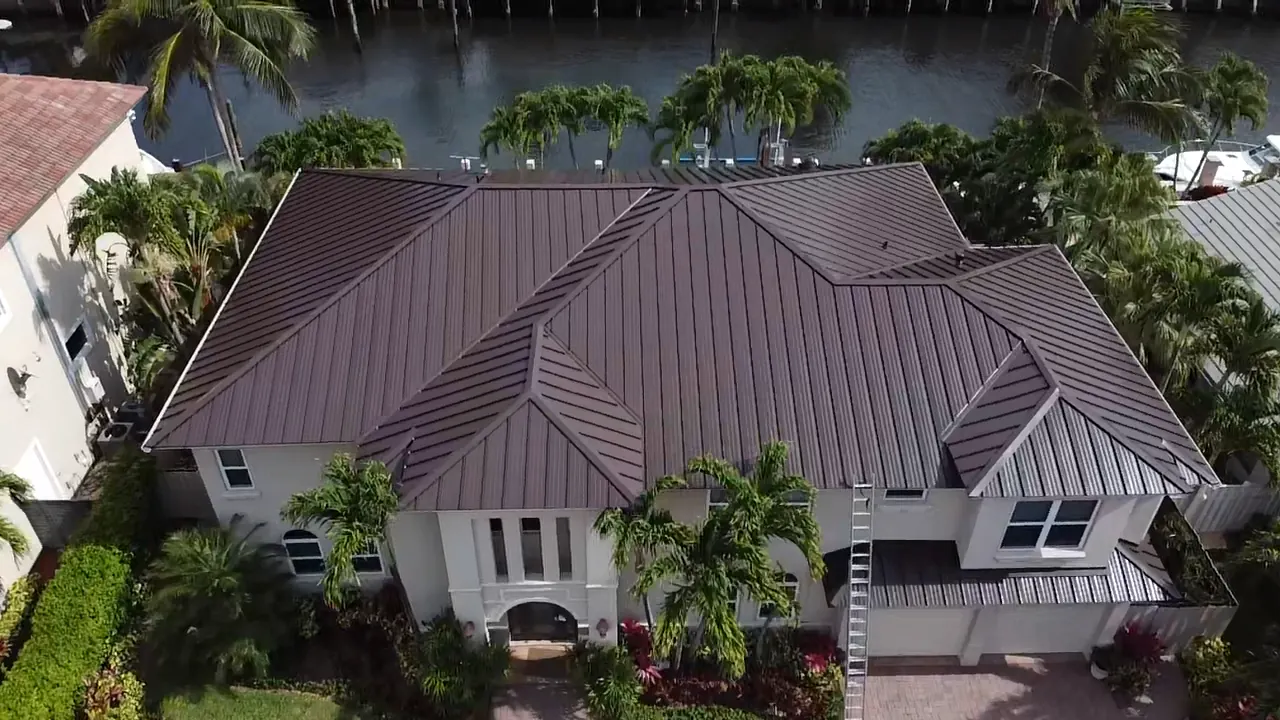
Metal Alliance supplies the metal behind the roof
When homeowners compare metal roofs, they often start with the color or the shape of the panel. We also want you to know where the metal comes from. Metal Alliance (opens in a new tab), based in Palm City, Florida, supplies metal coil and sheet used to make roofing panels and trim.
A fabricator then forms that material into a specific panel profile and makes the matching roof trim. M&M brings those components together with the underlayment, flashing and installation details for your home. Understanding those roles makes it easier to compare what is actually included in a metal roofing proposal.
- 01
Metal Alliance
Metal coil and sheet
- 02
Florida fabricator
Roof panels and trim
- 03
M&M Roofing
Your installed roof system
The three metal panel profiles we usually use
Our regular options are 1.5-inch mechanical standing seam, 1-inch nail strip standing seam and 5V Crimp. Below are Metal Alliance's published names for those profiles. Fabricators may use their own product names; the exact panel and approval belong in your project specifications.
Wind performance depends on how the panel is attached
For the 1.5-inch mechanical panel, clip spacing is one of the details that changes the approved uplift pressure. Panel width, metal thickness, seam, clips, screws and roof deck also matter. The graphs below show specific assemblies from Metal Alliance's Florida Product Approvals, including options approved for the High-Velocity Hurricane Zone (HVHZ).
These are allowable suction pressures in pounds per square foot (psf), not a single mph rating for each profile. A roof's required pressure depends on its location, height, exposure and roof zones. The selected assembly must meet that project's requirements; the examples below are not a ranking of the three panel types.
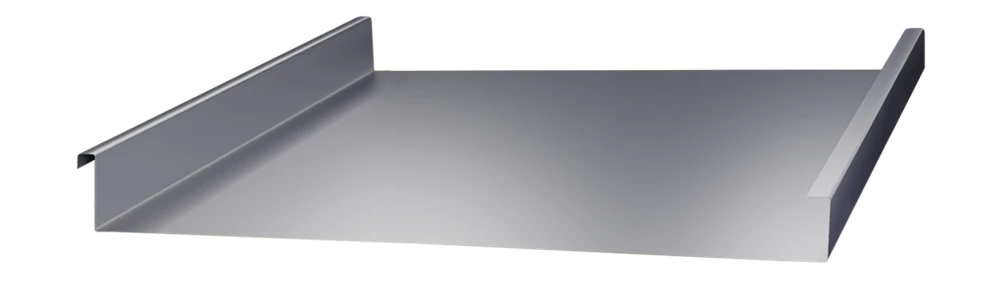
Profile illustration: Metal Alliance
Mechanically seamed · concealed fasteners
1.5-inch mechanical standing seam
This is the profile to ask about when you want the raised, continuous lines of a mechanically seamed metal roof. Clips secure the panels, and a seaming machine folds the adjoining seams together.
Metal Alliance lists a 1.5-inch rib with 90-degree or 180-degree mechanical seams. The seam, clip and attachment details must match the selected roof system.
See Metal Alliance's 150MSAllSeam profile (opens in a new tab)
Closer clip spacing changes the approved uplift pressure
Approval example: 24-gauge-minimum steel, a maximum 16-inch-wide panel and a 90° mechanical seam, on at least 15/32-inch plywood. Both rows use the same 2-inch clips and two #10 × 1-inch screws per clip.
Allowable negative pressure · pounds per square foot (psf)
- Clips 16 inches apart · Method A−166 psf
- Clips 8 inches apart · Method B−198.5 psf
For this assembly, clips at 8 inches on center provide greater allowable uplift resistance than clips at 16 inches. On center means measured from the center of one clip to the next along the seam.
Bars show pressure magnitude. The minus sign means suction pulling upward on the roof. Longer bars mean greater allowable uplift resistance for the listed assembly.
Assembly details and approval source
- Panel
- 150MS: 1.5-inch rib, maximum 16-inch coverage, 24-gauge-minimum steel (nominal 0.0239 inch; minimum 50 ksi yield strength), 90° seam.
- Clips & screws
- Nominal 2-inch-long × 1.5-inch-tall, 26-gauge clips; two #10 × 1-inch pancake-style fasteners per clip. Listed clip spacings: 16 or 8 inches on center.
- Deck
- Minimum 15/32-inch plywood or 3/4-inch wood plank, minimum specific gravity 0.42. Deck attachment and structural design are separate requirements.
- Other conditions
- The report includes HVHZ use. For slopes below 2:12 in the HVHZ, it requires a continuous sealant bead on top of the male leg. Follow the report's slope, underlayment, fire-barrier and manufacturing conditions.
Read the approved installation report (pages 1–3; pressure table on page 2) (opens in a new tab)
2023 Florida Building Code approval, checked October 17, 2026. Page 2 lists maximum allowable pressures with a factor of safety of 2 already applied. Page 3 requires comparison with project ASD uplift pressures. These are selected examples; follow all conditions in the full report.
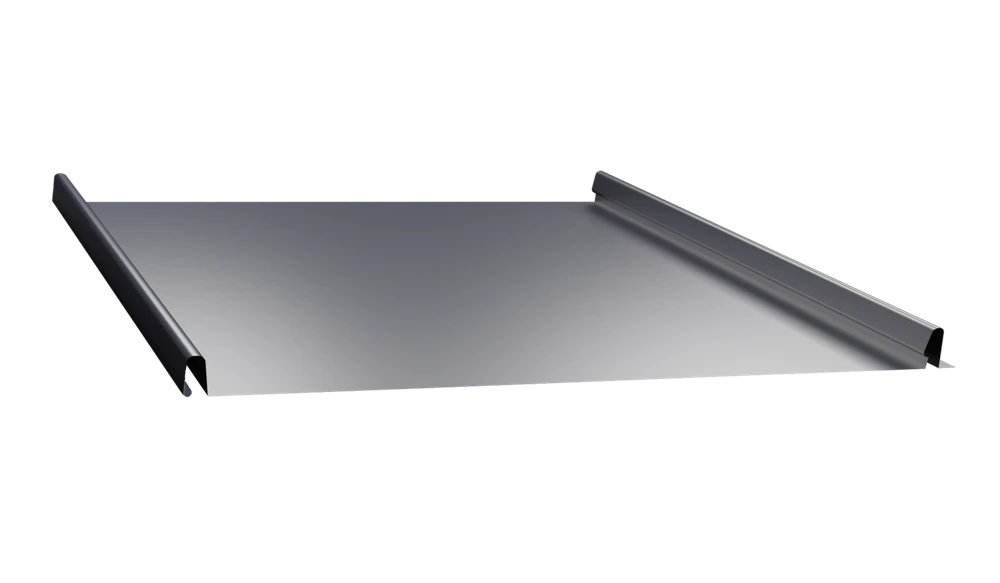
Profile illustration: Metal Alliance
Snap-lock · concealed fastening flange
1-inch nail strip standing seam
Our 1-inch standing seam option is nail strip. It has a lower rib and a built-in fastening flange; the next panel snaps over the connection to conceal the fasteners.
Metal Alliance calls this its 1-inch Snap-Lok Nail Strip panel. It does not use the separate clips or mechanical seaming of the 1.5-inch system above.
See Metal Alliance's 100SLAllSeam profile (opens in a new tab)
Same screw spacing, different seam-sealant conditions
Approval example: 26-gauge-minimum steel, a maximum 16-inch-wide nail-strip panel and at least 15/32-inch plywood. Both methods use #10 × 1-inch pancake screws at 6 inches on center, through the metal flange rather than its prepunched slots.
Allowable negative pressure · pounds per square foot (psf)
- Without seam sealant · Method A−116 psf
- Sealant at the base of the male leg · Method B−176 psf
This approval keeps the screw spacing at 6 inches on center. Its two listed pressures depend on the seam-sealant condition; it does not provide a range of screw spacings for this assembly.
Bars show pressure magnitude. The minus sign means suction pulling upward on the roof. Longer bars mean greater allowable uplift resistance for the listed assembly.
Assembly details and approval source
- Panel
- 100SL: nominal 1-inch rib, maximum 16-inch panel width, 26-gauge-minimum steel (nominal 0.0185 inch; minimum 50 ksi yield strength).
- Fasteners
- #10 × 1-inch pancake-style screws at 6 inches on center, installed through the metal flange, not through the prepunched slots, as specified by this approval.
- Sealant
- Method A has no seam sealant; Method B requires sealant at the base of the male leg. The approval does not name a sealant brand or chemistry; confirm the specified system with the supplier.
- Deck
- Minimum 15/32-inch plywood or 3/4-inch wood plank, minimum specific gravity 0.42. Deck attachment and structural design are separate requirements.
- Approval scope
- This is the HVHZ .3 steel assembly. The separate 24-gauge .2 assembly is non-HVHZ and its pressure is not used here. Follow all slope, underlayment, fire-barrier and manufacturing conditions in the selected approval.
Read the approved installation report (pages 1–3; pressure table on page 2) (opens in a new tab)
2023 Florida Building Code approval, checked October 17, 2026. Page 2 lists maximum allowable pressures with a factor of safety of 2 already applied. Page 3 requires comparison with project ASD uplift pressures. These are selected examples; follow all conditions in the full report.
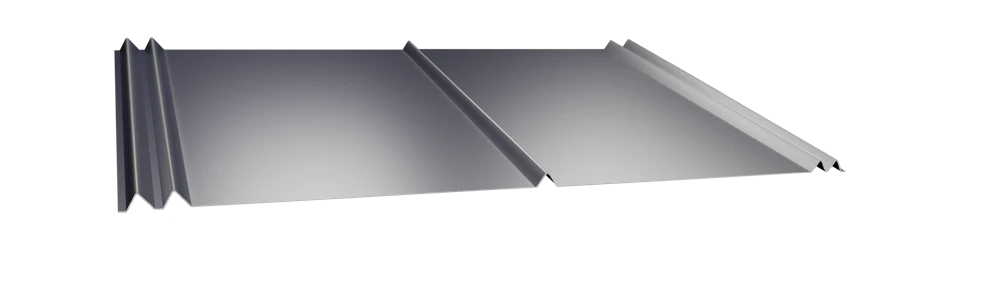
Profile illustration: Metal Alliance
V-shaped ribs · visible fasteners
5V Crimp exposed-fastener metal
5V Crimp is the familiar metal roof with low V-shaped ribs and fasteners visible on the panel surface. “5V Crimp” and “5V exposed fastener” refer to this same panel category.
Metal Alliance lists it as 50AllV, a half-inch 5V Crimp profile. Its fastening and sealing details differ from standing seam and are part of selecting the right system for the roof.
Closer fastener spacing changes the approved uplift pressure
Approval example: 26-gauge-minimum steel, 24-inch coverage and a nominal 3/8-inch rib, on at least 15/32-inch plywood. Both rows use #10 × 1.5-inch screws with sealing washers in the listed 12–12-inch pattern across the panel.
Allowable negative pressure · pounds per square foot (psf)
- Fasteners at 16 inches on center · Method A−117.75 psf
- Fasteners at 8 inches on center · Method B−206 psf
For this specific 5V assembly, fastener rows 8 inches apart along the panel have greater allowable uplift resistance than rows 16 inches apart. The panel geometry, screw type, sealing washers and pattern across the panel stay the same.
Bars show pressure magnitude. The minus sign means suction pulling upward on the roof. Longer bars mean greater allowable uplift resistance for the listed assembly.
Assembly details and approval source
- Panel
- 50ALLV: 24-inch coverage and nominal 0.375-inch rib; 26-gauge-minimum steel (nominal 0.0185 inch; minimum 50 ksi yield strength). These values apply to this approval's profile, not every 5V variant.
- Fasteners
- #10 × 1.5-inch fasteners with sealing washers in the approval's nominal 12–12-inch pattern. Method A: 16 inches on center. Method B: 8 inches on center.
- Deck
- Minimum 15/32-inch plywood or 3/4-inch wood plank, minimum specific gravity 0.42. Deck attachment and structural design are separate requirements.
- Other conditions
- The report includes HVHZ use and specifies a 2:12 minimum slope in the HVHZ. Follow its underlayment, fire-barrier and manufacturing conditions. This graph uses only FL31652.1-R4; values from other 5V approvals are not combined.
Read the approved installation report (pages 1–3; pressure table on page 2) (opens in a new tab)
2023 Florida Building Code approval, checked October 17, 2026. Page 2 lists maximum allowable pressures with a factor of safety of 2 already applied. Page 3 requires comparison with project ASD uplift pressures. These are selected examples; follow all conditions in the full report.
The approvals shown were checked on October 17, 2026. Their safety factor is already included in the plotted allowable pressures; compare them with project pressures on an allowable-stress-design (ASD) basis. Use the complete current approval and the selected fabricator's applicable system for the roof. Do not interpolate new attachment spacings from these bars.
For a closer look at the system we often discuss with South Florida homeowners, read our 1.5-inch mechanically seamed metal roof review.
Explore Metal Alliance's metal roof colors
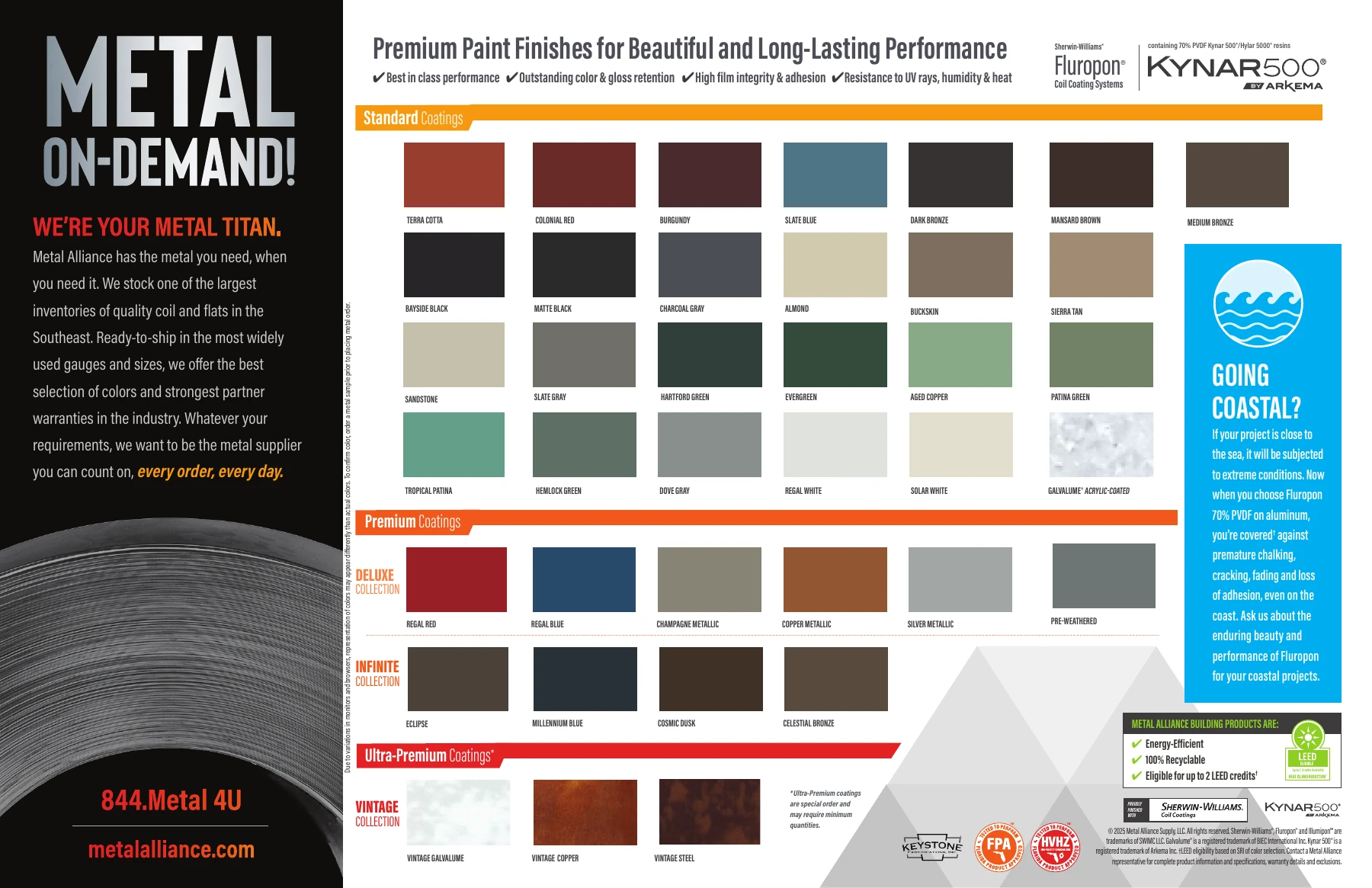
Whites, grays, bronzes, blues and specialty finishes can give the same panel a very different look. These are the supplier's own charts, so you can browse the choices and then narrow them down with a physical sample.
Fluropon 70% PVDF color guide
Standard colors, Deluxe, Infinite and Vintage collections. This is the guide marked revision 7/25, linked by Metal Alliance when checked on October 17, 2026.
Also see the WeatherXL SMP color chart
A separate finish system with its own palette. Metal Alliance still links this guide, marked revision 09/21. Confirm that the selected coating and color are available for your panel and metal.
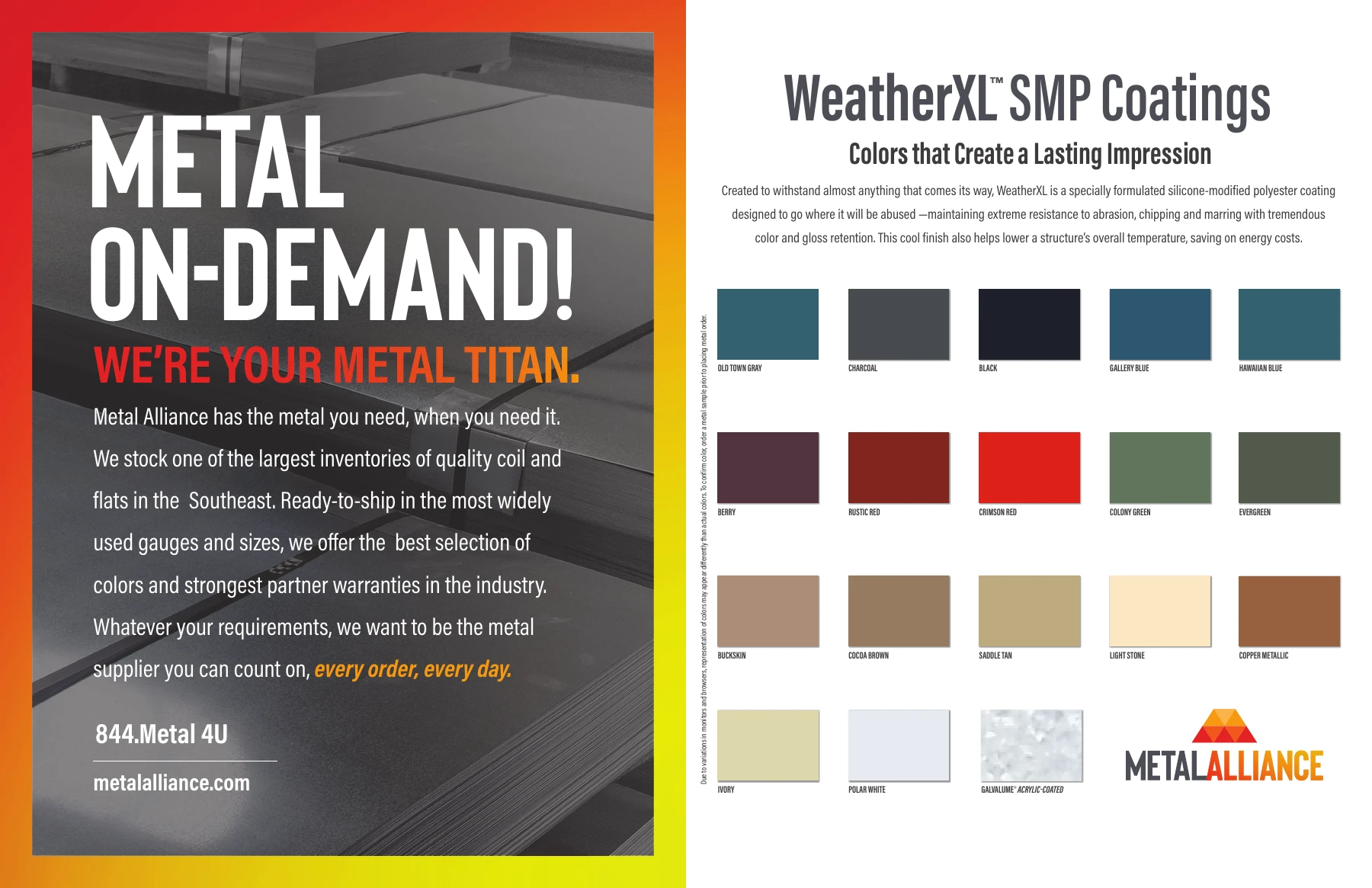
Charts © Metal Alliance. Screen colors are approximate. The PVDF guide notes that some colors may be supplied with an Illumipon FEVE coating, and some finishes require special orders or minimum quantities. Confirm the exact finish and availability before ordering.
Use our metal roof color browser to start a shortlist, or request metal color samples. The charts above are the supplier references for this article; we will confirm your final selection for the project.
Bring your favorite colors to the estimate
We can compare your shortlist with the panel profile and finish suited to your roof.
Get My Free Roof EstimateWhat quality means beyond the color
The value of a named metal source is that you can look beyond a color swatch and ask what you are buying. Metal Alliance publishes material, coating and panel information that helps make those choices specific.
The metal itself
Galvalume steel and aluminum are among Metal Alliance's offerings. The metal type and thickness need to suit the roof and its environment. “Metal roofing” alone is not a complete material specification.
A specified finish
Metal Alliance offers Fluropon 70% PVDF for UV resistance and color retention, and WeatherXL SMP for resistance to abrasion and scratching (opens in a new tab). Confirm the finish on your order and review its written warranty, including any coastal limitations.
The complete panel system
A panel name or rib height alone does not establish performance. Panel width, material, clips or fasteners, deck and installation details must work together within the applicable approval for the roof.
Fabrication and installation
Accurately formed panels, compatible trim and careful flashing all matter. The supplier, fabricator and installer each contribute to the finished roof.
For more detail on comparing the paperwork, see our guide to checking a roofing product's NOA and Florida approval. A finish warranty and a warranty covering installation or roof leaks have different scopes.
Our Florida metal fabricators and job-site delivery

We usually work with Metal Ops (opens in a new tab), and we also use Dynamic Metals (opens in a new tab) and Extreme Metal Fabricators (opens in a new tab) on some projects. These Florida fabricators make the metal roofing panels and trim for us and deliver them directly to the job site, ready for our crew to install.
Metal Alliance supplies the metal, our fabricators shape it into the panels and trim, and M&M installs the roof. The fabricator's product name may differ from the Metal Alliance profile name shown above. Your written scope should identify the selected fabricator, panel, metal and finish.
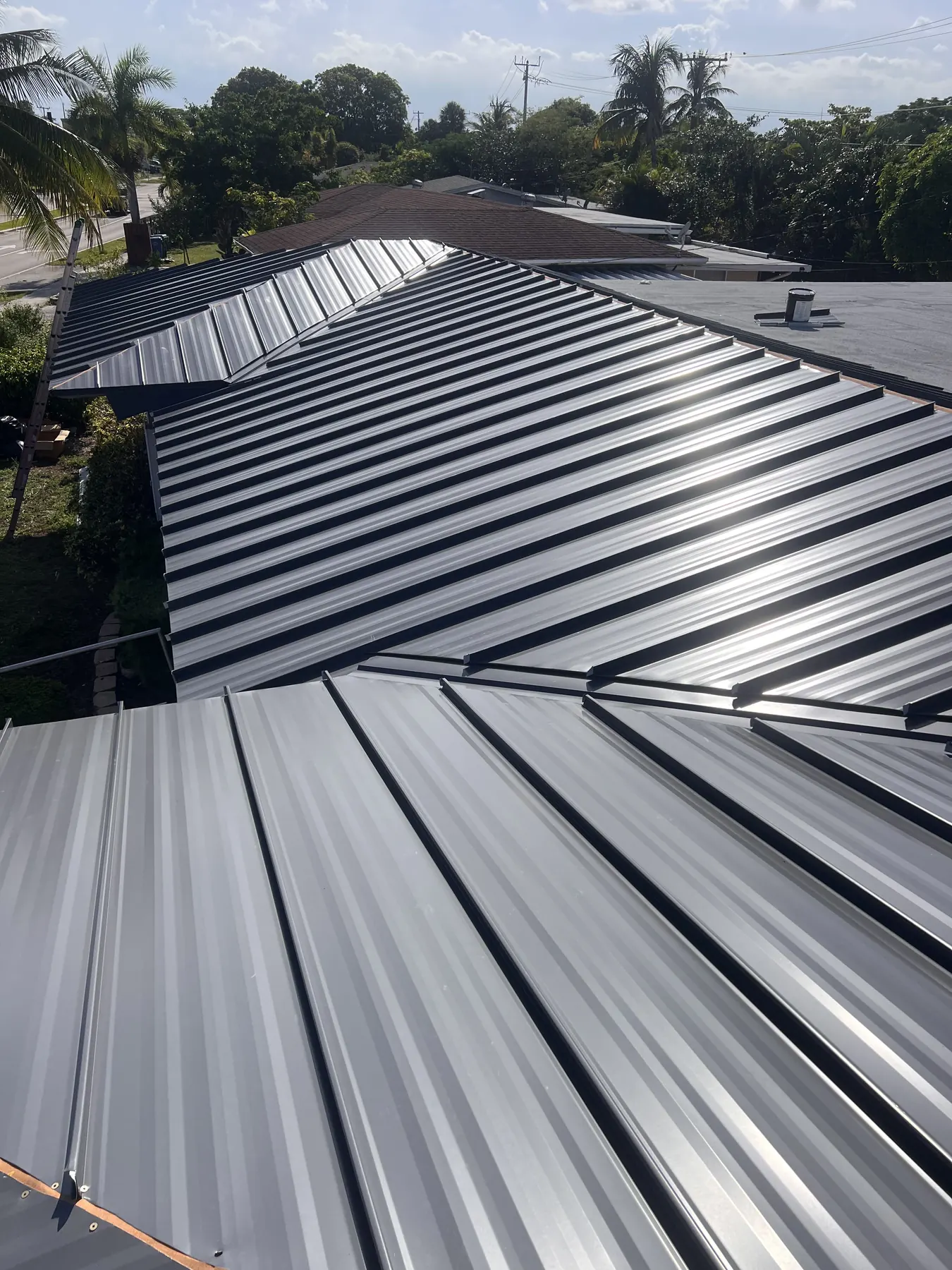
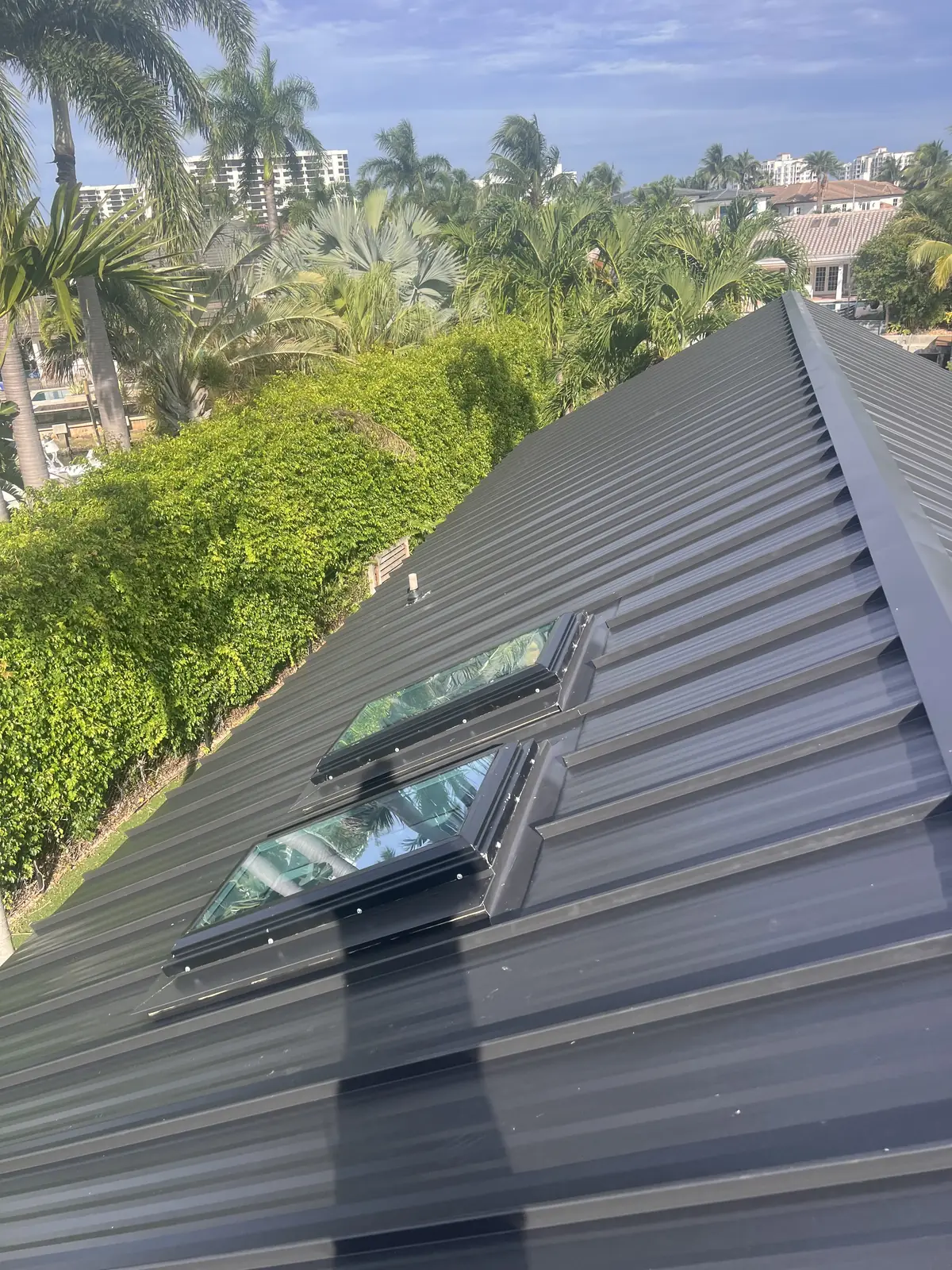
These photos from M&M's project gallery show dark standing-seam panels, a roof valley and skylight flashing. Explore the gallery for more metal roof colors, layouts and installation details.
Frequently asked questions
Is Metal Alliance M&M Roofing's metal supplier?
Yes. We use Metal Alliance as a source of metal for our metal roofing work and work with Florida fabricators for the finished panels and trim. The specific material, panel and fabricator should be identified for your project.
Which metal panel profiles does M&M usually use?
Our usual profiles are 1.5-inch mechanically seamed standing seam, 1-inch nail strip standing seam, and 5V Crimp exposed-fastener metal. Metal Alliance's corresponding published profile names are 150MSAllSeam, 100SLAllSeam and 50AllV. Your fabricator may use its own product name and approval.
Are 5V Crimp and exposed-fastener metal the same thing?
5V Crimp is one type of exposed-fastener metal roof panel. So a 5V roof is an exposed-fastener roof, but other exposed-fastener profiles also exist. In this article, 5V Crimp and 5V exposed fastener describe the same profile category.
Are 5V Crimp panels more wind-resistant than standing seam?
They can be, but it depends on the roof system. Screw and clip spacing can affect how well the panels resist being lifted by wind. The panels, fasteners and roof deck all need to match the system's approved installation requirements.
Does clip or screw spacing affect a metal roof's wind rating?
Yes. The mechanical-panel and 5V approvals shown here list different allowable uplift pressures for different attachment spacings. The selected panel width, metal thickness, seam, clips or screws, and roof deck must match the approval. These are pressures in pounds per square foot, not universal mph ratings. The nail-strip example keeps its screw spacing fixed and shows how the specified seam-sealant condition changes its listed pressure.
Can I choose a roof color from the chart?
The charts are a good starting point. Confirm the chosen color on a physical metal sample before ordering, then confirm the coating, metal type, availability and any premium or special-order cost for the exact panel. Colors shown on a phone or monitor can differ from the finished metal.
Which local metal fabricators does M&M use?
We usually work with Metal Ops, and we also use Dynamic Metals and Extreme Metal Fabricators on some projects. These Florida fabricators make the metal roofing panels and trim for us and deliver them directly to the job site for our crew to install. The fabricator and panel system are selected for each roof.
Sources checked October 17, 2026
- Metal Alliance — metal coil and sheet supplier (opens in a new tab)Supplier role, Palm City headquarters and available metal types.
- Metal Alliance — 150MSAllSeam (opens in a new tab)1.5-inch mechanically seamed standing seam profile.
- Metal Alliance — 100SLAllSeam (opens in a new tab)1-inch snap-lock nail strip profile; the specification identifies no clips or mechanical seaming.
- Metal Alliance — 50AllV (opens in a new tab)5V Crimp is the exposed-fastener profile, with a half-inch rib.
- Metal Alliance — current color-chart downloads (opens in a new tab)Manufacturer color guides and physical-sample guidance.
- Metal Alliance — Fluropon 70% PVDF color guide (7/25) (opens in a new tab)Color collections, material/finish availability and special-order notes. Includes a note about possible Illumipon FEVE substitutions.
- Metal Alliance — WeatherXL SMP color guide (09/21) (opens in a new tab)Separate SMP palette, still linked from the supplier's color page when checked.
- Metal Alliance — protective metal coatings (opens in a new tab)See the supplier's coating resources for the finish specified on your order.
- Metal Ops — Florida metal panel fabricator (opens in a new tab)Stuart manufacturer; lists Metal Alliance among its metal sources.
- Dynamic Metals — residential roofing products (opens in a new tab)Standing seam, nailstrip and 5V products; Florida fabricator.
- Extreme Metal Fabricators — metal roof systems (opens in a new tab)Florida fabricator offering standing seam and exposed-fastener panel systems.
- Florida Building Commission — FL31653.2-R5 (opens in a new tab)Official approval record. The graph links directly to the corresponding installation report and identifies its assembly and allowable-pressure table.
- Florida Building Commission — FL29523.3-R4 (opens in a new tab)Official approval record. The graph links directly to the corresponding installation report and identifies its assembly and allowable-pressure table.
- Florida Building Commission — FL31652.1-R4 (opens in a new tab)Official approval record. The graph links directly to the corresponding installation report and identifies its assembly and allowable-pressure table.
Product approvals are revised and renewed. Confirm the current document for the exact product, plant and roof system when your permit is prepared. This guide is general information for homeowners, not an engineering or permit determination for a specific roof.
Let's choose the right metal roof for your home
Start with a free estimate. We can walk through the panel profile, metal, finish and color together.
Call (754) 714-8445