
Florida homeowner guide · Permits & responsibility
Can You Re-Roof Your Own House in Florida?
Sometimes, if you qualify. Florida’s owner-builder exemption can allow a homeowner to act as their own contractor for a home they own and use. You still need the required reroof permit, inspections and code-compliant work. You also take on supervision and other legal and financial responsibilities. Confirm eligibility for your property and roof with the building department before planning the work.
By M&M Roofing and Construction Corp · Sources checked
Compare with a professional reroof
Get a free M&M estimate and a written scope so you can compare the work, materials and responsibilities.
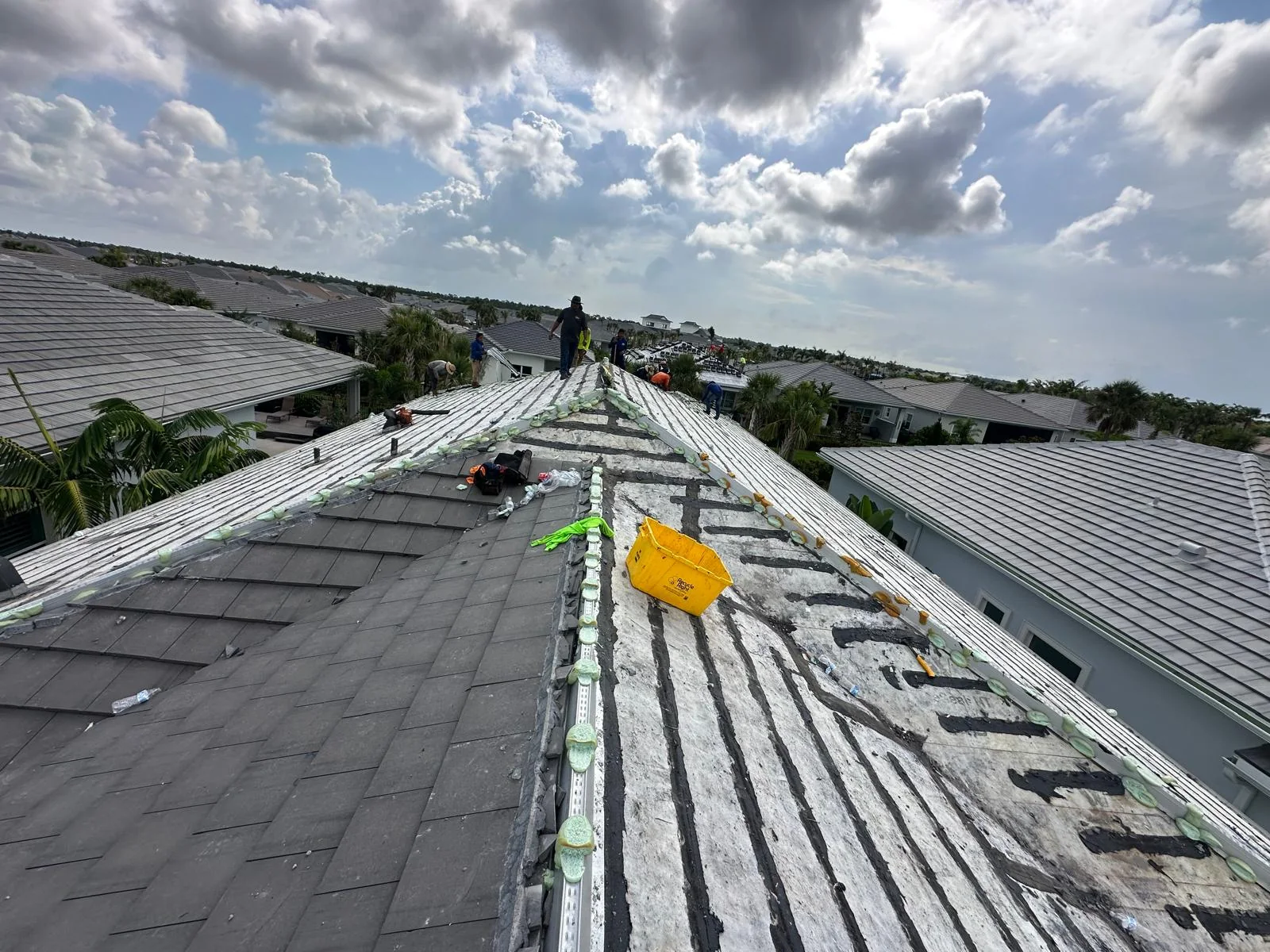
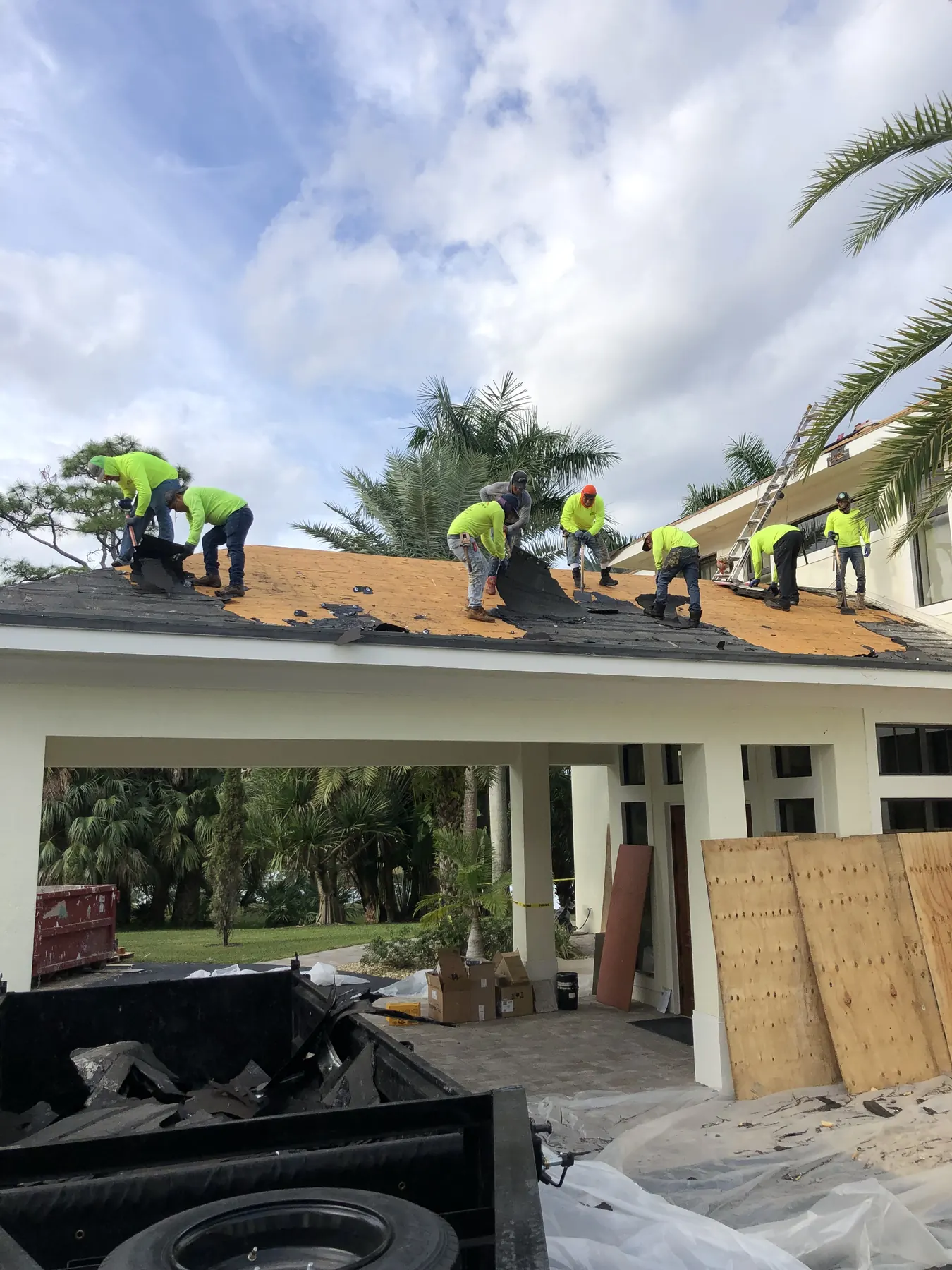
Actual M&M project photos. See the West Palm Beach reroof pictured on the left or browse the project gallery.
What is an owner-builder permit in Florida?
The term is owner-builder. It means a qualifying property owner acts as the contractor under an exemption from Florida’s contractor-licensing requirements. It does not give you a roofing license or remove the permit and building-code requirements.
For an ordinary residential project, Florida Statute §489.103(7) (opens in a new tab) allows qualifying owners to improve a one- or two-family residence for their own use or occupancy. This is not a route for work intended for sale or lease. Selling, leasing or offering the property within one year after completion creates a statutory presumption that the work was undertaken for that purpose.
You must directly supervise onsite work that is not performed by properly licensed contractors. Signing the application while an unlicensed contractor runs the job does not satisfy that responsibility. The statute has separate provisions for certain emergency roof work and substantially completed permits; those are not blanket exceptions for every property.
Do you still need a permit to reroof your own house?

Confirm the permit requirements before planning the work.
AI-generated illustration
Yes. A full reroof still needs the required roofing permit and inspections. Before removing the existing roof, ask the building department serving your address whether your ownership, occupancy and proposed roof qualify for its owner-builder process.
Expect an owner-builder disclosure, applicant verification and roofing documents for review. Ask which product approvals, roof details and inspections are needed, and when each inspection must happen. Include permit closeout in your plan. Our Broward County roof-replacement timeline explains why permitting, material readiness and inspection scheduling belong in the overall schedule.
Can you pull the permit and hire a roofing crew?
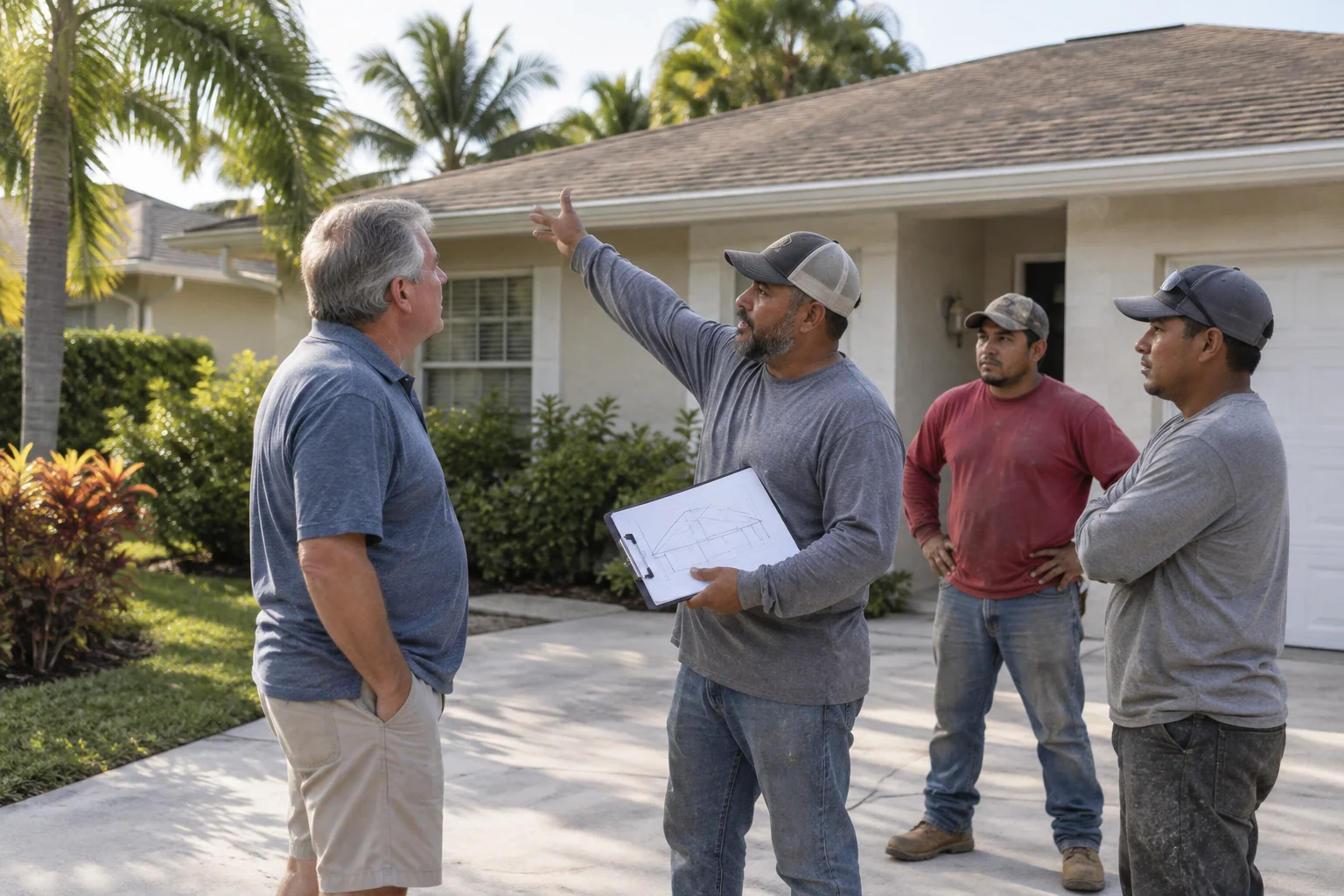
Be clear about who employs the crew and supervises the job.
AI-generated illustration
An owner-builder permit is not a way to let an unlicensed roofing business work under your name. Florida’s exemption does not excuse someone you hire from licensing requirements when they act as a contractor. You also cannot put an unlicensed person in charge as your contractor or supervisor.
Hiring a properly licensed contractor
Verify that the contractor is licensed for the roofing work. Ask the building department how the permit should be issued when you hire that contractor, and put permit and inspection responsibilities in writing.
Hiring people directly as employees
The owner-builder disclosure says unlicensed workers must be your employees under your direct supervision. It identifies payroll withholding, Social Security and workers’ compensation responsibilities. Paying a crew cash does not make those duties disappear.
This does not mean every worker employed by a licensed roofing contractor needs an individual contractor’s license. The contracting business, its qualifier, the employer and the actual crew arrangements are what you need to verify. Our Florida roofer license and insurance checklist shows how to check those records.
Source: §489.103(7)(b) and the owner-builder disclosure, items 5–9 (opens in a new tab).
Who is responsible if someone gets hurt?
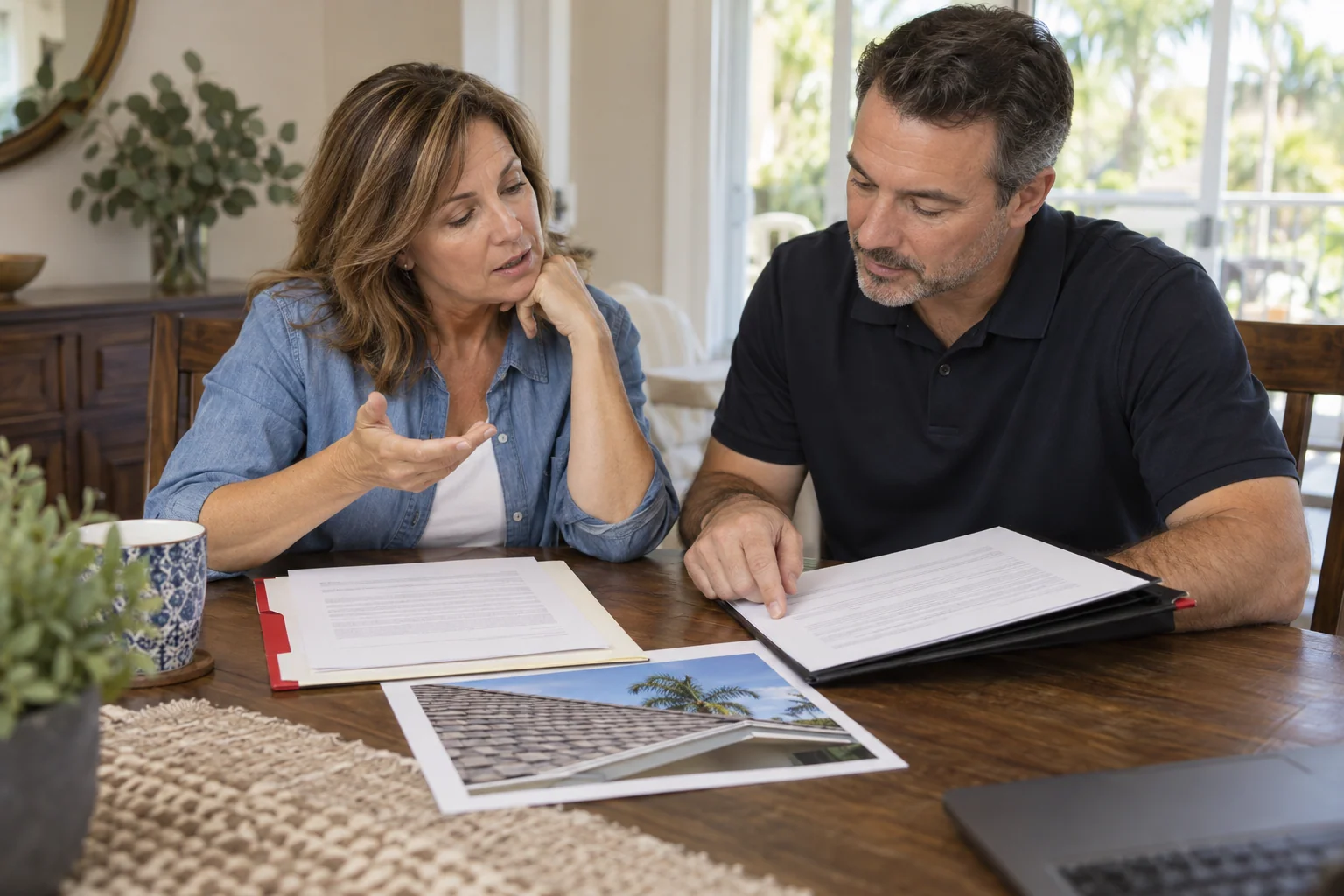
Review the coverage for your proposed work and hiring arrangements.
AI-generated illustration
Acting as an owner-builder can expose you to injury claims and employer obligations as well as responsibility for the construction. Florida’s required disclosure specifically warns that your homeowners insurance may not cover injuries to people working on your property. The outcome depends on the facts and policy; do not assume your normal home coverage is enough.
Before hiring help, describe the job and employment arrangements to your insurance agent. General liability and workers’ compensation serve different purposes. Florida construction employers generally need workers’ compensation with one or more employees, subject to applicable exemptions. Read the Florida Division of Workers’ Compensation requirements (opens in a new tab) and confirm how they apply before work begins.
The same care applies when hiring a company. A license alone is not proof of current coverage. Verify current general liability coverage and either workers’ compensation coverage or applicable workers’ compensation exemption records. An individual’s exemption is not coverage for an entire crew. Florida DFS’s homeowner contractor-fraud guide (opens in a new tab) recommends checking these records.
What if the owner-builder rules are violated?
If the exemption’s requirements are violated, §489.103(7)(c) (opens in a new tab) directs the permitting agency to withhold final approval, revoke the permit or pursue an action or remedy for unlicensed activity. Fines or other consequences depend on the violation and applicable law; there is no single penalty that fits every case. An issued permit does not make an unlicensed contractor arrangement lawful.
Owner-builder vs. hiring a roofing contractor
A contractor’s price covers more than materials and installation labor. You are also comparing who organizes the work, manages the crew and takes responsibility for the agreed roofing scope.
Permit and inspections
As owner-builder
You apply through the owner-builder process, supply the required documents and remain responsible for permit compliance and closeout.
With a roofing contractor
The contractor handles the roofing permit and inspection process within the agreed scope. Confirm this in the contract.
Who runs the work
As owner-builder
You directly supervise onsite work not performed by properly licensed contractors. You cannot put an unlicensed contractor in charge.
With a roofing contractor
The properly licensed contractor manages its roofing work and crew. Check the business and qualifier before hiring.
Hiring labor
As owner-builder
Unlicensed workers must be your genuine, supervised employees, with applicable payroll, tax and workers’ compensation obligations.
With a roofing contractor
The contractor manages its employees and subcontracting arrangements. Verify who employs the people on your roof and how they are covered.
Insurance and risk
As owner-builder
You take on contractor and potentially employer responsibilities. Your homeowners policy may not cover the resulting exposures.
With a roofing contractor
Verify general liability coverage and either workers’ compensation coverage or applicable workers’ compensation exemptions. Hiring a contractor does not remove every owner responsibility.
For many homeowners, hiring a properly licensed and insured roofing contractor is the more practical choice: the contractor brings experience with the roof system, coordinates the work and manages responsibilities you would otherwise take on yourself. It does not remove every owner obligation or guarantee that every possible loss is insured.
Compare complete written scopes before deciding what you would save. Include tear-off, disposal, deck repairs, roofing materials, permits, inspections and the insurance or employment costs of your proposed arrangement. Use our roof-replacement cost guide to frame the comparison, then request a property-specific proposal for professional roof replacement.
Before deciding, get these answers
- Building department: Does my property and proposed roofing system qualify? Which documents and inspections are required?
- Crew arrangements: Am I doing the work, hiring a licensed contractor or becoming an employer? Who is legally supervising it?
- Insurance: What covers injuries and damage under this specific arrangement, and what is excluded?
- Full project scope: Who handles weather protection, unexpected deck repairs, inspection corrections and final closeout?
This guide addresses an ordinary residential reroof and provides general information, not a determination that a specific property qualifies. Confirm your application with the permitting authority and your coverage with your insurer. Get legal or tax advice for ownership, hiring or sale-and-lease questions specific to your situation.
Official sources checked October 15, 2026: Florida Statute §489.103 (opens in a new tab), Miramar roofing permit package (opens in a new tab), Homestead roofing checklist (opens in a new tab), Florida workers’ compensation requirements (opens in a new tab) and Florida DFS homeowner guidance (opens in a new tab).
Florida owner-builder roofing FAQs
Can I pull my own roofing permit in Florida?
Sometimes. A qualifying owner can use the owner-builder exemption, but the property, intended use and proposed roofing work must qualify. Ask the building department that serves your address about its roofing application, disclosure and verification requirements before starting.
Do I always have to hire a licensed roofer with an owner-builder permit?
No. Florida’s exemption can allow qualifying owners to do work themselves and use genuine employees under the required supervision. It does not allow an unlicensed independent contractor to run the job. If you hire a contractor, verify the appropriate license and ask the building department how the roofing permit must be issued.
Can I hire an unlicensed roofing crew under my permit?
You cannot use your owner-builder permit to let an unlicensed roofing business or supervisor act as the contractor. Unlicensed people working directly for you must meet the employee and supervision conditions in the owner-builder disclosure, with applicable tax and workers’ compensation duties. Paying a crew cash does not remove those obligations.
Does every worker on a roofing crew need a contractor’s license?
No. Employees may work for a properly licensed contractor without each holding a separate contractor’s license. Verify the contracting business and qualifier, who employs the crew, and the relevant coverage or exemption records.
Will homeowners insurance cover someone injured on my DIY roof project?
Do not assume it will. Florida’s owner-builder disclosure warns that homeowners insurance may not cover injuries to people working on your property. Explain the planned work and hiring arrangements to your insurer before starting. General liability and workers’ compensation address different risks.
Can I sell or rent the home after an owner-builder reroof?
The ordinary residential exemption is for your own use or occupancy, not work intended for sale or lease. State law creates a presumption of sale-or-lease intent if the property is sold, leased or offered within one year after completion. Check the local disclosure and get advice before relying on a future sale or rental date.
Does storm damage automatically let me replace the roof myself?
No. Florida has a separate exemption for certain storm-damaged wood-shake and asphalt or fiberglass-shingle roofs under specified emergency conditions. It is not blanket permission to reroof any property or skip permits. Ask your building department which provision, if any, applies to your project.
Why hire a roofing contractor if I qualify as an owner-builder?
A properly licensed and insured contractor brings roofing experience and manages the agreed work, crew, permitting and inspections. That can reduce the responsibilities you would otherwise take on as the contractor or employer. Verify the license, insurance and written scope rather than relying on a promise that everything is covered.
Get a free estimate for your reroof
Tell M&M about your home, roof type and plans. Ask about the written scope, permit process, crew and insurance documents when reviewing your proposal.
Call (754) 714-8445