
CertainTeed GMS Under Tile Roofs: Hot-Mop Approach
How M&M Roofing uses CertainTeed Flintlastic GMS over 30-pound felt beneath tile, and why the layers below your roof tiles deserve a closer look.

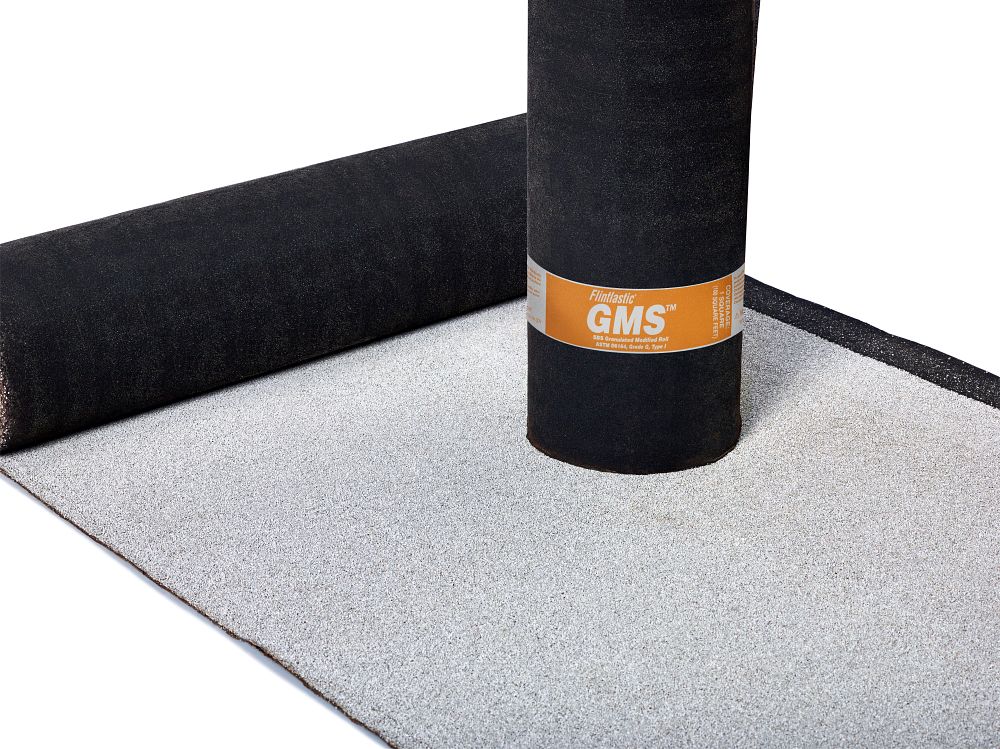
Flintlastic® GMS
SBS modified bitumen · Hot-asphalt application
By M&M Roofing and Construction Corp · Florida Certified Roofing Contractor CCC1332459 · Published · Updated
Plan your tile roof replacement
Ask us about the layers beneath your tile and what your written roof estimate should include.
The short answer
At M&M Roofing, we consider CertainTeed Flintlastic GMS hot-mopped over an approved, mechanically attached 30-pound felt base our most premium underlayment system for tile roofs. Although GMS is also used in low-slope roofing, CertainTeed documents tile-underlayment applications too. The felt, deck, fastening and tile attachment must follow the selected approved roof assembly.
M&M field photos · Before the tile goes on
A closer look at our hot-mop work
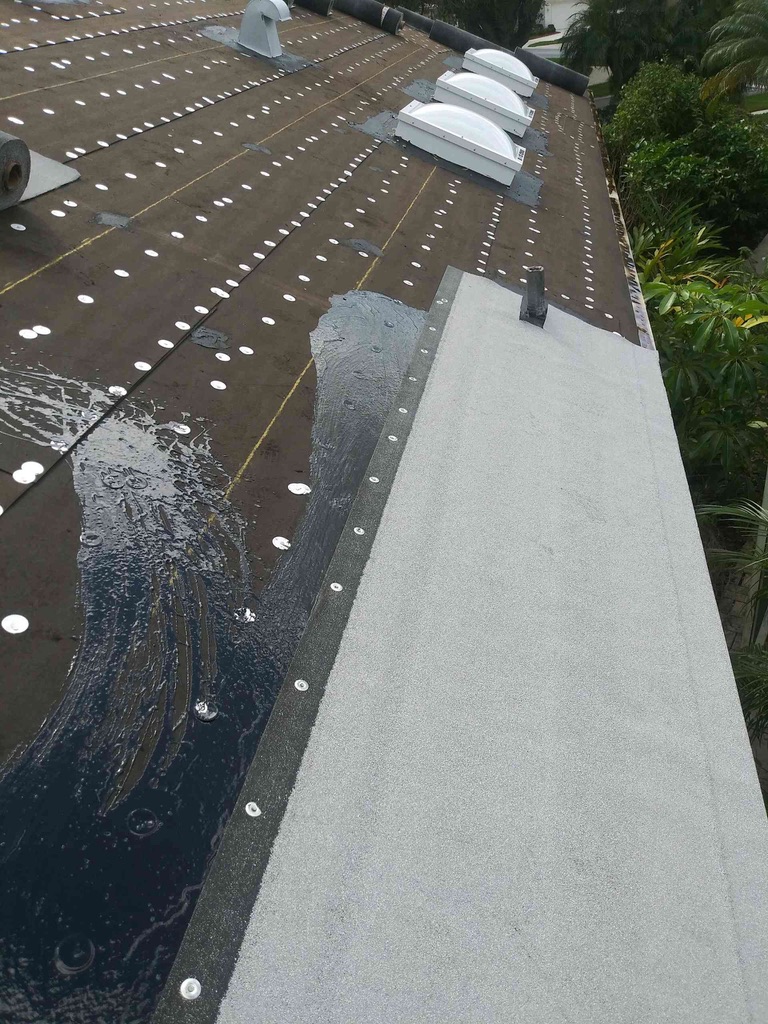
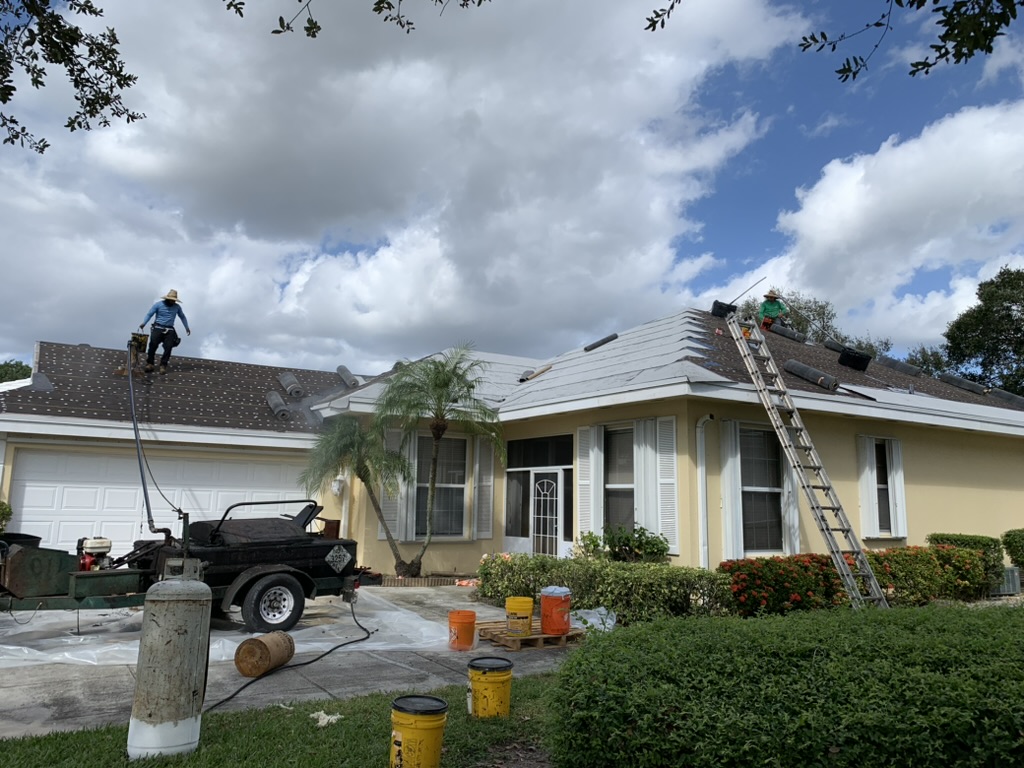
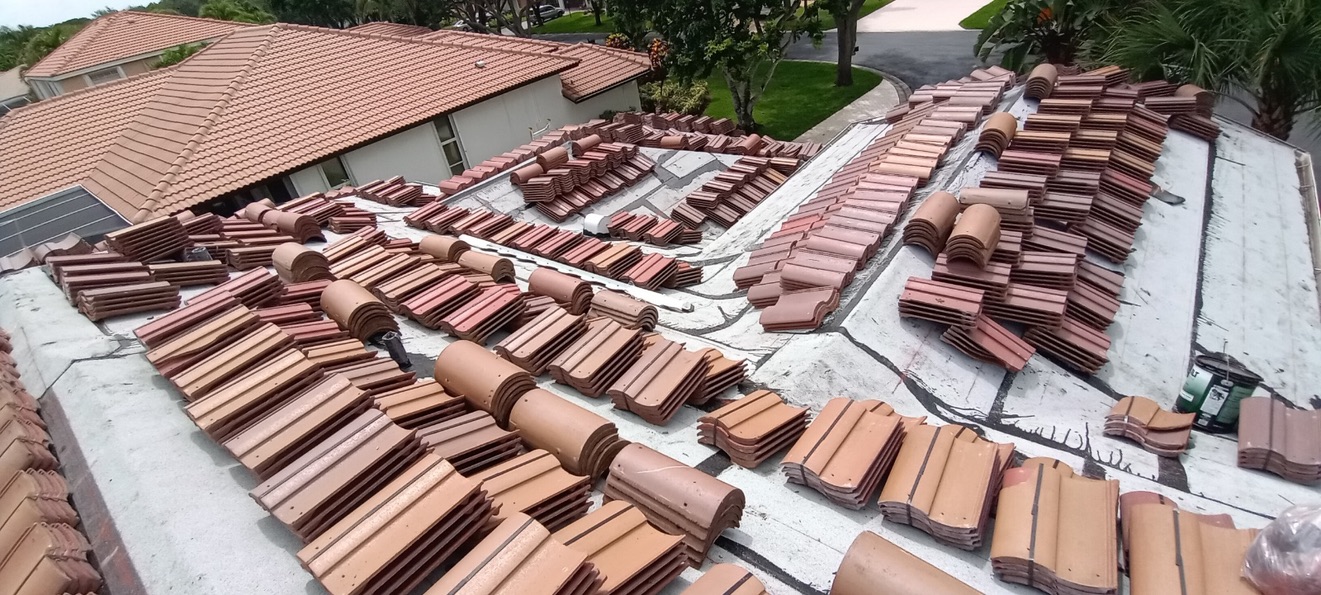
The layers underneath the tile are easier to understand when you can see the work in progress. These field photos show the attached felt, asphalt and granulated membrane discussed in this guide.
The bond below your roof tiles
In the system we use, hot asphalt bonds the GMS membrane to the attached felt base. Once the tile goes on, these layers are hidden—but they remain an important part of the roof.
A look beneath the finished roof
The tile you see. The layers underneath.
A tile roof is more than its profile and color. Here is where the felt, hot asphalt and GMS fit into the system we are discussing.
Roof tile
With its approved attachment
Flintlastic GMS
The modified-bitumen membrane
Hot asphalt
The bond between GMS and the felt
Approved #30 felt
Mechanically attached base layer
Plywood roof deck
The specified structural substrate
Why we talk about what is under the tile
The tile is the visible roof covering. The underlayment beneath it helps protect the deck when water gets past that covering. That is why we look at the roof as a complete assembly, from the plywood to the ridge.
Conceptual diagram, not an installation detail. Separators, flashing, laps and fastening follow the chosen assembly; the Miami-Dade examples below include red rosin paper beneath the felt.
What is CertainTeed Flintlastic GMS?
Flintlastic GMS is a granule-surfaced, polyester-reinforced SBS modified-bitumen membrane made by CertainTeed. In everyday terms, it is a reinforced sheet of modified asphalt that becomes part of the roof’s waterproofing system.
You may first encounter GMS in flat-roof or low-slope roofing literature, where it serves as a cap sheet. CertainTeed also includes it in its tile-underlayment brochure (opens in a new tab). Under tile, the sheet sits below the finished roof covering rather than remaining the exposed roof surface.
That distinction matters when reading about the product. Our hot-mop flat-roof guide discusses insulation and drainage for a different type of roof. This article focuses on the felt-and-GMS build-up beneath tile.
How M&M uses GMS over 30-pound felt
For this tile-roof approach, we use a 30-pound felt that meets the requirements of the selected approved assembly. We mechanically attach that base and hot-mop the GMS membrane over it. The hot asphalt creates the bond between those roofing layers. The felt provides the attached base beneath the membrane; it is not the finished tile-roof waterproofing system by itself.
Before those layers go down, the deck condition and the roof details need attention. Valleys, roof-to-wall connections, pipe penetrations and edges all have to work with the underlayment. The membrane across the open roof area is only one part of keeping water out.
Once the underlayment and details are ready, the tile is installed using the attachment method specified for the complete roof. Our tile roofing service guide explains how those choices fit into a full replacement.
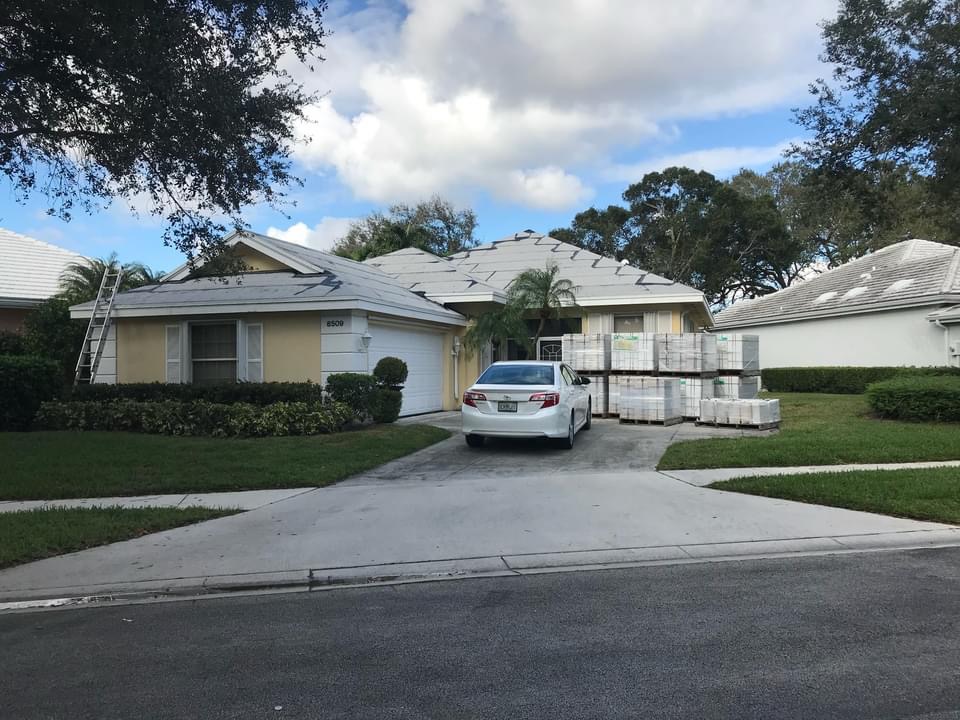
From the underlayment stage to tile staging
Want to know which layers belong in your tile-roof estimate?
Get My Free Tile Roof EstimateWhat the product approvals say about #30 felt
There is documented support for GMS hot-mopped over an approved felt base beneath tile. The important part is choosing the actual assembly, not relying on the product names alone.
Florida Product Approval
FL11288-R26
Table 4B lists tile systems UDL-13 and UDL-25 using FBC Approved ASTM D226 Type II felt beneath hot-asphalt-applied GMS. Each has a defined plywood substrate, fastening pattern and membrane back-nailing.
Miami-Dade County, Florida
NOA 25-0829.01
Systems E(6) and E(7) name G.A.P. #30 felt, a red rosin separator and Type IV asphalt, with different attachment details. Those are specific tile-underlayment assemblies.
Approved Nov. 13, 2025 · Expires Nov. 24, 2030
“30-pound felt” is useful jobsite shorthand, but the written specification should identify the felt’s manufacturer, standard and approval. Do not combine the base sheet from one system with the fastening schedule or pressure rating from another.
One detail shows why the full document matters: the NOA’s generic-felt System E(4) excludes tile, while E(6) and E(7) allow it. Our guide to checking a roofing NOA and Florida approval walks through what to look for.
The same GMS membrane, different assembly pressures
A wind-pressure figure belongs to an installed assembly. These two Florida approval examples use the same membrane and felt category, but different base-sheet fastening patterns.
UDL-13 · Listed underlayment assembly
−52.5 psf
UDL-25 · Listed underlayment assembly
−157.5 psf
Bars show suction magnitude on a 0–157.5 psf scale. The minus sign means upward suction. These are selected assembly allowances, not wind speeds, product-wide ratings or ratings assigned to an M&M project.
What changes between these two assemblies?
Both specify 19/32-category APA 40/20 Exposure 1 PS1 plywood, one layer of approved ASTM D226 Type II felt, and 12-gauge annular ring-shank nails with 32-gauge, 1⅝-inch tin caps. GMS is hot-asphalt applied and back-nailed at a maximum 12 inches on center.
UDL-13: felt fastening at 6 inches along minimum 4-inch laps, plus 9 inches in three staggered center rows. UDL-25: 4 inches along the laps and in four staggered center rows. Nail corrosion resistance, penetration and all other report conditions still apply.
Use the complete report for roof zones and compatibility. These summaries are not an installation specification.
Source: FL11288-R26, Table 4B, pages 13 and 18 (opens in a new tab)
The tile and its attachment still need their own design check. A stronger underlayment attachment does not automatically give the entire tile roof that pressure rating.
GMS thickness and material data
CertainTeed’s December 2024 data sheet reports the values below as nominal production results confirmed by independent laboratory testing. They describe the sheet material, separately from the assembly pressures above.
Nominal thickness
145 mils
3.7 mm · ASTM D5147
Vapor permeance
Not reported
No numeric perm value in the reviewed GMS technical sheet. Missing data is not zero.
Tensile strength
Nominal production values · ASTM D5147
Chart scale: 0–100 lb/in
Tear strength
Nominal production values · ASTM D5147
Chart scale: 0–150 lb
Tensile and tear: ASTM D5147 at 73.4 ± 3.6°F. MD is along the roll; XD is across it. Values are nominal, not minimums. The two charts have different units and scales; they do not rank products. Vapor passage is a design consideration, not a universal quality score. See the technical data sheet, page 2. (opens in a new tab)
How does this compare with a self-adhered tile underlayment?

Another system M&M uses: Polystick TU MAX
M&M also uses self-adhered tile underlayments. Our Polystick TU MAX guide explains that approach. With GMS in the system discussed here, hot asphalt supplies the bond above the felt. With a self-adhered sheet, the bond comes from the membrane’s adhesive backing.
For a real example of the alternative approach, our Parkland tile-roof project used #30 felt beneath TU MAX. That project illustrates a different underlayment system; it is not a GMS installation.
When comparing roof estimates, ask for the actual membrane, base layer, flashing scope and tile attachment. The useful comparison is what each complete roof system includes and whether it suits your home.
A good estimate explains what you won’t see later.
Let’s review the deck, underlayment and tile choices before the new roof covers them up.
Discuss My Tile Roof With M&MFrequently asked questions
Can CertainTeed Flintlastic GMS be used under a tile roof?
Yes. CertainTeed includes GMS in its tile-underlayment literature, and Florida Product Approval FL11288-R26 lists GMS tile assemblies. Miami-Dade NOA 25-0829.01 also includes tile applications in specific systems. The selected assembly must match the roof deck, felt, attachment and tile installation.
Does M&M hot-mop GMS over 30-pound felt?
Yes. M&M uses a 30-pound felt that meets the selected assembly’s requirements, rather than specifying one felt brand for every job. The felt is the mechanically attached base; hot asphalt bonds the GMS membrane above it. The written roof specification identifies the actual felt and approved assembly.
Will any roll labeled 30-pound felt work?
The label alone is not enough. The Florida approval's UDL-13 and UDL-25 assemblies specify FBC Approved ASTM D226 Type II felt. The Miami-Dade NOA's E(6) and E(7) assemblies instead name G.A.P. #30 Asphalt Saturated Felt. Follow one complete applicable assembly, including its deck and fastening requirements.
Is GMS the same as peel-and-stick underlayment?
No. In the method discussed here, GMS is bonded in hot asphalt. A self-adhered underlayment uses its own adhesive backing. Flintlastic is a family of different products, so the full product name matters when comparing estimates.
Can roof tile be installed with foam adhesive over GMS?
Approved tile-adhesive combinations are listed in the GMS approvals. The underlayment, adhesive and tile approval all need to agree. Adhesive type, placement and quantity are part of the tile system's design; a membrane's granulated surface alone does not establish compatibility.
Does 145-mil thickness tell me how long the roof will last?
It tells you the manufacturer's nominal membrane thickness, not the lifespan of the finished roof. Deck condition, flashing, installation, drainage and maintenance also matter. A tile-roof estimate should explain the complete system and its applicable warranties rather than turn thickness into a guaranteed number of years.
Sources checked November 11, 2026
- CertainTeed Flintlastic GMS product information (opens in a new tab)Product identity, construction and application category.
- CertainTeed Flintlastic GMS technical data sheet · December 2024 (opens in a new tab)Page 2: ASTM D5147 properties. Published results are nominal production values, not minimum guarantees.
- CertainTeed Flintlastic roofing underlayments brochure · March 2026 (opens in a new tab)Manufacturer's tile-underlayment discussion, including GMS. Use the current full approval for assembly selection.
- Florida Product Approval FL11288-R26 · evaluation report (opens in a new tab)NER-CTR-002.R3, revised December 16, 2025. Tile-cover limitations and Table 4B; UDL-13 on page 13 and UDL-25 on page 18.
- Miami-Dade County, Florida NOA 25-0829.01 · expires November 24, 2030 (opens in a new tab)Approved November 13, 2025. Tile examples E(6) and E(7) on pages 9–10; covering compatibility and general limitations on pages 11–13. Read the complete 13-page document.
These documents describe product and assembly options. The permit package must select a complete applicable system for the property and use the current approvals, manufacturer instructions and roof-covering requirements. The field photos show work in progress. The listed assembly pressures are approval examples, not ratings assigned to these photographed roofs.
Let’s look at your complete tile roof system
From the deck and waterproofing to tile and flashing, get a written estimate that explains what goes into your roof.
Call (754) 714-8445