
South Florida · Tile roofing
Tile Roof Repair vs. Replacement in South Florida
One leak does not always mean you need a new roof. The better decision starts with your roof's age, its repair history and the condition of the whole system.
By M&M Roofing and Construction Corp
Homeowner guide ·
Repair or Replace? Let's Look at Your Roof.
Tell us about your tile roof. We'll help you understand the problem and compare your options.
The short answer
Will another repair give you useful time?
A younger, otherwise sound tile roof with one isolated problem is often a good repair candidate. An older roof with recurring leaks deserves a replacement discussion before you pay for another patch.
How old is the roof?
Consider remaining life, not just the installation date.
How often has it leaked?
Look at where repairs happened and whether they lasted.
What is failing?
Inspect the tiles and the layers beneath them.
At M&M Roofing and Construction Corp, we help homeowners weigh tile roof repair against replacement across South Florida, including Broward County. Our starting point is simple: look at the roof's history and current condition together. Age alone cannot tell the whole story, and neither can a single leak.
01 · Age & remaining life
Start with how much roof life you can preserve
If your tile roof is about 10 years old and has one repairable problem, replacing the whole thing may be premature. When the rest of the system is in good condition, a targeted repair can protect the value of a roof that still has useful life ahead of it.
That changes as the roof gets older. In our South Florida work, we commonly see homeowners considering tile roof replacement around 24–25 years, and some roofs need replacement as early as around 20 years. Those are observations from our projects, not a statewide average or an expiration date for every roof.
A well-built, well-maintained system can perform differently from a roof with aging underlayment, recurring flashing problems or installation defects. A younger roof can also need major work if damage is widespread. The inspection should explain how much of the existing system is still worth preserving.
02 · Previous repairs
Repeated repairs are a reason to look deeper
How many times have you already paid to repair this roof? In our view, more than two previous repairs is a reason to examine the whole system before agreeing to another one. It is a practical warning sign, not a rule that the third leak means automatic replacement.
The pattern matters. A leak that returns in the same place may mean the original cause was never resolved. Leaks that keep appearing in different areas can point to broader deterioration. Repeated problems can also involve storm damage, maintenance issues or separate defects; the repair count alone does not prove poor workmanship.
Before paying for the next repair, ask:
- Is this the same leak returning, or a new problem elsewhere?
- What caused the earlier repairs to fail?
- Is the damage confined to one area?
- Is the underlayment beyond that area still serviceable?
- What useful life is this repair reasonably expected to provide?
A roof inspection and a review of your repair invoices can help answer those questions. Another patch is harder to justify when the underlying system is deteriorating in several places.
03 · The whole system
Good-looking tiles do not tell you everything
A tile roof is more than the tile you can see from the driveway. Underlayment, flashing, the attachment system and the roof deck all contribute to its performance. The tiles may still look serviceable while the layers or details underneath need attention.
Material selection, installation quality, roof design, weather exposure and maintenance help explain why two tile roofs of the same age can be in very different condition. The repair recommendation should identify the part that failed, rather than treating every tile roof leak as the same problem.
Eagle Roofing's repair-versus-replacement guidance also distinguishes localized underlayment or flashing problems from multiple or widespread leaks.
For a look at the layers involved in a replacement, see our Miramar tile reroof dry-in project. Our tile roofing services page explains the broader system and installation scope.
04 · From an M&M repair
What a tile roof repair can look like
These photos show a tile roof repair beside a chimney. Our crew opened the area down to the wood decking, found extensive rot, replaced the damaged wood with plywood and applied new peel-and-stick underlayment.
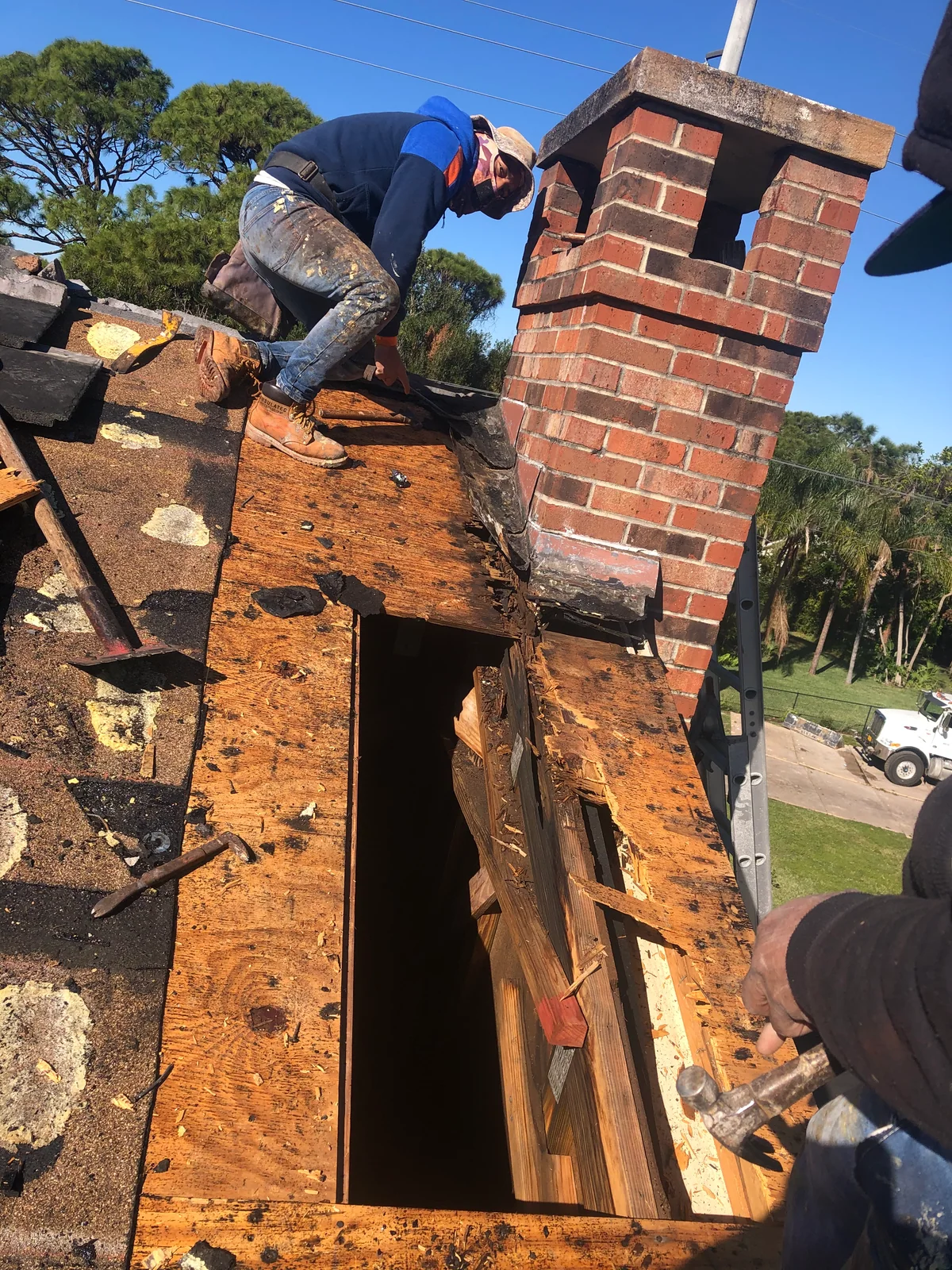
Expose the damaged decking
After opening the roof in this area, our crew found extensive rotted wood beside the chimney.
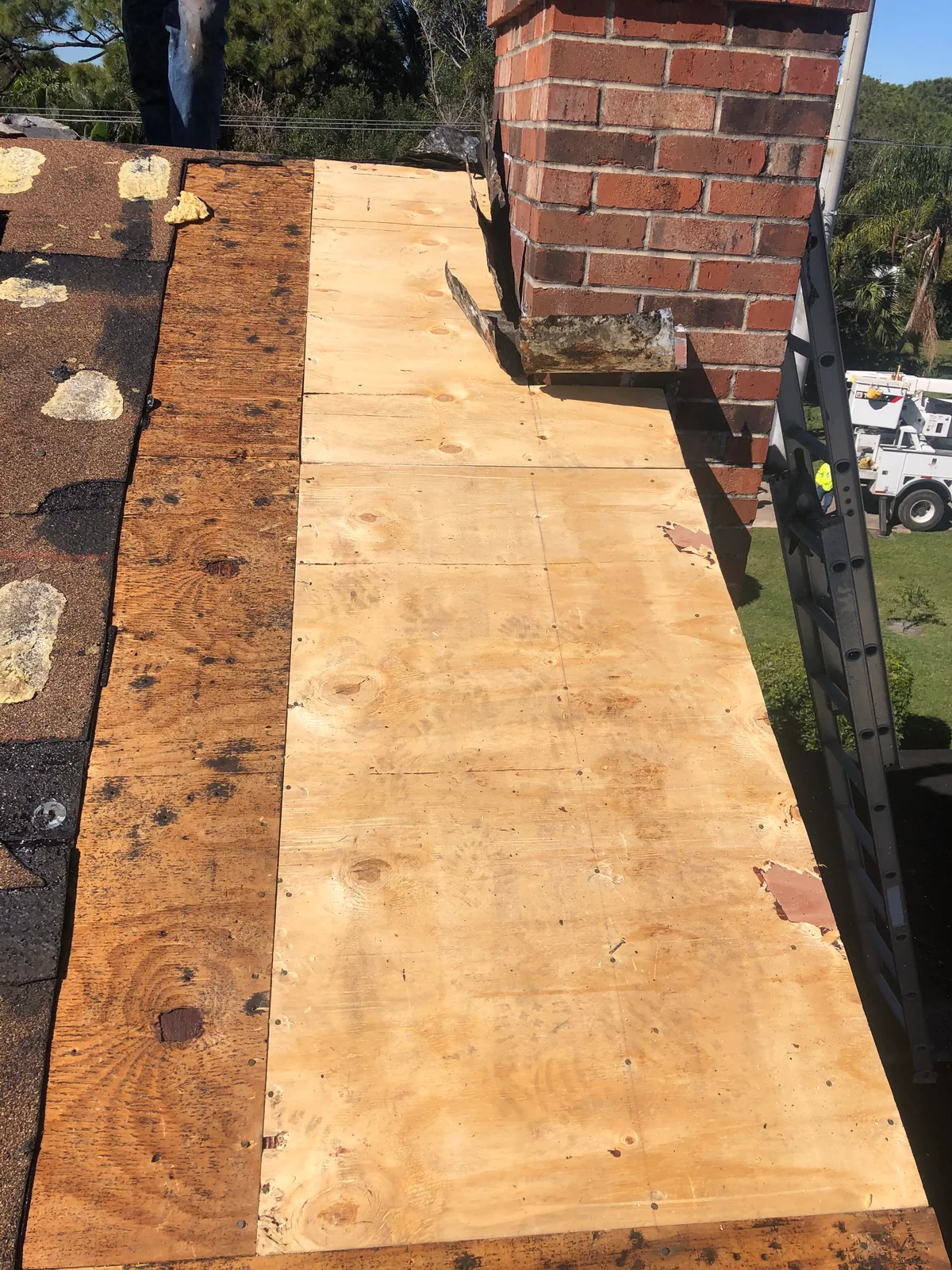
Replace the damaged wood
The damaged decking was removed and replaced with new plywood in the repair area.
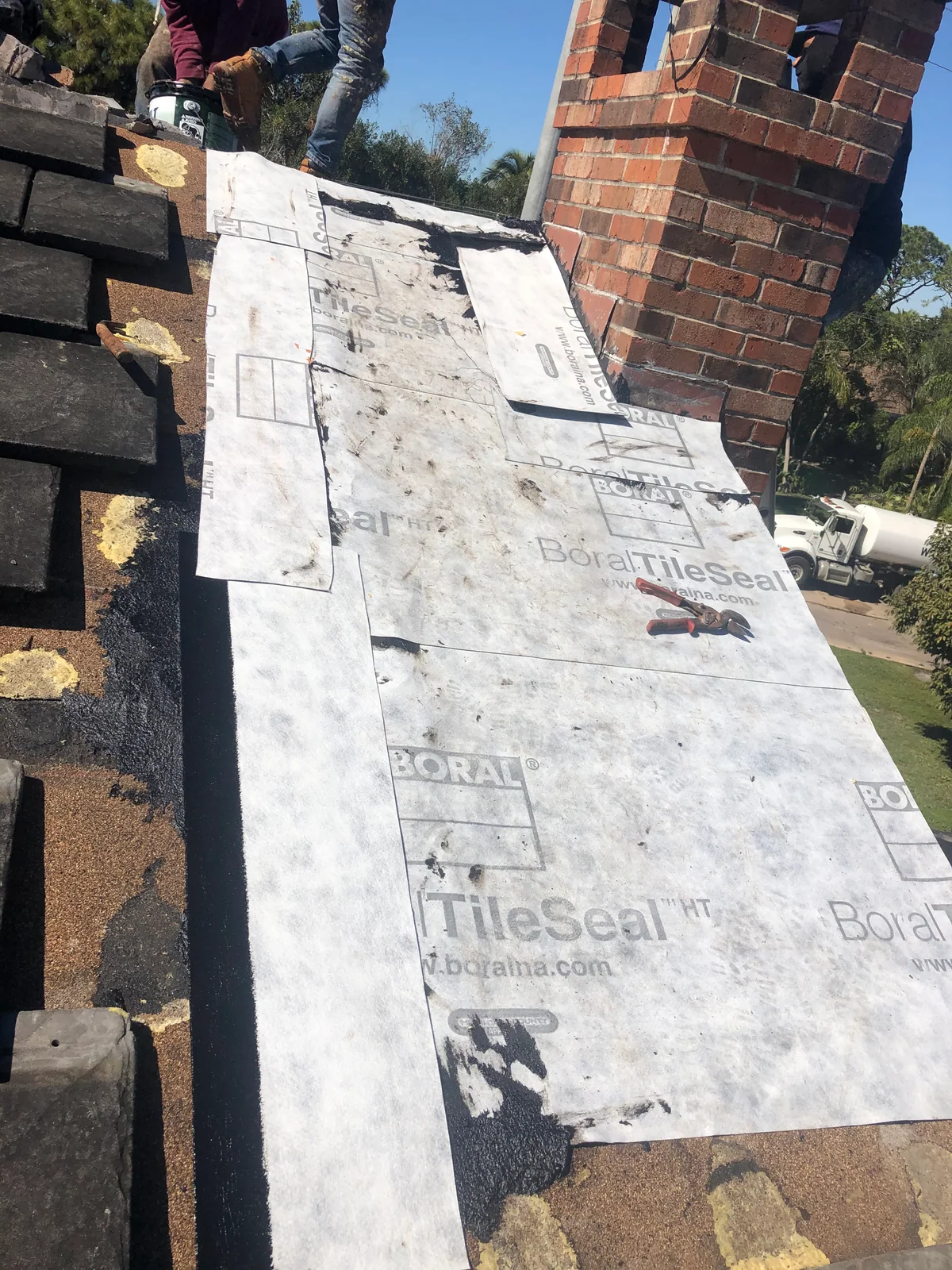
Apply new peel-and-stick
New peel-and-stick underlayment was applied over the replacement plywood. This is the last stage shown in these photos.
The work shown goes beyond replacing a few tiles: it addresses damaged layers underneath them. These are progress photos through the underlayment stage, before the tiles are reinstalled.
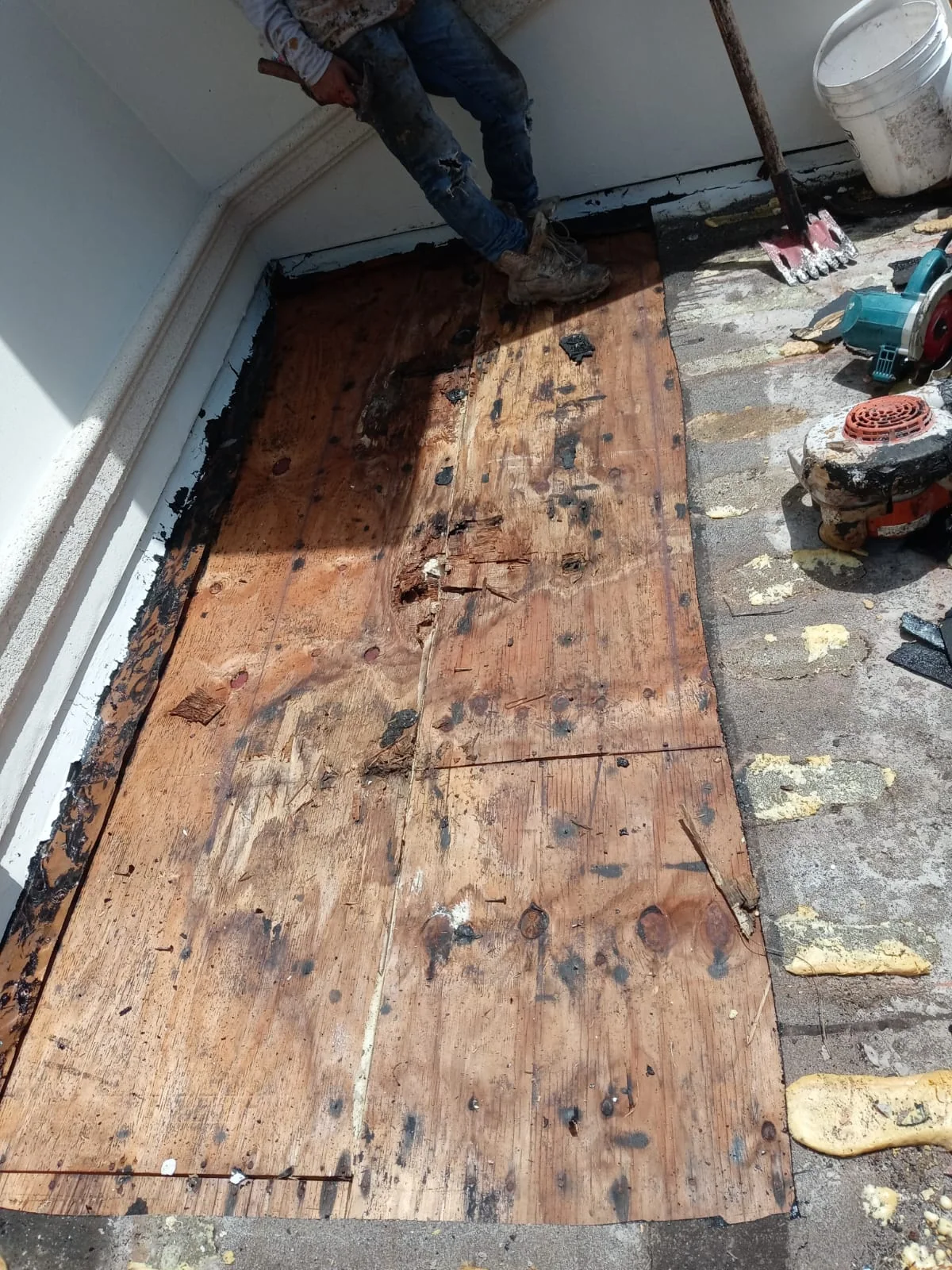
Rotted plywood in an area leaking into the house
In this repair, water was leaking into the house. The photo shows rotted plywood exposed in the affected area during the work.
Whether a repair like this is the right investment depends on the condition of the surrounding roof and its wider history of leaks and repairs. The exposed area helps explain the repair scope; the rest of the system still needs to be evaluated when comparing repair with replacement.
Have a leak or a damaged area on your tile roof? Learn more about our roof repair services and how we can help evaluate the problem.
05 · Where your money goes
Compare the next repair with the replacement plan
Every additional repair draws from the same household budget you could use toward a replacement. A repair can be money well spent when it solves a localized problem and extends the service of an otherwise sound roof. Repeated short-lived fixes on a deteriorating roof can become expensive.
Money already spent on earlier repairs cannot be recovered. Use that history to understand the roof, then compare the cost and likely benefit of the next repair with a written replacement estimate.
For a repair
- What caused the leak and what will be repaired?
- What condition is the surrounding roof in?
- What limitations or warranty terms apply?
- How likely is further work in other areas?
For a replacement
- Which tile and underlayment system is included?
- What tear-off, flashing and permit work is covered?
- What wood allowance and extra-work rates apply?
- What is the complete written project price?
For replacement budgeting, use our tile roof replacement cost guide for Broward County. A property-specific quote is still needed to compare the two options fairly.
06 · Insurance considerations
Ask how your roof affects your actual insurance options
Insurance is another reason homeowners consider replacement. Roof age and condition can affect available quotes, roof-age discounts and underwriting decisions. However, replacing a roof does not guarantee a lower premium, and a premium increase is not necessarily caused by the roof.
Before counting insurance savings, ask your agent or insurer for the expected difference in writing. Compare equivalent coverage, deductibles and policy terms. Ask which roof documents or inspections are needed and whether there is a deadline in any notice you received.
Compare the roof-related difference
If comparable quotes show an additional annual cost tied to keeping the existing roof, include that difference in your repair-versus-replacement budget. Your whole homeowners insurance premium still pays for coverage; it should not be counted as money wasted on an old roof.
Florida's homeowners insurance law also provides roof-age protections. For the homeowners policies covered by section 627.7011, an insurer cannot refuse to issue or renew solely because a roof is under 15 years old. For roofs 15 years or older, the insurer must allow a homeowner-paid inspection by an authorized inspector it approves; a finding of at least five years of useful life prevents refusal solely because of age. Other underwriting factors can still apply.
The Florida Department of Financial Services also explains that roof-age discounts vary by insurer. Get answers for your own policy before using insurance costs to justify a replacement.
07 · Put the factors together
Two roofs. Two different conversations.
These are examples of how we think through the decision. An on-site inspection determines whether the description fits your roof.
Example one
10 years old. First isolated repair.
The inspection finds a localized defect, with serviceable underlayment and no evidence of widespread problems. A properly scoped roof repair may be the sensible choice because it preserves a system with useful life remaining.
Start by evaluating a repair.
Example two
25 years old. Facing the fourth repair.
Three repairs are already in the history, and another leak has appeared. If the inspection also finds aging underlayment or problems across several areas, this roof is a strong candidate for a replacement discussion. Obtain a replacement estimate before committing more money to another temporary fix.
Seriously compare replacement before another repair.
The best choice is the one supported by the condition of your roof and a clear explanation of what the work will accomplish. You should understand why the roofer recommends repairing it or starting over.
08 · Your questions answered
Frequently asked questions
A clear next step
Find out what your tile roof actually needs.
M&M Roofing and Construction Corp can evaluate the problem, review your roof's repair history and explain the options. Bring your previous repair invoices and any insurance notices so the recommendation accounts for the whole picture.
Request My Tile Roof Estimate