
Concrete Tile Roof Replacement Cost in Broward County
Planning a new concrete-tile roof? Start with M&M Roofing’s published range of $8–$13 per square foot of measured roof area, then compare the roof-size examples and costs that can change your estimate.
Published · Updated · Reviewed by M&M Roofing, Florida license CCC1332459
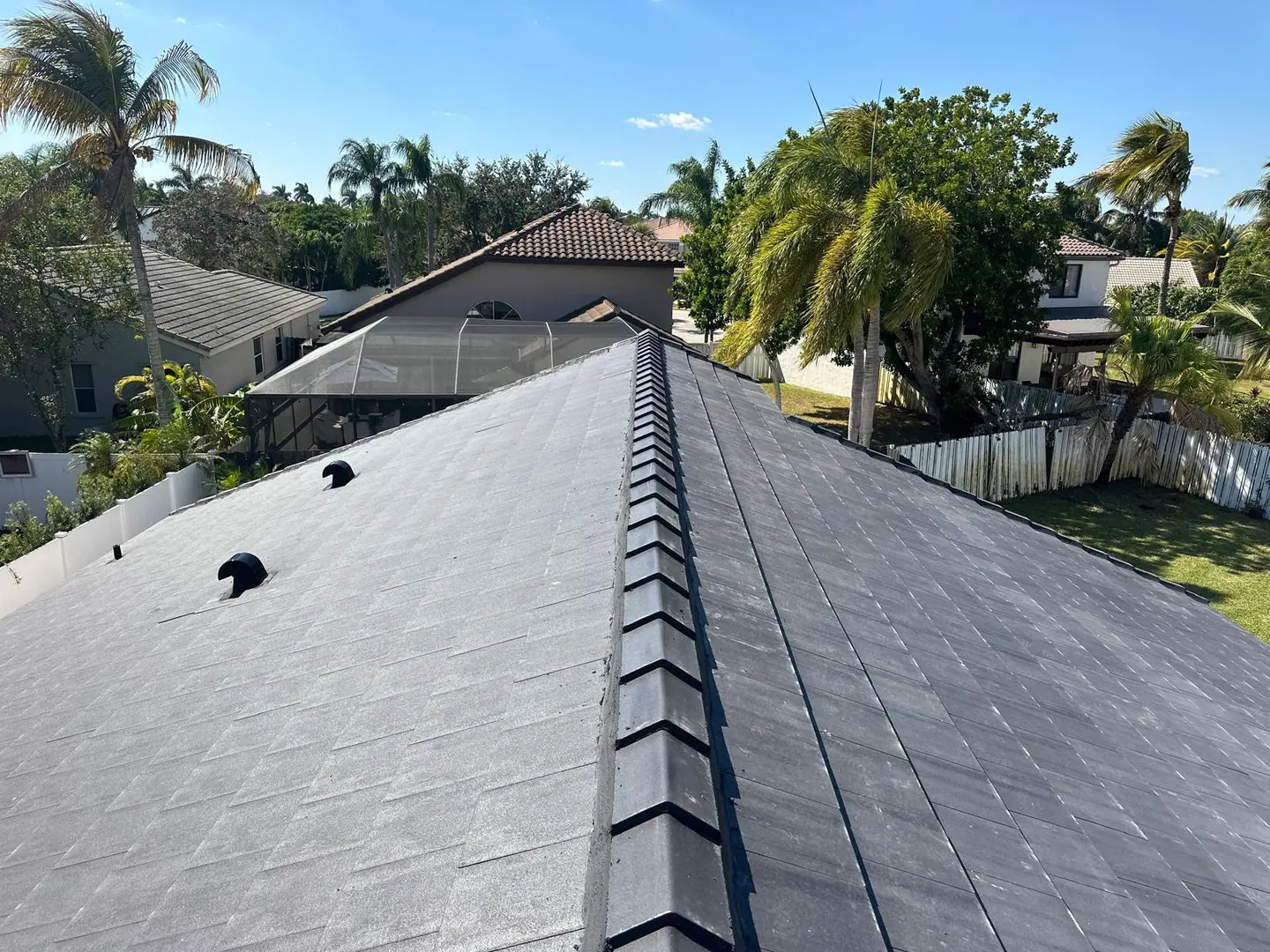
What should you budget for a new tile roof?
M&M’s published planning ranges are approximately $8–$13 per square foot of measured roof area, depending on the underlayment system and project scope.
Example: a 2,000 sq. ft. roof
- Underlayment bonded directly to the roof deckFoam-attached concrete tile · $8–$11 per sq. ft.
- $16,000–$22,000
- Base layer plus peel-and-stick underlayment#30 felt/base + foam-attached concrete tile · $11–$13 per sq. ft.
- $22,000–$26,000
Use actual roof area, not your home’s living area. These August 2026 planning ranges are for new concrete tile. Roof design, access, tile selection and existing conditions can change the price. Your written proposal defines what is included.
These are budgeting examples, not a property-specific quote or a county-published average. One roofing square equals 100 square feet of actual roof surface.
Scope of these planning ranges
These figures are intended to budget a new concrete-tile replacement using the stated underlayment and foam-attachment approach. They are not an all-inclusive price list. The property-specific proposal controls whether tear-off, disposal, permit fees, standard tile, flashings, delivery, roof loading and a wood allowance are included.
Do not assume the table includes concealed deck or fascia repairs, structural or roof-to-wall work, solar or gutter work, connected flat-roof sections, engineering, or upgraded tile unless the written estimate lists those items.
Important terminology: in a direct-to-deck system, the self-adhered underlayment goes directly onto the prepared roof deck. The roof tiles are installed above that membrane using an approved attachment method. The tiles are not placed directly on bare plywood.
What those price ranges look like by roof size
The table below applies the two per-square ranges to common measured roof sizes. It is budgeting math, not a property-specific estimate.
| Measured roof size | Actual roof surface | Direct-to-deck + foam | #30 base + peel-and-stick + foam |
|---|---|---|---|
| 20 squares | 2,000 sq. ft. | $16,000–$22,000 | $22,000–$26,000 |
| 25 squares | 2,500 sq. ft. | $20,000–$27,500 | $27,500–$32,500 |
| 30 squares | 3,000 sq. ft. | $24,000–$33,000 | $33,000–$39,000 |
| 35 squares | 3,500 sq. ft. | $28,000–$38,500 | $38,500–$45,500 |
| 40 squares | 4,000 sq. ft. | $32,000–$44,000 | $44,000–$52,000 |
A final estimate may be outside these ranges when the roof has premium or clay tile, extensive wood damage, difficult access, complex geometry, connected flat-roof sections, engineering or other nonstandard work.
If you are comparing tile with shingle, metal or low-slope roofing, see the broader Broward County roof replacement cost guide.
Your living area is not your roof area
A 2,000-square-foot house does not automatically have a 20-square roof. Contractors price the actual roof surface, which can include slope, overhangs, garages, covered patios and attached sections. Roof shape and material waste also matter. Two homes with the same living area can have very different roof measurements.
For a useful comparison, every contractor should be pricing from a measured roof area and should identify whether the quoted number includes material waste.
Why the underlayment system changes the cost
Direct-to-deck self-adhered system
About $800–$1,100 per square
After the old roofing is removed and the deck is prepared, an approved self-adhered tile underlayment is bonded directly to the deck. The concrete tile is then installed above it with an approved foam adhesive system.
#30 base plus peel-and-stick
About $1,100–$1,300 per square
A base layer commonly described in proposals as #30 felt is installed first. A self-adhered membrane is installed over that layer, followed by the foam-attached concrete tile. The additional material and installation steps can contribute to the higher planning range.
The more expensive system is not automatically the best choice for every home. Compare the exact underlayment manufacturer and product, the approved assembly, tile attachment, warranty, deck condition and the contractor’s written scope—not only the number of layers or the price.
The two ranges can also reflect differences in product selection and the overall job scope. The full price gap should not be treated as the cost of one additional base layer unless the two proposals are otherwise identical.
For an overview of profiles, assemblies and local service options, visit M&M Roofing’s concrete and clay tile-roofing page.
What about a secondary water resistance discount?
Florida’s current wind-mitigation form identifies fully adhered polymer-modified bitumen underlayment complying with ASTM D1970 as one method that may be documented as a sealed roof deck, also called secondary water resistance. That does not guarantee eligibility or a specific premium reduction. The inspector documents the installation, and the insurance carrier determines whether a credit applies.
Do not assume that a two-layer felt-and-membrane system qualifies for the same credit simply because it has more layers. Ask how the specific permitted assembly will be documented and confirm the result with your inspector and insurer.
The foam adhesive used to set roof tiles is also different from spray foam applied at deck joints or roof framing for wind-mitigation purposes. The two should not be treated as the same feature.
Full replacement is not the same as reusing existing tile
The ranges in this guide are intended for replacement scopes using new concrete tile. A lift-and-relay or tile-reuse proposal removes and stores salvageable existing tiles while the underlayment is replaced, then reinstalls usable tile. That is a different scope with different labor, breakage, matching and availability risks.
When one estimate includes new tile and another assumes that the existing tile will be reused, the totals should not be compared as if the contractors priced the same job.
The biggest tile-roof cost drivers in Broward County
- 1
Measured roof size and waste. More squares require more tile, underlayment, adhesive, tear-off labor, disposal and loading.
- 2
Roof shape and height. Hips, valleys, steep slopes, multiple levels, dormers and two-story sections increase labor and safety requirements.
- 3
Concrete or clay tile selection. Manufacturer, profile, color, finish, availability and specialty pieces can materially change the cost. Clay and premium products can exceed the ranges in this guide.
- 4
Delivery and staging. Tile is heavy. Loading method, driveway access, landscaping, pools, neighboring properties and space for equipment can affect the job plan.
- 5
Tear-off and disposal. Existing layers, tile weight, dump fees and the way material must be removed can change labor and disposal costs.
- 6
Hidden deck and wood damage. Deteriorated plywood, plank decking, fascia or structural wood may not be fully visible until tear-off.
- 7
Flashings and penetrations. Valleys, walls, chimneys, skylights, vents, pipes and roof-to-flat-roof transitions require project-specific details.
- 8
Permits, HOA review and engineering. Broward has multiple municipal building departments as well as the county jurisdiction. Fees, submittal steps and added documentation can vary.
- 9
Other work at the roof. Solar panels, gutters, screens, rooftop equipment or connected low-slope sections may require separate removal, replacement or coordination.
What can be added after tear-off?
The existing tile and underlayment can conceal damaged plywood, planks, fascia and other wood. A contractor may identify warning signs before work starts, but the full condition of the deck is not always visible until the old system is removed.
Your proposal should state any included wood allowance, the unit price for additional plywood or other wood work, how damage will be documented and who must approve a change order. That gives you a much better budget than a low starting number with no written method for concealed conditions.
Broward permits and approved tile systems
Tile reroofing requires a permit. The building department depends on the property’s jurisdiction, so a home inside Fort Lauderdale, Miramar, Pembroke Pines or another municipality may follow that city’s process, while unincorporated properties use Broward County.
Broward is within Florida’s High-Velocity Hurricane Zone. As of August 2026, reroofs are governed by the 8th Edition (2023) Florida Building Code. Current roofing permit documents call for the roof-system manufacturer, applicable Florida Product Approval or Miami-Dade Notice of Acceptance, underlayment, adhesive or other attachment information, design pressures and tile calculations. The specified tile, underlayment and foam must be compatible and supported by the applicable approvals, limitations and project calculations.
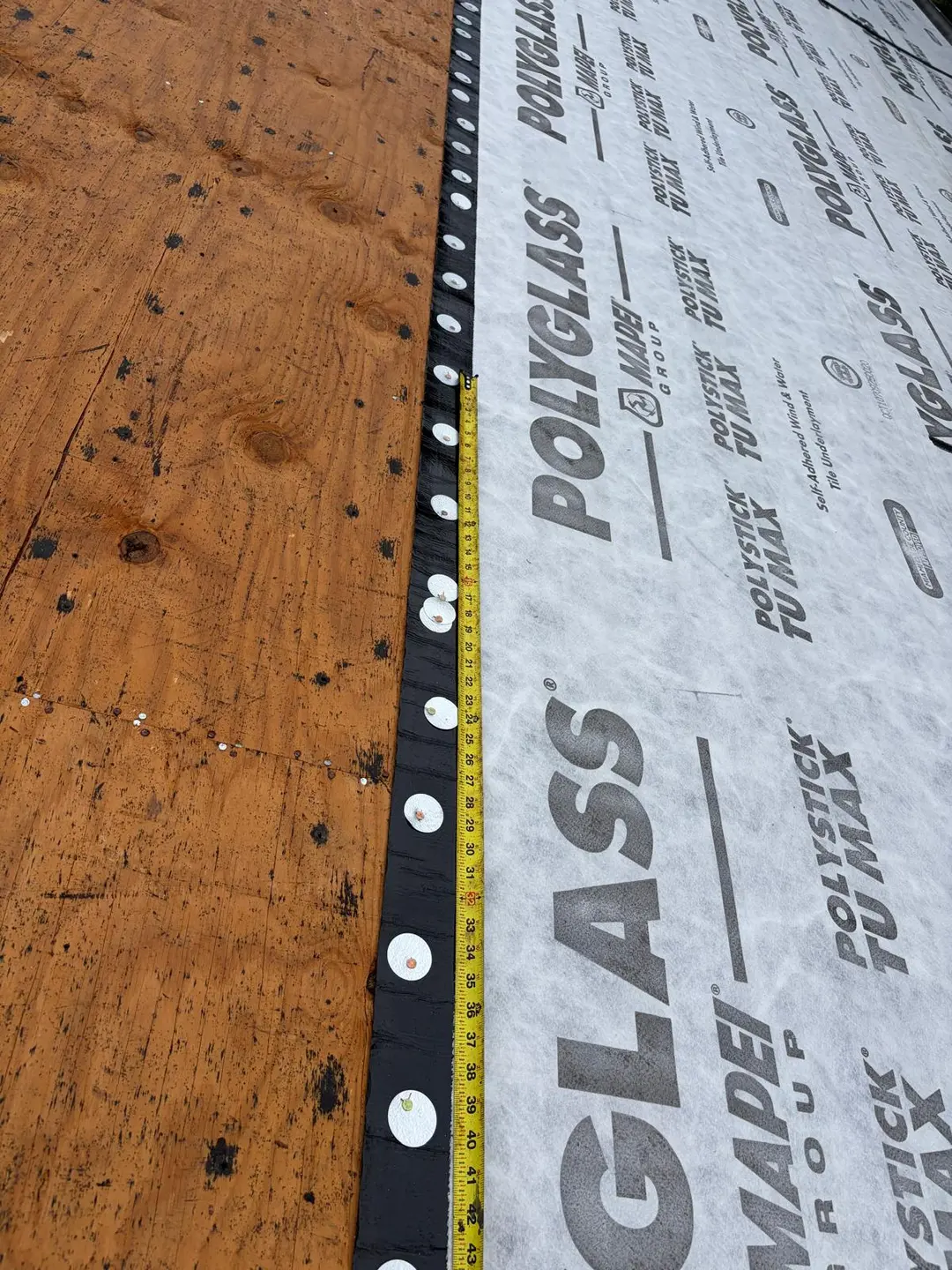
Real M&M Roofing project
A direct-to-deck tile project in Miramar
On this documented Miramar project, deteriorated plywood was removed and replaced before Polyglass Polystick TU Max was self-adhered directly to the repaired deck. Crown Windsor Slate concrete tile in Thunderstorm Blend was then installed with ICP tile adhesive foam.
See the full Miramar concrete-tile case studyFor a closer look at the stage before tile installation, follow our in-progress Miramar tile reroof dry-in case study. It documents localized deck and fascia repairs, edge-metal preparation, and TU MAX installation while the dry-in inspection is still pending.
How to compare two tile-roof estimates
A useful comparison puts both contractors on the same scope. Check each proposal for:
- The measured number of roofing squares and how waste is handled
- Concrete or clay tile manufacturer, profile, color and product approval
- The exact underlayment product and whether it is applied directly to the deck or over a base layer
- The tile adhesive or other attachment method and approved installation requirements
- Tear-off, disposal, delivery, loading and property protection
- Valleys, wall flashings, drip edge, vents, penetrations and roof transitions
- Permit handling, permit fees, inspections, HOA documents and any known engineering
- Included wood repairs and unit prices for additional concealed damage
- Any flat-roof sections, solar panels, gutters or rooftop equipment
- Workmanship and manufacturer warranties, exclusions, payment schedule and change-order process
A proposal that says only “tile roof” and gives a total price leaves too many important details undefined.
The bottom line
For 2026 planning, a common foam-attached concrete-tile reroof in Broward County is roughly $800–$1,100 per roofing square with self-adhered underlayment applied directly to the deck, or roughly $1,100–$1,300 per square for a #30 base layer with peel-and-stick membrane above it.
The accurate number comes from measured roof area and a written, property-specific scope. The best estimate is the one that clearly identifies the complete roof assembly, known inclusions, possible concealed work and how changes will be approved.
Get a measured tile-roof estimate
M&M Roofing can inspect the property, measure the roof and prepare a written scope for the tile, underlayment, attachment, flashings, permit work and known job conditions.
“On-time, on-budget! Absolutely fantastic company;that exceeded all expectations!”
Frequently asked questions
What is the average tile roof replacement cost in Broward County?
There is no single official countywide average that fits every roof. M&M Roofing’s August 2026 planning ranges are approximately $800–$1,100 per roofing square for direct-to-deck self-adhered underlayment with foam-attached concrete tile, and $1,100–$1,300 per square for a #30 base layer plus peel-and-stick underlayment with foam-attached tile.
What is a roofing square?
One roofing square equals 100 square feet of actual roof surface. It is not the same as 100 square feet of living area.
How much would a 30-square tile roof cost?
Applying the ranges in this guide, a measured 30-square roof would be approximately $24,000–$33,000 with direct-to-deck self-adhered underlayment, or approximately $33,000–$39,000 with a #30 base plus peel-and-stick system. The actual proposal can change with tile selection, complexity, access, wood damage and other scope items.
Does the tile-roof price include plywood replacement?
That depends on the proposal. Some estimates include a limited wood allowance; others state a unit price for all plywood or other deck work discovered after tear-off. The inclusion and approval process should be written into the contract.
Is #30 felt plus peel-and-stick always better than direct-to-deck underlayment?
No. The correct comparison is the complete approved assembly, exact products, attachment method, deck condition, warranty and project requirements. A higher price or an additional layer does not automatically make one system the best fit for every home.
Can direct-to-deck peel-and-stick qualify for an insurance discount?
A qualifying installation may be documented as a sealed roof deck or secondary water resistance during a wind-mitigation inspection. Eligibility and the amount of any credit are determined by the inspector’s documentation and the insurance carrier, not by the roofing estimate alone.
Do I need a permit to replace a tile roof in Broward County?
Yes. The permit authority depends on whether the property is within a Broward municipality or an unincorporated area. The proposal should state who handles the permit and whether the fees are included.
Ready to plan your tile roof replacement?
Request My Free Estimate