
Roofing & hurricane mitigation · Florida
My Safe Florida Home: A Roofing Grant Guide for Homeowners
A stronger roof starts with the right plan. Here is how My Safe Florida Home funding works, where a secondary water barrier fits, and how M&M helps you choose a shingle, metal or tile roof that matches your approved project.
By M&M Roofing and Construction Corp · Published and sources checked
Plan Your Roof. Get a Free Quote.
Have your program inspection report? Let us know. We can review the roofing recommendations and explain your material options.
This requests an M&M roofing estimate. Apply for state funding through My Safe Florida Home.
What goes beneath your roof matters
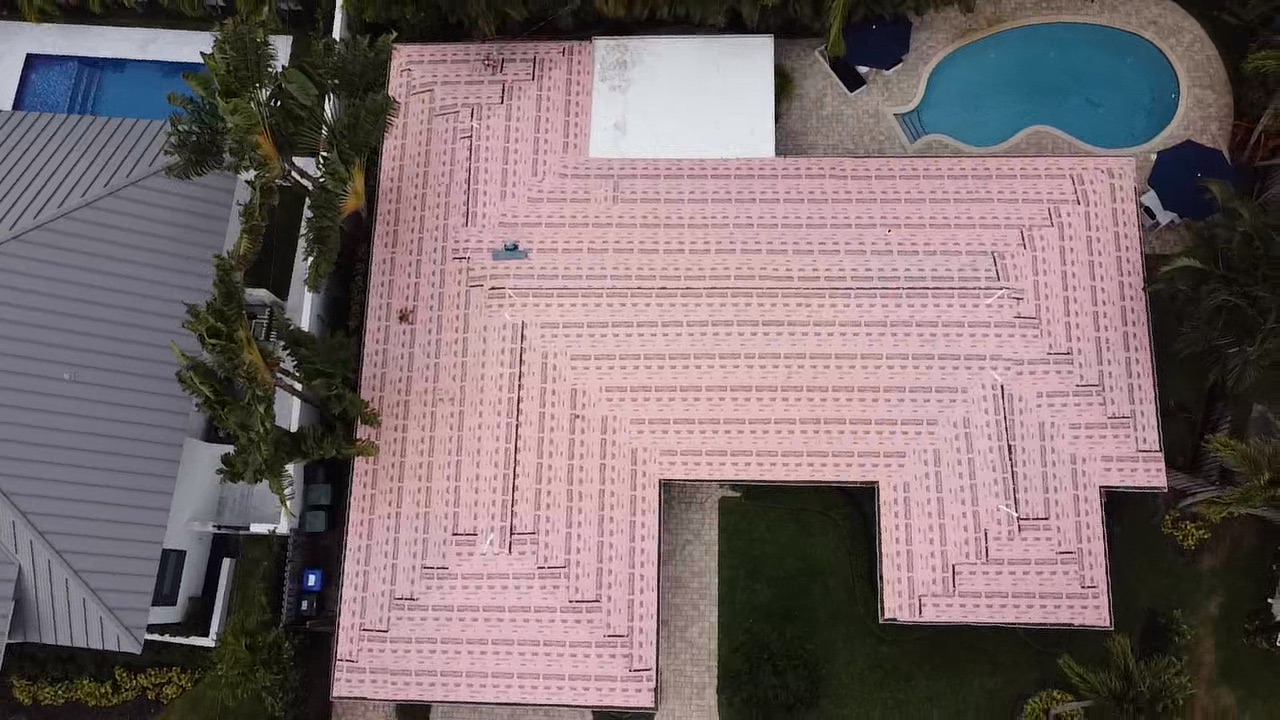
Plan the protection you will not see from the street
Shingles, metal panels and tile are the visible roof covering. Beneath them, a properly specified secondary water barrier helps limit water reaching the home if the covering is damaged. That concealed work needs to be planned and documented before the roof is finished.
We offer IR-Xe for shingles, XFR for metal, and TU MAX for tile. We match the product and installation method to your roof and the work recommended in your program inspection report.
Can the program help pay for a roof replacement?
Yes, when replacing the covering is necessary to complete a recommended, eligible roofing improvement. The program identifies roof-to-wall connections, roof-deck attachment and secondary water resistance as roofing mitigation work. Replacing an aging roof by itself does not establish eligibility.
You may choose shingle, metal or tile. The program requires replacement of the entire pitched roof, the entire flat roof, or both—not patching or a partial repair. Your initial program report and approved scope determine which work can be considered. Read the program’s roof replacement rules.
Start with approval, then construction.
Gather estimates first, but obtain grant approval before permits and construction. The officially linked homeowner guide warns that a permit issued before approval can disqualify the work. Follow your case instructions and resolve timing questions with the program before scheduling. Official homeowner guide.
Who can qualify for My Safe Florida Home funding?
An inspection and a grant have different requirements. Under the current 2026 law, grants are limited to eligible low- and moderate-income applicants. Other eligible homeowners may still qualify for a program inspection. Current Florida program law.
| What to check | What it means for your application |
|---|---|
| Your home and ownership | A site-built, owner-occupied single-family unit with a homestead exemption, on an individual parcel. It may be detached, or attached and no more than three stories. Rental, vacation and manufactured homes are excluded. Property rules. |
| Year built | Built before January 1, 2008, as shown by the county property appraiser. Grant requirements. |
| Insured dwelling value | No more than $700,000 in Coverage A on your current homeowners policy. This is the insured dwelling amount, not your sale price or market value. It applies to both grant types. Insurance evidence. |
| Household income | Your household must fall within the program’s low- or moderate-income category. Household size and the applicable income benchmark matter; there is no single dollar limit for every Florida family. |
| Program inspection | An initial program inspection within the 24 months before your grant application, with a recommended eligible improvement. Agree to the final inspection and supply the requested insurance information. Inspection and grant conditions. |
How the income categories work
Low income means annual adjusted gross household income at or below 80% of the applicable median; moderate income is below 120%. The statutory calculation uses the greater statewide or metropolitan-area benchmark, or county benchmark outside a metropolitan area, adjusted for household size. Florida’s income definitions.
The portal asks for the previous year’s total household adjusted gross income and household members. Use the program’s classification for your household rather than an online example for a different family size. What to include as household income.
Availability check: October 20, 2026. The official support page says applications are being accepted. An application or inspection does not reserve a grant; availability, priority and program approval still apply. Check current application availability.
How much can the grant contribute?
Matching grant
$2 from the state for every $1 you contribute
The state reimburses two-thirds of eligible project cost, up to a maximum $10,000 grant. You cover your share and any amount above the cap.
Eligible low-income grant
Up to $10,000 without a match
The grant can cover eligible actual costs up to $10,000. Costs above that amount and work the program excludes remain your responsibility.
| Eligible project cost | State contribution | Your remaining cost |
|---|---|---|
| $9,000 | $6,000 | $3,000 |
| $15,000 | $10,000 | $5,000 |
| $25,000 | $10,000 | $15,000 |
Examples assume the full cost is approved and eligible. Excluded costs are additional. Official grant amount guidance.
Plan for when the money is paid
For matching grants, you pay for the completed project and submit payment-in-full evidence for reimbursement. Low-income applicants do not have to provide payment-in-full proof, but the improvements still must be completed and the draw approved. Payment goes to the homeowner. Discuss payment terms with your contractor before work begins; a grant approval is not an automatic advance or a promise of deferred contractor payment. Matching and low-income payment rules.
How M&M helps you prepare the roofing work
Our roof replacement service helps you understand and document the roof you are buying. You handle the program application; we handle the roofing scope and the records of our work.
Review your inspection report
We review the roofing recommendations with you, identify which items belong in our scope, and flag questions that need an answer from the program or its inspector.
Plan a compatible roof system
We explain your shingle, metal or tile choices and the appropriate underlayment. The estimate identifies the roofing work, material system and project-specific requirements so you can compare the scope with your grant.
Document the installation
We provide installation photos and project paperwork, including the roofing scope and invoice. We plan photos of concealed work before it is covered so the records can support the final inspection and your submission.
You submit the application, household and insurance information, and reimbursement request through the official portal. The program determines eligibility and payment. M&M is an independent roofing contractor, not the state program administrator. Our Florida roofing license is CCC1332459.
Three roof covering choices
The underlayment we offer for each roof
You can choose the look and roof covering that suit your home. We pair that choice with an appropriate Polystick underlayment and an approved installation system. These are our product options, not a list of products that independently guarantee a grant.
Shingle roofing
Polystick IR-Xe
For homeowners choosing asphalt shingles, we offer IR-Xe, a self-adhered underlayment made for shingle roof systems. We plan the membrane, shingles, flashing and attachment as one compatible roof assembly.
Metal roofing
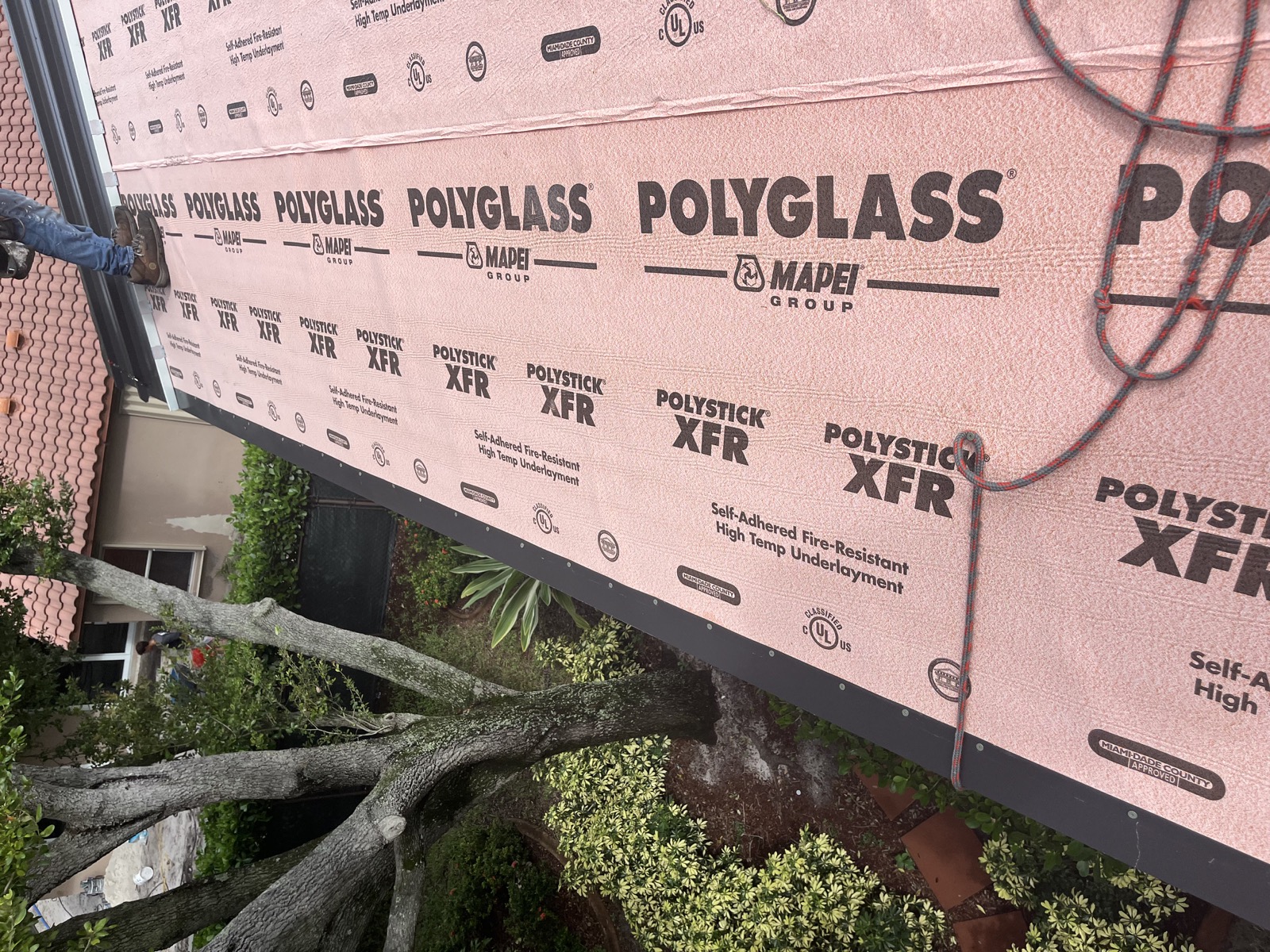
Polystick XFR
For metal roofing, we offer XFR, a self-adhered, high-temperature underlayment designed principally for metal systems. The panel profile, fastening, flashing and approved underlayment installation all belong in the scope.
Tile roofing
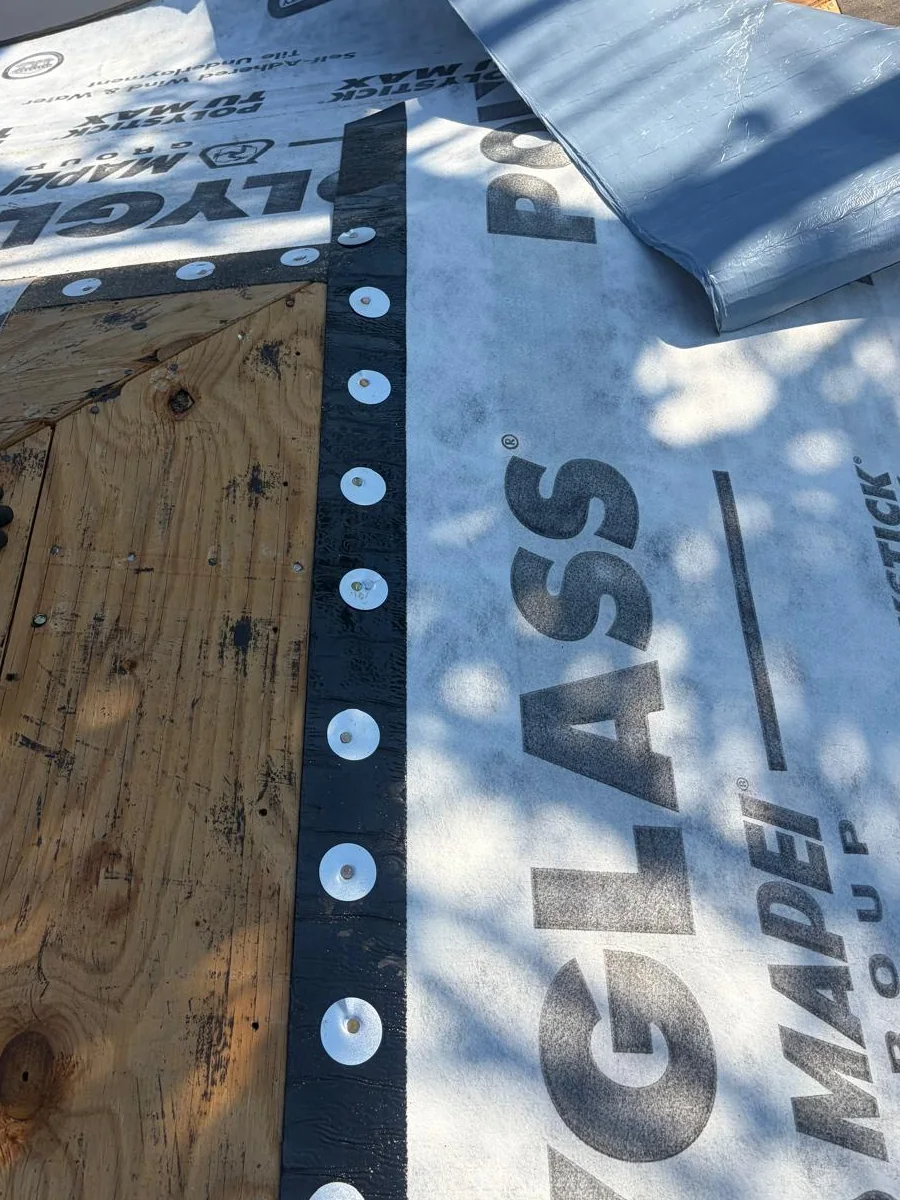
Polystick TU MAX
For concrete or clay tile, we offer TU MAX. It is designed for compatible foam-adhered or mechanically fastened tile systems. We check the tile, attachment method, substrate and specific underlayment assembly together.
See a finished metal option in our Dark Bronze standing seam project in Coconut Creek, or compare the products in our Polystick underlayment guide. The right choice depends on your covering and roof assembly.
What makes a secondary water barrier qualify?
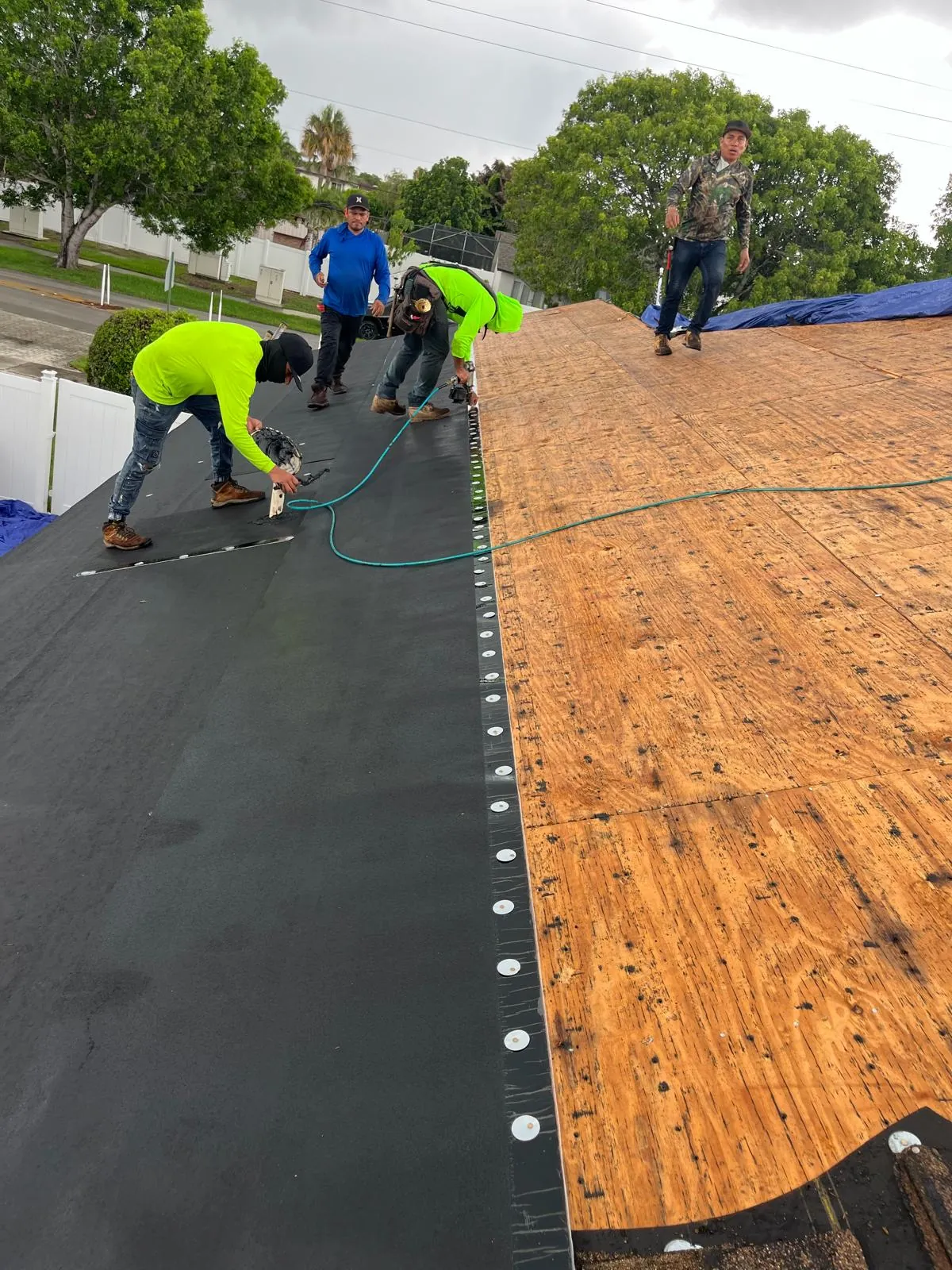
The installation method matters as much as the product name. For the full-coverage self-adhered method in the program’s guidance, the membrane bonds directly to the roof deck. Peel-and-stick installed over another underlayment is excluded under that guidance.
The full-coverage, self-adhered approach
- 1. Roof coveringThe shingles, metal or tile you see.
- 2. Compatible self-adhered membraneFull coverage bonded directly to the roof deck in the specified assembly.
- 3. Roof deckThe substrate, prepared and repaired as the approved system requires.
Simplified layer order. Flashing, laps, fasteners, primers and other details follow the applicable approved system.
The program also lists other methods, including taped deck seams with nailed underlayment, qualifying double-layer felt or synthetic systems, and attic-side foam at seams when not reroofing. Our discussion here focuses on the compatible self-adhered systems we offer. Read the complete secondary water resistance guidance.
A permitted roof and a grant-eligible scope must work together
For South Florida projects, we check the specific product approval, roof covering, deck, attachment and local permit requirements—including High Velocity Hurricane Zone requirements where applicable. A tile assembly needs its own compatible installation details; it cannot simply inherit a shingle or metal specification.
The Miami-Dade approval for these Polystick products lists distinct systems and limitations. Using an approved product is one part of planning the roof. It does not by itself establish that your project qualifies for reimbursement.
From the first inspection to the reimbursement request
- 1
Start with the official program
Create your account, complete the prioritization questionnaire and follow the portal's application instructions. The free program inspection is separate from a contractor's roofing estimate.
- 2
Complete the initial inspection
Review the report and the recommended improvements. Send M&M the roofing recommendations so we can discuss the scope. Ask the assigned inspection company to resolve report questions.
- 3
Get the estimate and apply for the grant
Choose the recommended work, confirm the contractor's license, and submit the requested property, income, insurance and contractor information. A quote helps you plan; it does not approve the grant.
- 4
Receive approval before permits and installation
Once your grant is approved and the scope is confirmed, coordinate the permit and roofing schedule. Keep any changes aligned with the program's instructions.
- 5
Complete and document the approved work
M&M provides installation photos and roofing paperwork. Complete local inspections and close the permit. Finish all selected mitigation projects before requesting the program's final inspection.
- 6
Request the program final inspection
The current rule gives you 18 months from grant approval to finish construction and request the final inspection. Do not wait until the deadline to arrange the final steps.
- 7
Send the final report to your insurer, then request payment
Keep the insurer's response and submit the draw request with the required project, payment and insurance records. Respond to program requests for missing information. The program reviews the submission before releasing funds.
Official instructions: grant application · final inspection · 18-month timeline · reimbursement steps.
Monitor your portal and email. The current law sets a 60-day deadline to respond to requests for information; missing it can cause an application to be treated as abandoned. Program response deadlines.
Keep a complete project file
Before construction
- Initial program inspection report and recommended projects.
- Grant approval and the approved scope.
- Current insurance declarations and requested eligibility records.
- Contractor name, license, detailed estimate and selected roof materials.
At completion
- Installation photos, itemized invoice and project paperwork.
- Closed permit and local inspection records.
- Program final inspection report and insurer response.
- Payment evidence required for your grant type and the portal’s draw documents.
Your insurer’s response is part of the documentation even if no discount applies. Keep an updated declarations page or an insurer letter or email that meets the program’s instructions. Insurance response requirements.
My Safe Florida Home roofing FAQs
Does My Safe Florida Home pay for a completely free roof?
There is no blanket free-roof benefit. A matching grant reimburses part of an approved eligible project, up to $10,000. An eligible low-income grant can cover eligible costs up to $10,000 without a match. A roof costing more than the grant, or work outside the approved scope, leaves costs for the homeowner.
Can I choose shingles, metal or tile?
Yes. The program's roofing guidance allows these roof coverings when replacement is necessary for a recommended eligible roofing improvement. M&M can discuss each option and the appropriate underlayment. The grant cap does not increase because you choose a more expensive covering.
Does choosing IR-Xe, XFR or TU MAX automatically qualify my roof?
No. These are our product options for compatible roof systems. The initial program report, approved work, actual installation and final verification determine eligibility. For the program's full-coverage self-adhered method, the membrane must bond directly to the roof deck; peel-and-stick over another underlayment is excluded under that guidance.
Can I start the reroof while waiting for the grant?
Gather estimates and plan the work, but obtain grant approval before permits and construction. Work completed before approval is not eligible. If your roof needs urgent work, ask the program how that affects your application before relying on a future grant.
Can a townhome qualify for roofing improvements?
Eligible townhomes can now receive roofing recommendations and grants. Your initial program report must recommend the work. The September 2026 update says older reports will not be amended; contact the assigned inspection company about your specific report. Previously paid grants do not create a new entitlement to additional money.
Does M&M submit the grant application for me?
You submit your application and reimbursement request through the official program portal. We review your inspection report, plan the roofing work, and provide installation photos and project paperwork. Our roofing quote form is separate from the state's application.
Is the building department's final inspection enough?
No. Close the roofing permit and complete the required local inspections, then request the separate My Safe Florida Home final inspection after all selected projects are finished. The current program deadline is 18 months after grant approval to complete construction and request that final inspection.
Will the improvements lower my homeowners insurance premium?
Your insurer determines any discount. Send the program's final report to your insurer and keep its response, including a response saying no discount applies. Grant eligibility and insurance credits are separate decisions; neither a particular underlayment nor a new roof guarantees savings.
For townhome report questions, see the September 2026 roofing update. For your application or grant decision, contact the program through its official portal or call 850-427-2559.
Official guidance behind this article
Requirements and funding can change. This article was checked on October 20, 2026 against the current Florida statute, topic-specific program updates and manufacturer product sheets linked above. Where an older guide differs, this article uses the newer statutory and program guidance. Follow the instructions issued for your application.
Official program websiteCurrent program statuteEligibility requirementsWater barrier rules
Let’s Plan the Roofing Work for Your Home
Tell us whether you are considering shingles, metal or tile and whether you have your program inspection report. We will help you understand the roofing scope, underlayment options and project paperwork.
Call (754) 714-8445