
Mechanical Seam vs Nailstrip Metal Roof: Which Fits Your South Florida Home?
Published · Updated · Reviewed by M&M Roofing, Florida license CCC1332459
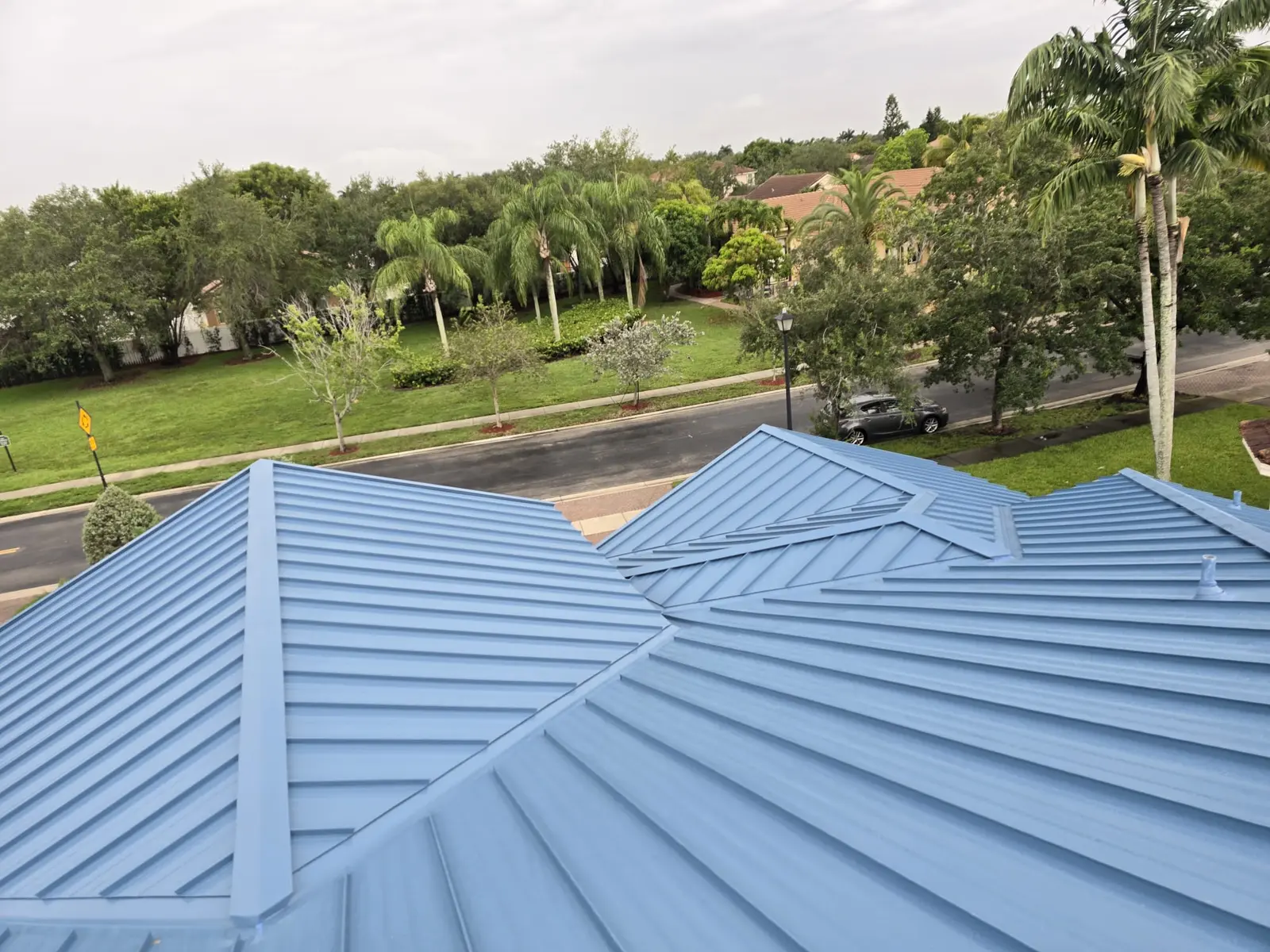
The short answer
A mechanically seamed panel is field-locked with a seaming tool, while a nailstrip panel typically fastens through an integral flange concealed by the next panel. Neither system automatically wins. In South Florida, compare the exact HVHZ approval, allowable design pressures, roof slope, deck, attachment pattern and complete installation scope.
How the Two Systems Attach
Mechanically seamed
Panels are typically attached with concealed clips. After the panels are positioned, approved seaming equipment folds the adjoining legs into the specified single- or double-lock seam. The panel, seam, clip, deck and spacing must match the tested assembly.
Nailstrip
A nailstrip panel commonly includes a slotted fastening flange secured to the deck. The next panel snaps over that flange and conceals the fasteners. Slot dimensions, fastener placement, panel length and thermal-movement instructions are part of the approved system.
Nailstrip Is Not Automatically the Same as Snaplock
The terms sometimes overlap in sales conversations, but they do not always describe the same attachment. Many snaplock profiles use separate concealed clips, while a nailstrip profile typically uses an integral flange. Manufacturer terminology varies, so the product name, details and approval documents—not a nickname—should control the proposal.
Mechanical Seam vs Nailstrip: Side-by-Side
| Factor | Mechanically seamed | Nailstrip |
|---|---|---|
| Deck attachment | Typically separate concealed clips configured by the approved assembly | Typically an integral slotted fastening flange secured directly to the deck |
| Seam closure | The seam is field-folded with approved seaming equipment, often as a single- or double-lock profile | The adjoining panel snaps over the fastening flange without a powered field seamer |
| Primary fasteners | Concealed beneath the panels and seams | Concealed beneath the next panel |
| Thermal movement | Managed through the approved clip and fixed-point details | Managed through slots, fastener placement and panel-length limits in the instructions |
| Installation sequence | Includes clip placement plus a separate field-seaming operation | Generally uses fewer components and eliminates the field-seaming pass |
| Slope and wind uplift | The exact approval controls minimum slope, deck, panel width, metal thickness, clips and allowable pressures | The exact approval controls minimum slope, deck, panel width, metal thickness, fasteners and allowable pressures |
| Installed cost | Often carries more labor and equipment cost; the actual difference belongs in a property-specific estimate | Often has a simpler installation sequence; material, details and project conditions still control the quote |
For a budgeting starting point, read M&M's standing seam metal roof cost guide for Broward County, which explains how attachment method, finish and roof conditions affect the estimate.
What Controls Wind Performance in Broward and Miami-Dade
A seam profile does not have one universal “mph rating.” Broward's HVHZ roofing permit documentation connects the proposed system with the building and roof-zone design pressures. The approval then defines the assembly limits and installation requirements.
- Required pressures for field, perimeter and corner roof zones
- Panel profile, width, metal thickness and seam configuration
- Deck material and the approved underlayment assembly
- Clip or fastener type, spacing and edge-zone requirements
- Mean roof height, slope, geometry and exposure
- Flashing, penetration, valley, ridge and eave details
Homeowners can review the system named in a proposal using the Florida Product Approval database or the Miami-Dade Product Control search.
When Each System May Make Sense
Consider mechanical seam when
- The approved assembly fits the project's slope and required pressures
- The homeowner prioritizes a field-locked seam and architectural system
- The roof geometry and details are compatible with the chosen panel and clips
- The installation budget accounts for clips, tools and field seaming
Consider nailstrip when
- Its current approved assembly fits the deck, slope and required pressures
- A concealed-fastener appearance is desired with a simpler installation sequence
- Panel lengths and thermal-movement details fit the roof layout
- The complete written scope compares favorably after flashings and accessories are included
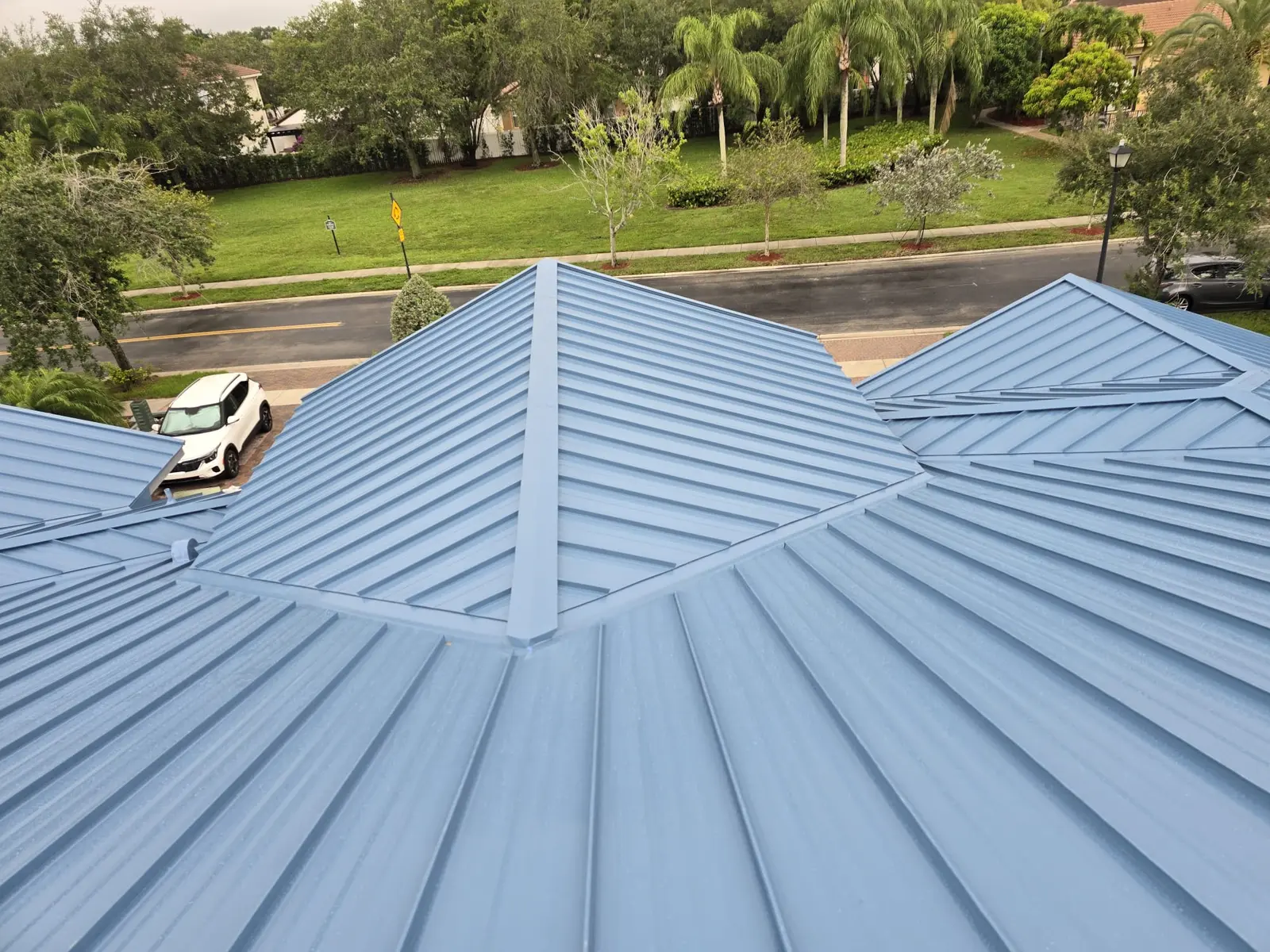
Real Miramar Project
Tile-to-Metal Standing Seam Roof Conversion
See the installation and finished results from a home on SW 24th Street in Miramar: 24-gauge Regal Blue metal, 1.5-inch mechanically seamed panels, and Polystick XFR underlayment.
View the Miramar case study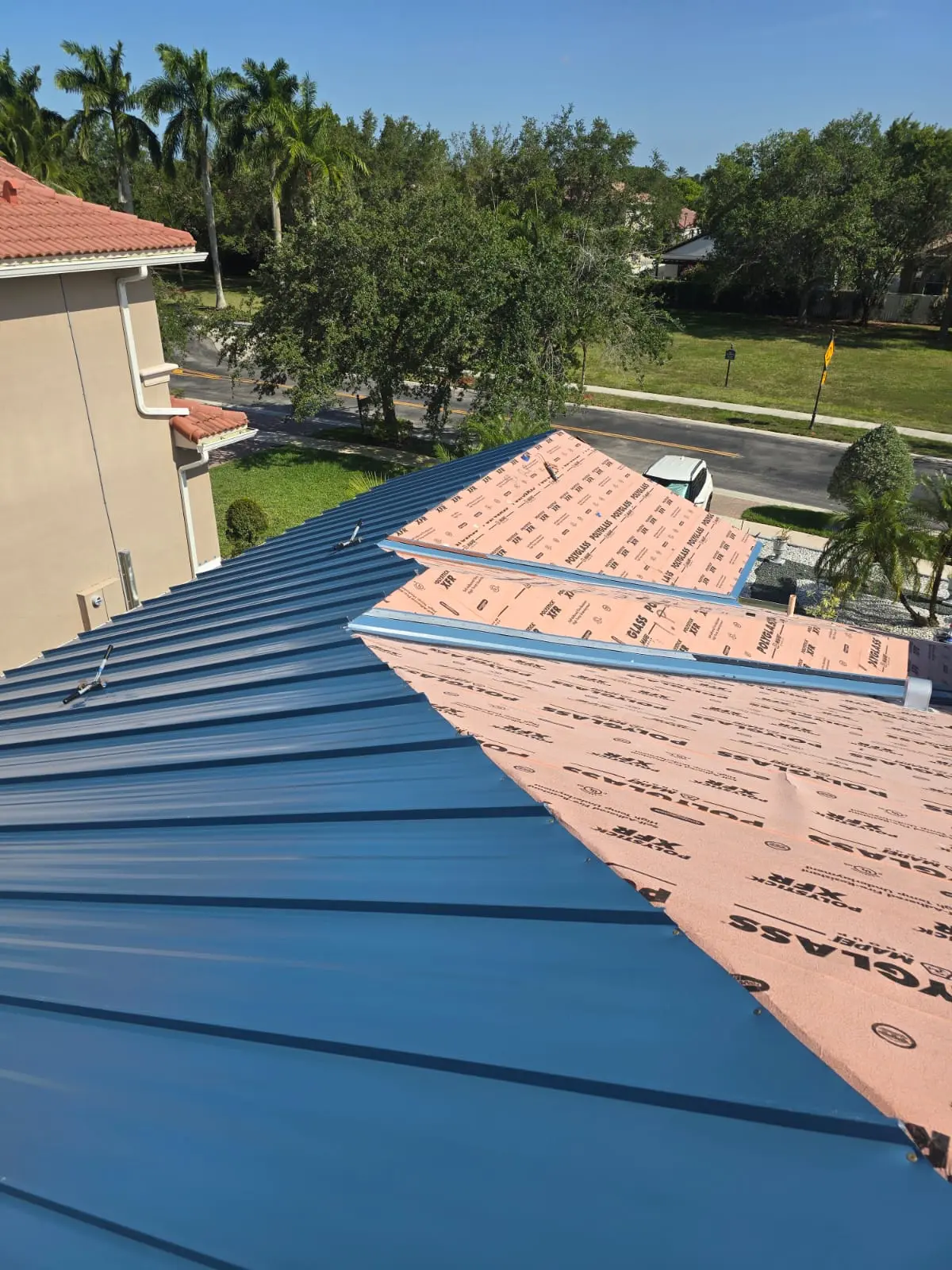
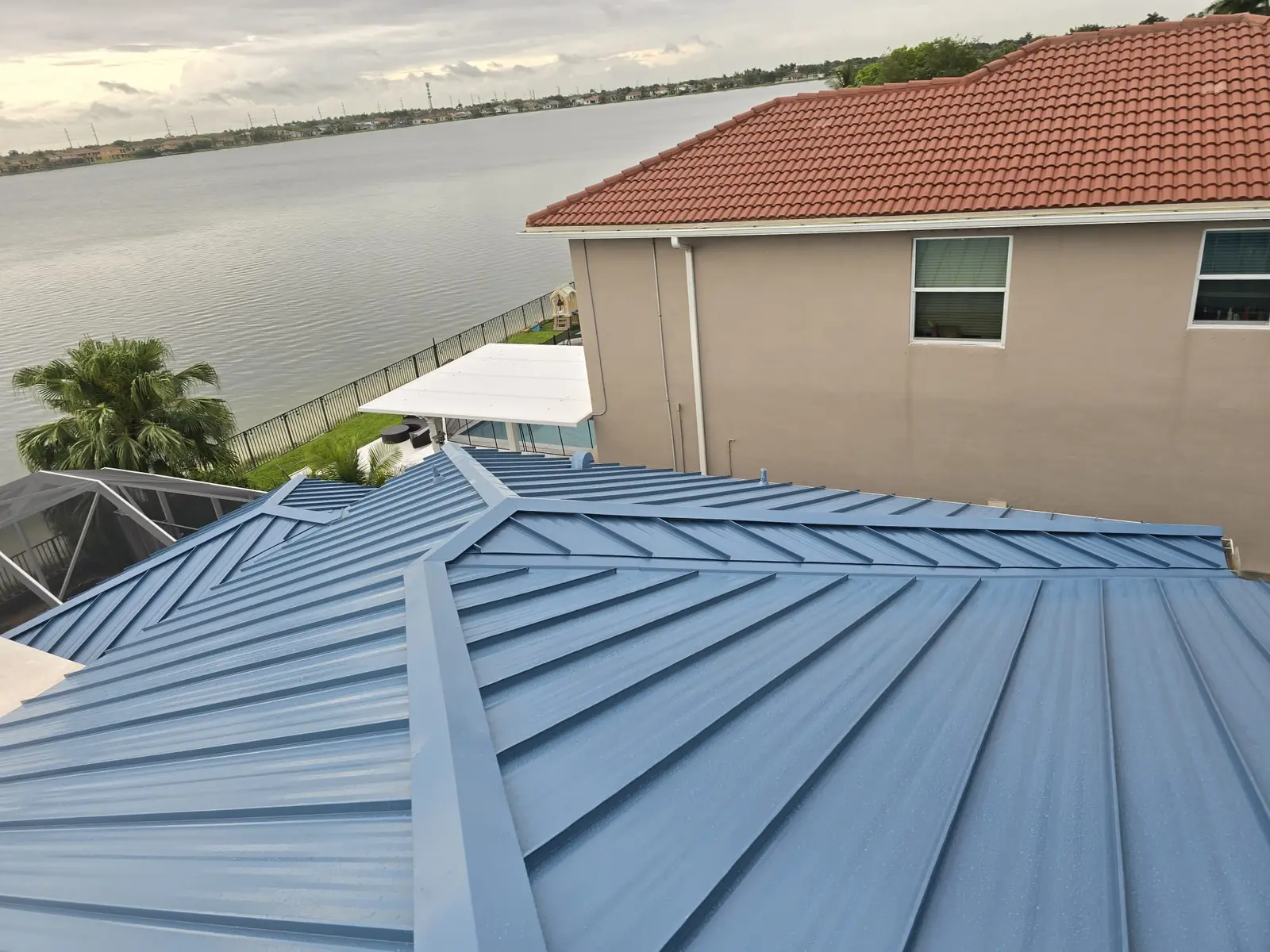
This is a documented project example, not a universal specification. See all nine installation photos in the Miramar tile-to-metal case study.
What Every South Florida Metal Roof Proposal Should Identify
- Manufacturer, product name, panel profile, width, metal thickness and finish
- Current Florida Product Approval or Miami-Dade NOA for the complete assembly
- Deck, underlayment, clips or fasteners and attachment spacing
- Required and allowable pressures for the applicable roof zones
- Flashings, penetrations, ventilation, drainage and accessory metals
- Tear-off, permit handling, disposal and site protection
- Deck-repair unit prices, exclusions, warranties and change-order procedure
Use our metal roof colors and finishes collection to discuss appearance alongside the panel, coating and substrate in your proposal.
Compare Approved Systems for Your Roof
M&M Roofing can measure the property, inspect the existing roof and prepare a written comparison for the metal systems that fit the project.
Request a Free EstimateFrequently Asked Questions
Is nailstrip the same as snaplock standing seam?
Not necessarily. A nailstrip panel typically has an integral fastening flange, while many snaplock systems use separate concealed clips. Manufacturers may use overlapping marketing terms, so the panel profile and approval documents should control the comparison.
Is a mechanically seamed roof always stronger than nailstrip?
No universal statement is accurate. Mechanical seaming creates a different seam connection, but project suitability and wind performance depend on the complete tested assembly, allowable pressures and installation—not the seam name alone.
Can nailstrip metal roofing be approved for Broward County?
A nailstrip system may be suitable when its current Florida approval or Miami-Dade NOA permits HVHZ use and the assembly's limits meet the property's slope, deck, geometry and required design pressures.
Does 24-gauge metal automatically have better wind performance?
No. Metal thickness is only one part of the assembly. Panel width and profile, deck, clips or fasteners, spacing, roof zones, height, exposure and allowable pressures all matter.
Which system usually costs more?
Mechanically seamed systems often require additional clips, equipment and labor, while nailstrip installation may be simpler. A reliable difference can only be calculated after both complete assemblies are priced for the same roof and scope.
Can a tile roof be converted to mechanically seamed metal?
Yes, when the building, deck, permitted assembly and project details support the conversion. M&M Roofing completed a documented tile-to-metal conversion in Miramar using 24-gauge Regal Blue mechanically seamed panels over Polystick XFR.