

High barrelConcrete roof tile · Florida
Crown Sanibel: a high-barrel tile with a bold roofline
Explore Crown Sanibel concrete roof tile: Florida colors, weight, profile dimensions and Miami-Dade NOA details, with practical guidance for your reroof.
By M&M Roofing and Construction Corp · Florida Certified Roofing Contractor CCC1332459 · Published · Updated
Get a free Sanibel roof estimate
Tell us about your roof. We can help compare the profile, color and complete installation scope.
The short answer
Crown Sanibel is a concrete tile with a deep, rounded shape that gives your home a classic barrel-tile look. It’s worth considering if you want the roof to be a noticeable part of your home’s style. Compare a few colors beside your exterior paint and trim to find the look you like.
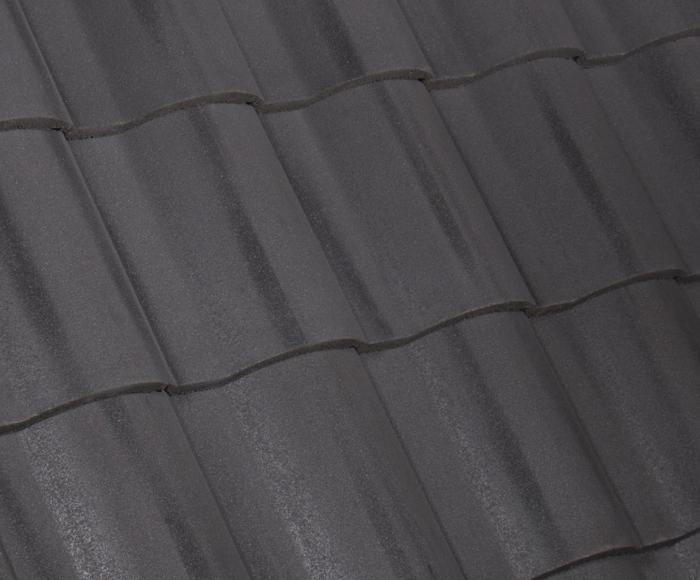
What makes Sanibel look different?
A roof that reads as rounded from the street
Sanibel’s raised barrel repeats across the roof in distinct waves. On a broad roof face, that pattern is often more noticeable than the individual tile edges. It is worth comparing from both the driveway and across the street, where the larger rhythm of the roof becomes clear.
Where we would start the color conversation
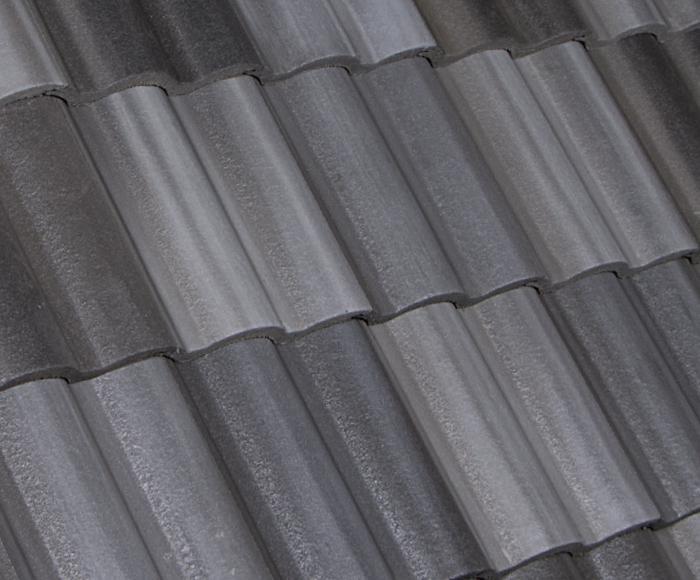
Terracotta tones emphasize the traditional barrel-tile look. Gray and brown blends keep the curved profile while changing the overall palette. View a physical sample beside the wall finish, fascia and trim: the shadow between barrels can make the installed roof look different from a single tile held flat.
The tradeoff to think through
A taller profile adds visual depth; it does not automatically deliver better wind performance. If you prefer a quieter roofline, compare Sanibel with Tuscany’s lower rounded shape before choosing a color. Roof geometry, ridge details and the complete assembly matter as much as the field-tile appearance.
Profile description: Crown’s Florida Sanibel page (opens in a new tab). The design considerations above are our guidance for comparing the look on your home.
25 Sanibel color choices to explore
These are the Sanibel choices in M&M’s researched Crown catalog. Each card identifies the manufacturer color and code. Compare a current physical sample outdoors before approving the final color; screens, lighting and production variation change what you see.
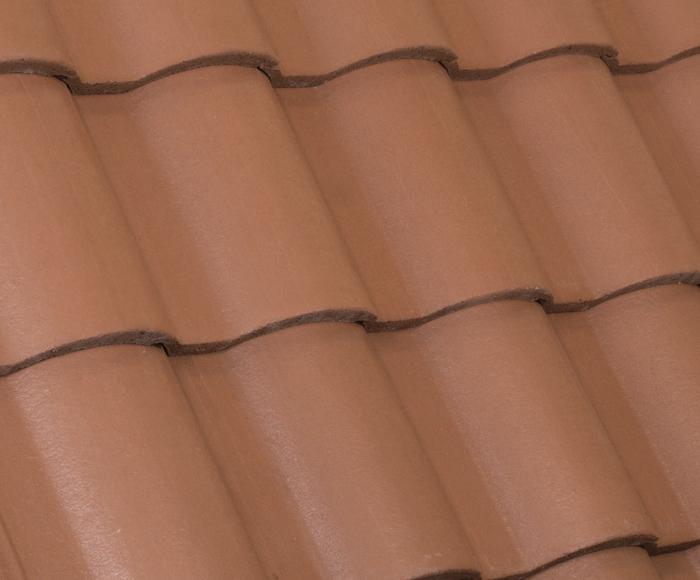
Mission Terracotta Range
ASASC001
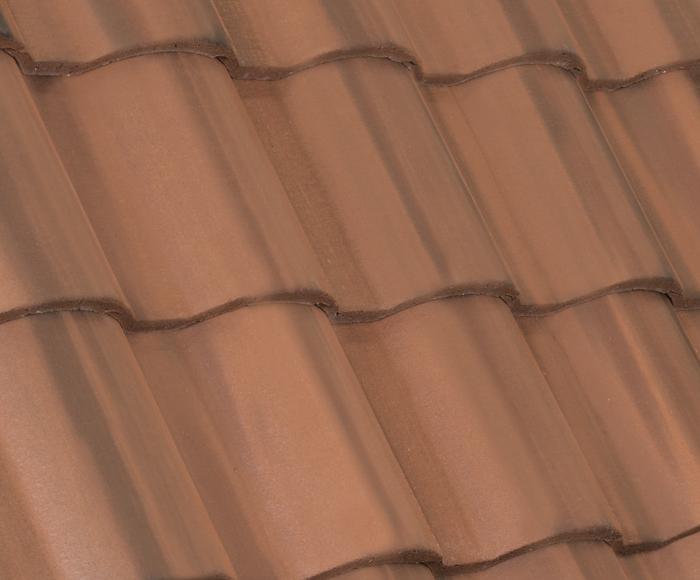
Burnt Terracotta
ASASC002
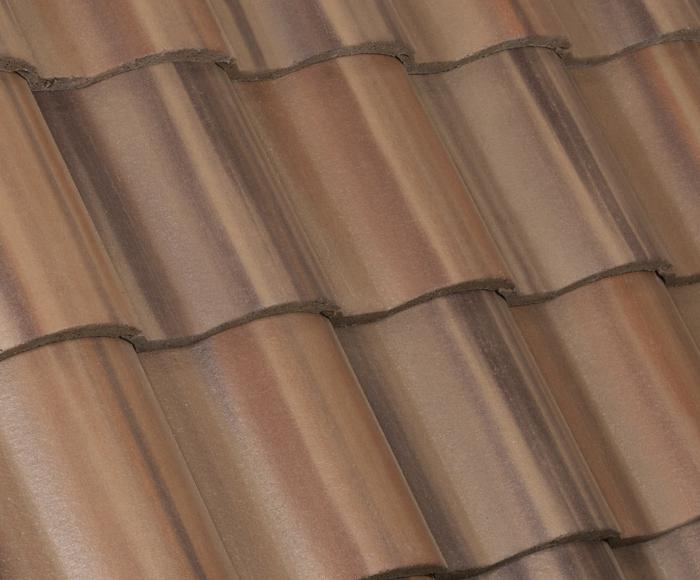
Sandhill
ASASC004
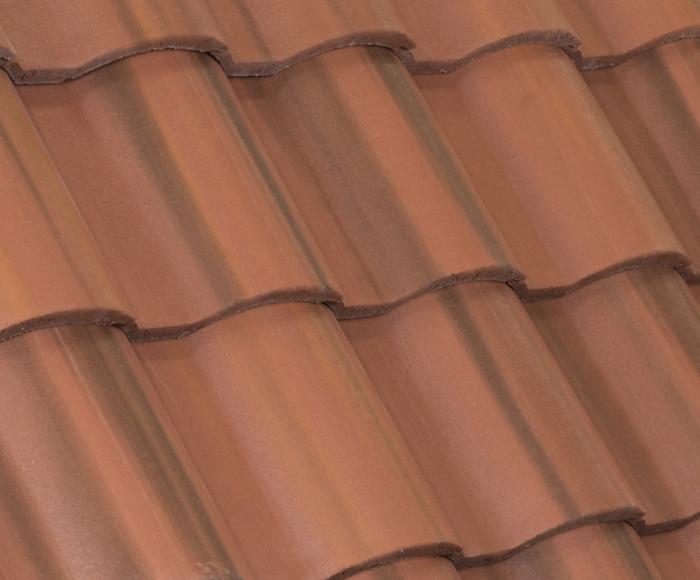
Sunburst
ASASC005
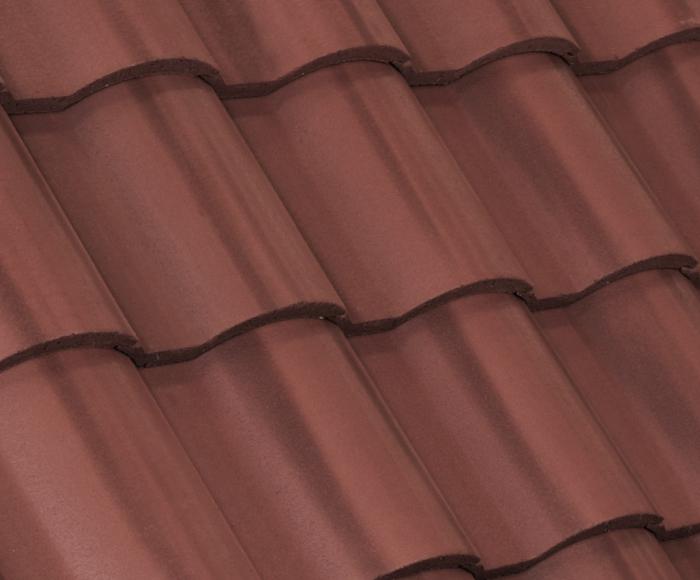
Bougainvillea
ASASC007
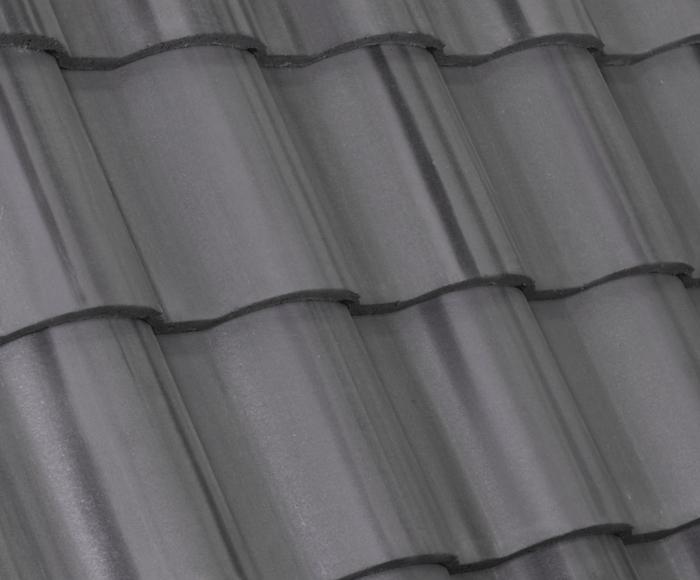
Manatee
ASASC010
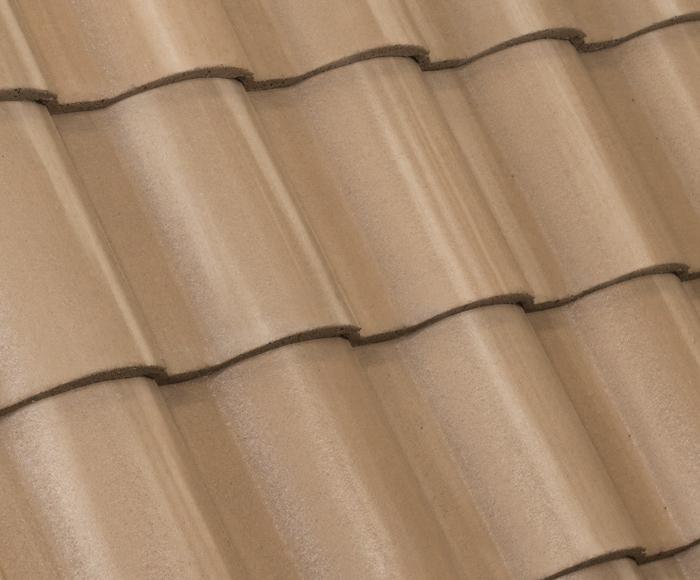
Sand Dollar
ASASC011
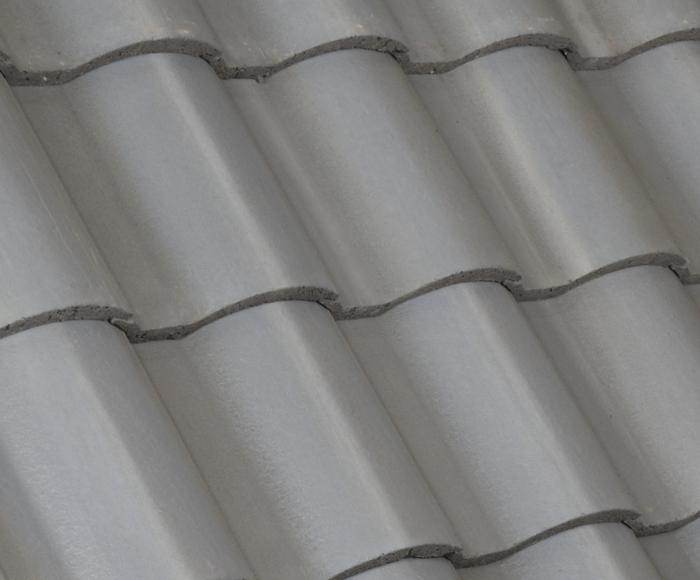
Silverado
ASASC012
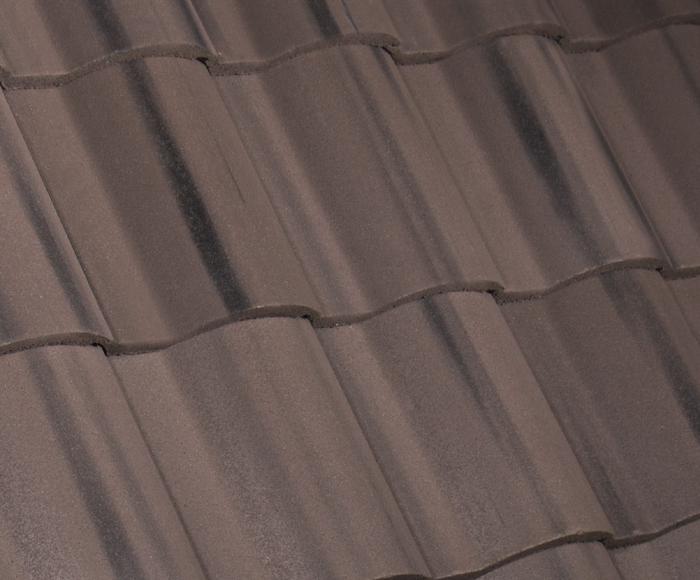
Birchwood
ASASC015
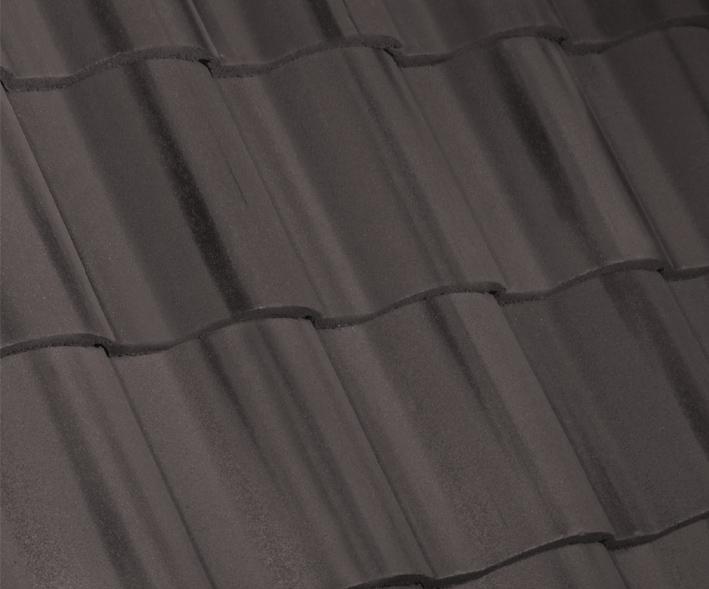
French Roast
ASASC020
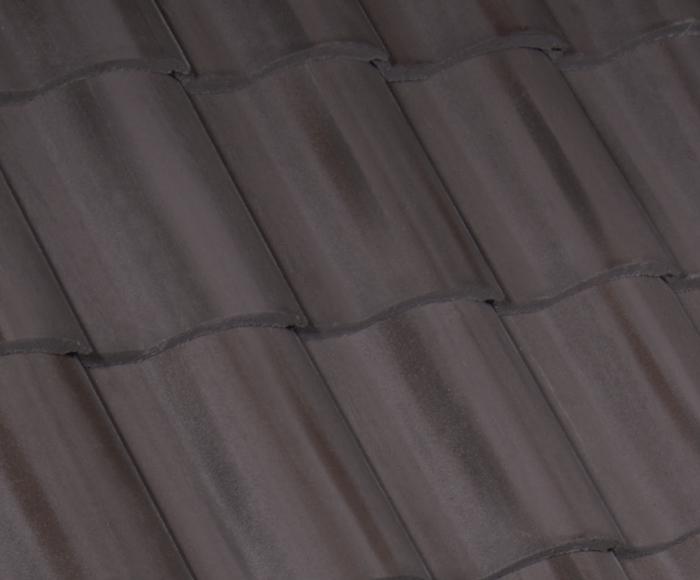
Royal Plum
ASASC021
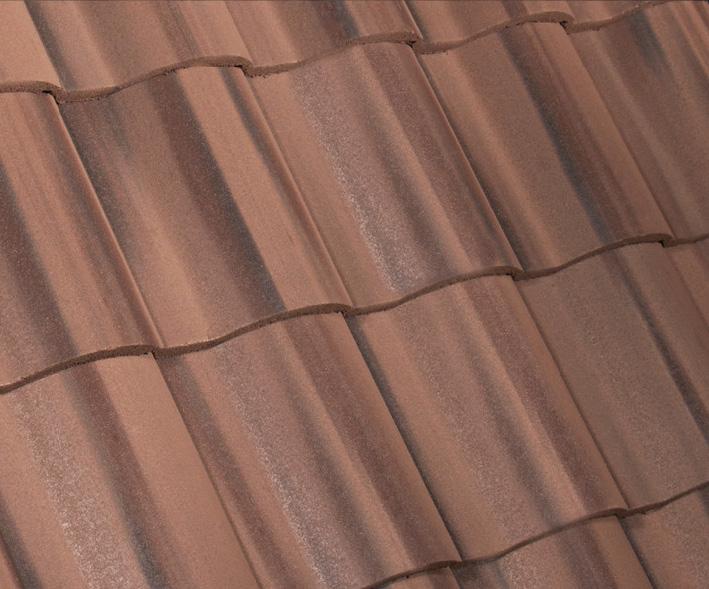
Sequoia
ASASC022
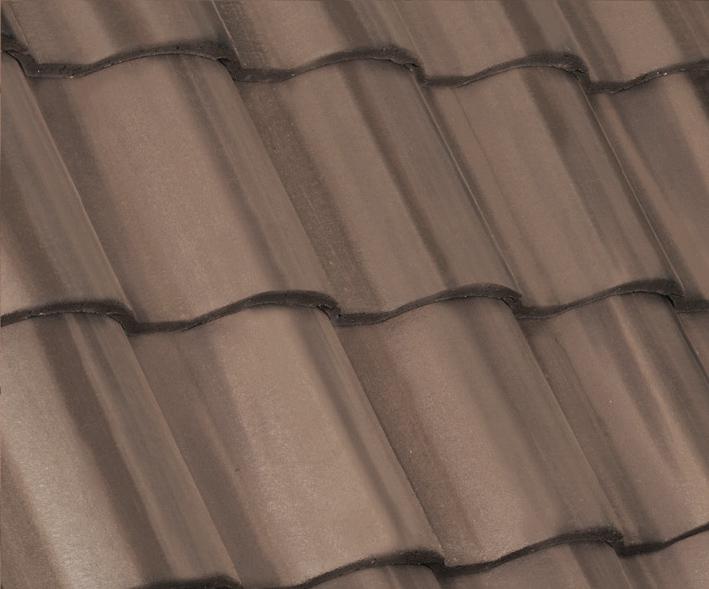
Barkwood
ASASC023
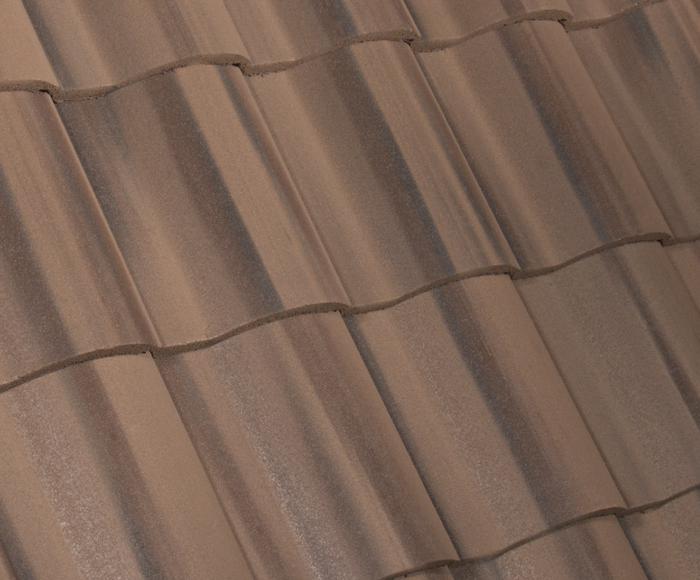
American Oak
ASASC024
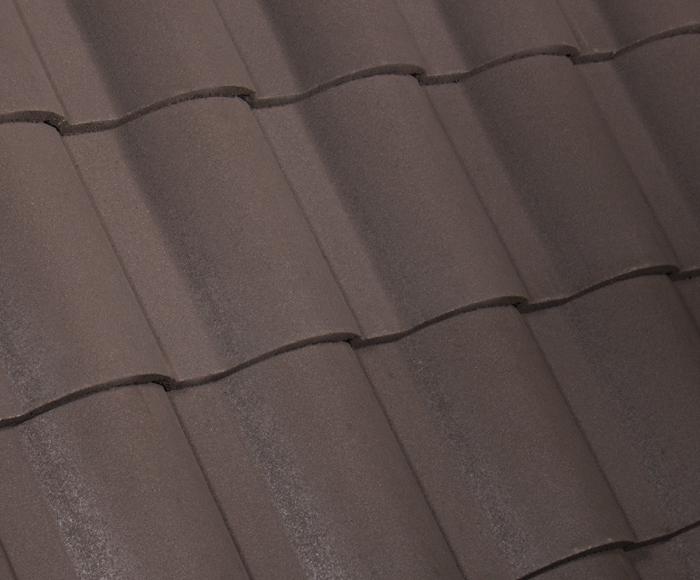
Tobacco Range
ASASC026
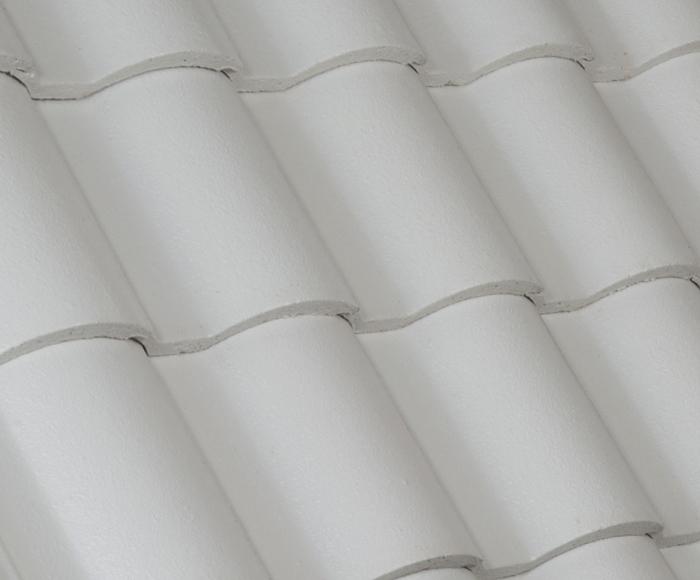
Polar White
ASAPC101
Premium Color-Thru
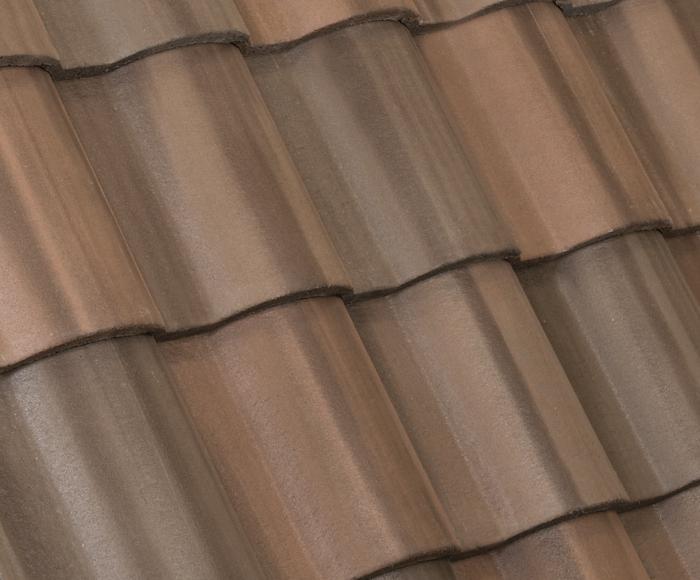
Madera Blend
ASACB300
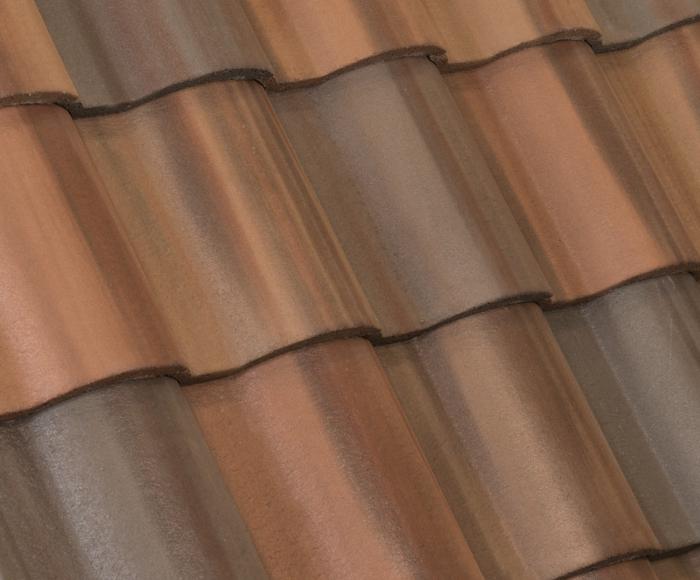
San Antonio Blend
ASACB302
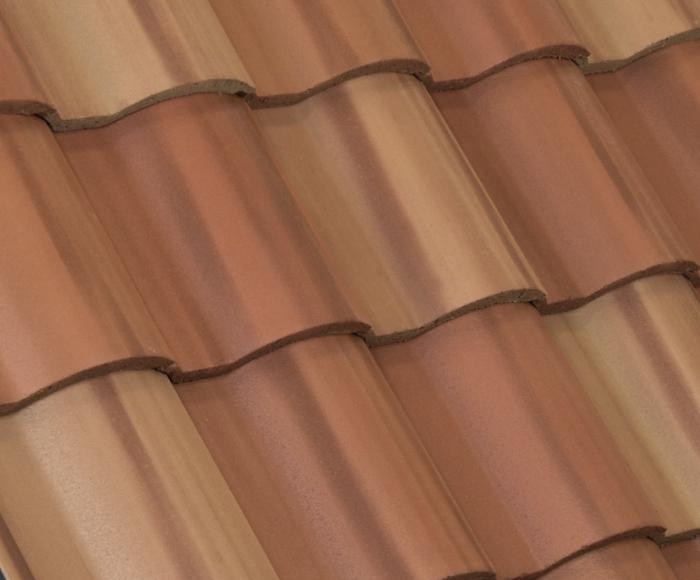
Navajo Blend
ASACB303
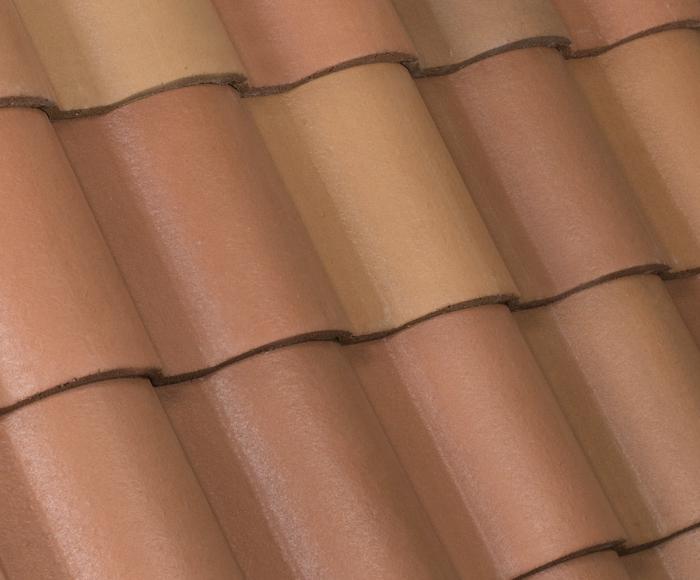
Nueva España Blend
ASACB305
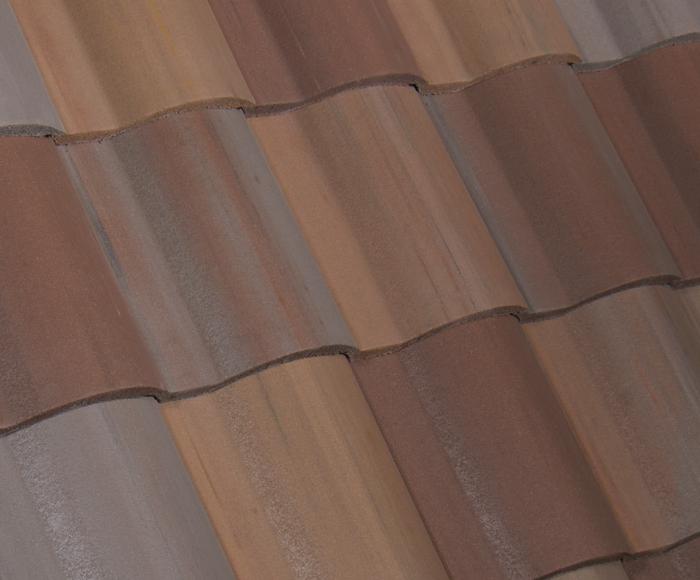
New Florida Blend
ASACB308
Thunderstorm Blend
ASACB312
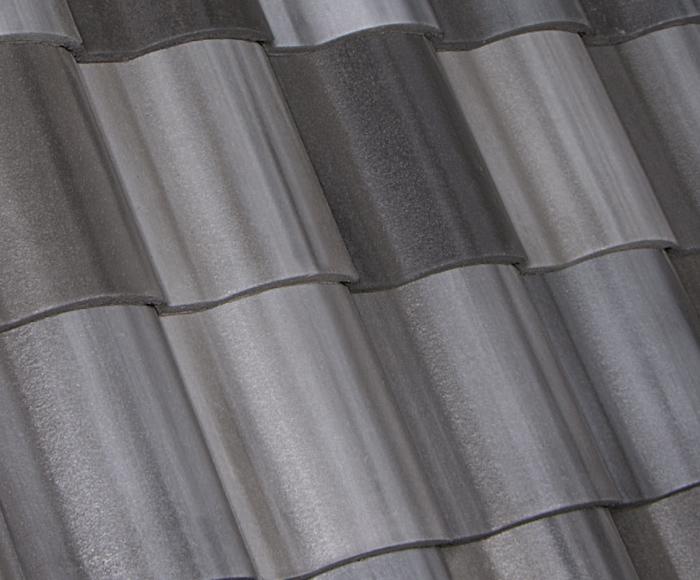
Moonlight Gray Blend
ASACB313
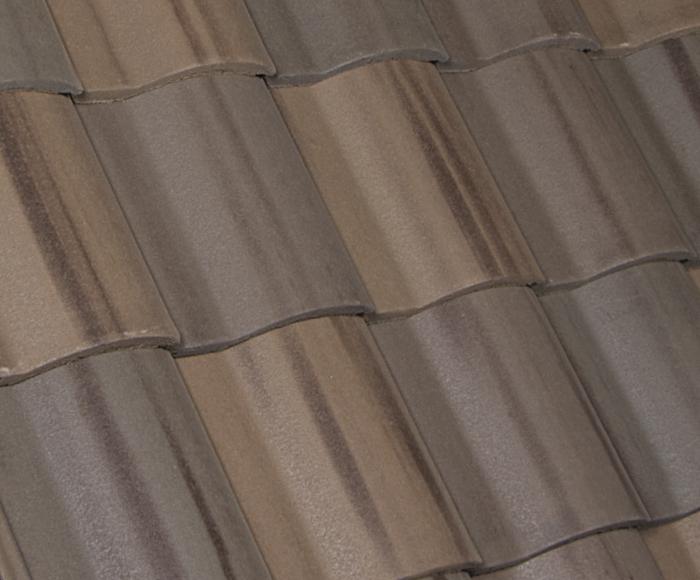
Ashbrown Blend
ASACB314
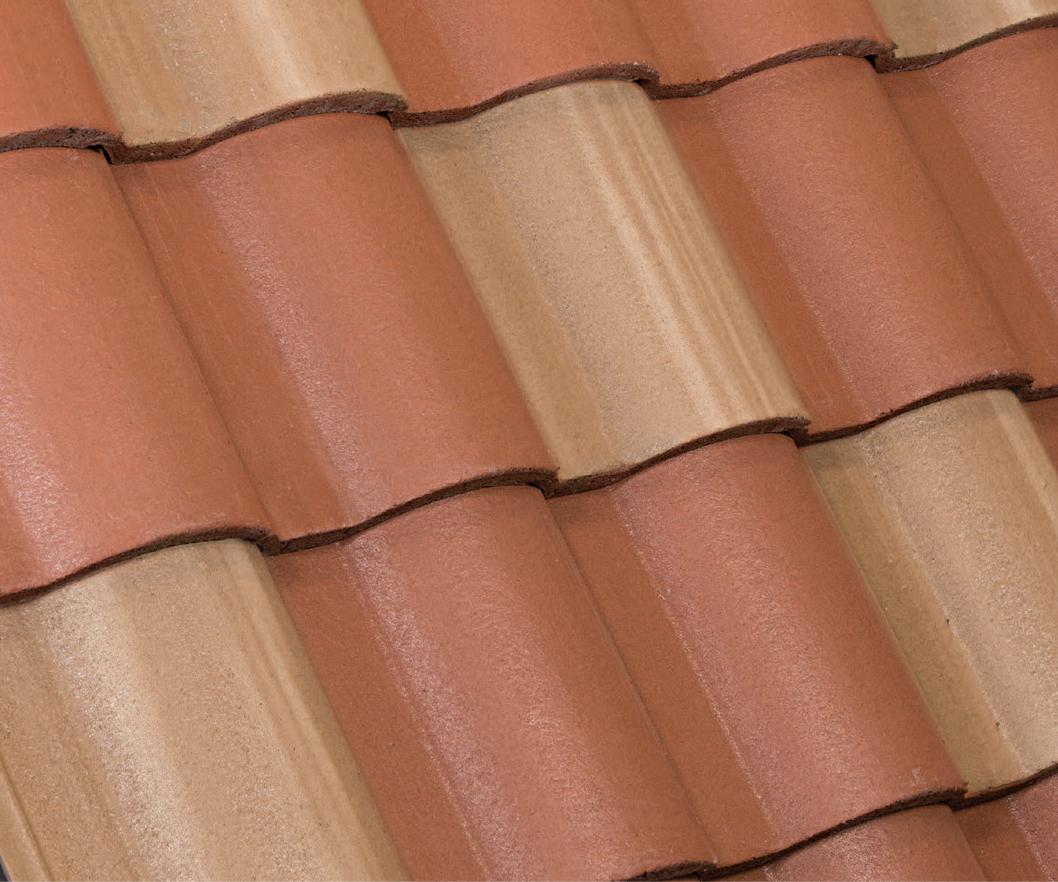
Grand Canyon Blend
ASACB318
Images © Crown Roof Tiles. Original manufacturer references, checked October 20, 2026. A listed color is not a stock or physical-sample guarantee. Custom Blend does not by itself establish a premium price.
Choose your Crown samples →Sanibel dimensions, weight and coverage
A roofing square means 100 square feet of roof surface, not the floor area of the home. The nominal product figures below use a 3-inch headlap. They describe field tile; hips, ridges, accessories and the rest of the assembly are additional.
| Property | Published value | Source |
|---|---|---|
| Material | Concrete field tile | Manufacturer / NOA |
| Nominal overall size | 17 × 13¼ inches | Crown brochure, p. 21 |
| Nominal exposed size | 14 × 11⅞ inches | Crown brochure, p. 21 |
| Headlap for listed coverage | 3 inches | Crown brochure, p. 21 |
| Field tiles per roofing square | Approximately 87 | Crown brochure, p. 21 |
| Nominal weight per field tile | 11 lb | Crown brochure, p. 21 |
| Nominal field-tile weight per square | 957 lb / 100 sq ft | Crown brochure, p. 21 |
| Overall profile height | 3.1 inches | NOA 24-1008.16, p. 2 |
Sources: May 2026 Crown Florida brochure, printed p. 21 (opens in a new tab); official Sanibel NOA, p. 2 (opens in a new tab).
Why you may see a different weight in another document
The brochure’s approximate shipping weight is 11 lb per tile. The NOA uses a tile weight W of 11.33 lbf in its attachment calculations. These numbers serve different purposes; use the values and conditions from the selected approval when checking attachment.
Compare Crown tile profiles
Switch between profile height and published tile-only weight. The highlighted row is Sanibel.
SanibelCurrent profile
3.1 in.
Tuscany
2.3 in.
Windsor Slate
1.2 in.
Windsor Split Slate
1.2 in.
Windsor Shake
1.2 in.
View profile measurements as a table
| Profile | Height (in.) | Tile-only lb / 100 sq. ft. |
|---|---|---|
| SanibelCurrent profile | 3.1 | 957 |
| Tuscany | 2.3 | 893 |
| Windsor Slate | 1.2 | 1,050 |
| Windsor Split Slate | 1.2 | 1,050 |
| Windsor Shake | 1.2 | 1,050 |
Height source: Sanibel NOA 24-1008.16 (opens in a new tab), Tuscany NOA 25-0127.09 (opens in a new tab) and Windsor NOA 25-0127.10 (opens in a new tab), each p. 2. Weight source: May 2026 brochure, p. 21 (opens in a new tab). These are geometry and nominal weight comparisons, not performance rankings.
Estimate Sanibel tile quantities
Use the measured sloped roof area, not the home's floor area. This illustration uses 87 tiles and 957 tile-only pounds per 100 square feet.
Enter 500–6,000 square feet in 100-square-foot steps.
Selected roof area: 2,000 sq. ft.
- Estimated field tiles
- 1,740
- Nominal tile-only weight
- 19,140 lb
How quantities change with roof area
Bars compare field-tile counts. Each row also lists nominal tile-only weight; the highlighted row marks your selected area.
1,000 sq. ft.
870 tiles · 9,570 lb
2,000 sq. ft.Selected area
1,740 tiles · 19,140 lb
3,000 sq. ft.
2,610 tiles · 28,710 lb
4,000 sq. ft.
3,480 tiles · 38,280 lb
View roof-area quantities as a table
| Roof area (sq. ft.) | Field tiles | Tile-only weight (lb) |
|---|---|---|
| 1,000 | 870 | 9,570 |
| 2,000Selected area | 1,740 | 19,140 |
| 3,000 | 2,610 | 28,710 |
| 4,000 | 3,480 | 38,280 |
Planning illustration only. Quantities exclude waste, cuts, breakage, hips, ridges and other accessories. Weight excludes underlayment, attachment materials, decking and other roof components. This is not a material order, structural assessment or roof-loading plan.
Calculation source: area ÷ 100 × Crown’s published 87 tiles or 957 lb per square. Tile counts round up to a whole piece; nominal weights use the published rounded weight per square. Final quantities require roof measurements, layout, cuts, waste and accessories.
What the Sanibel Miami-Dade NOA actually covers
Official approval reviewed · October 20, 2026
NOA 24-1008.16 (opens in a new tab)
- Approval date
- February 6, 2025
- Expiration shown
- February 13, 2029
- Manufacturing location
- Arcadia, Florida
- Product description
- High-profile, one-piece S interlocking concrete roof tile
Scope: the named concrete tile on the specified wood-deck applications, subject to the complete NOA. Check the current county record (opens in a new tab) when preparing the permit.
Three things the installation review must connect
The roof beneath the tile
Confirm the deck, substrate and approved underlayment assembly. The tile’s NOA does not approve every waterproofing product that could be placed beneath it.
The attachment schedule
Mechanical fasteners, mortar and adhesive applications have different details. Fastener type, embedment, spacing, adhesive product and placement must match the selected approval.
The demand on this building
The required attachment depends on the building and roof zones. The professional preparing the roof design must compare demand with resistance on the same technical basis.
Read slope and attachment numbers in context
The reviewed NOA specifies a 4:12 minimum slope for mechanical attachment. Do not extend that statement to every installation method or treat a 2:12 row in a gravity-moment table as permission to install at that slope. For another attachment method, verify the applicable provisions and the complete approved system.
The NOA’s attachment calculations use a tile weight W of 11.33 lbf and method-specific moment values. A resisting moment in foot-pounds is not wind pressure in psf and is not a miles-per-hour rating. We have not assigned a universal wind-speed claim to Sanibel.
The Sanibel NOA requires TAS 106 field uplift testing for mortar- or adhesive-set applications. That requirement belongs in the project’s inspection and installation planning. The NOA also states that it does not qualify the roof’s fire classification. Any installed-assembly fire claim needs its own applicable documentation.
Broward and Miami-Dade are in the High-Velocity Hurricane Zone. A Florida evaluation limited to areas outside that zone cannot stand in for the HVHZ documentation. Our guide to checking NOAs and Florida product approvals explains what to ask for.
Crown vs. Westlake · Foam attachment · Reviewed October 21, 2026
How does Sanibel compare with Barcelona 900?
Both are high-barrel, one-piece S concrete tiles. We compare Crown’s Arcadia product with Westlake’s Lake Wales product; the shapes belong to the same family, but are not identical.
What does “holds better” mean here?
Wind tries to lift and tip a tile. The numbers below describe how much turning force the listed attachment can resist. A higher number means greater resistance in that specific configuration. It does not measure just the glue’s bond to the waterproofing layer, or give the whole roof a wind-speed rating.
For this comparison, we use the published single-paddy entries for ICP’s two-part APOC Polyset AH-160, HFO1 formulation. A paddy is a measured patch of foam. Matching the formulation, paddy pattern and printed weight gives a more useful comparison than comparing unrelated maximum ratings.
Single-paddy AH-160 HFO1 entries · foot-pounds (ft-lbf) · all bars use the same 0–120 scale
Read these as table entries, not installation amounts. The 24 g row appears in the tile NOAs, while the adhesive NOA requires at least 30 g for its medium-paddy detail. The installer and roof designer must reconcile the full approvals before use.
24 g single-paddy entry in each tile NOA
- Crown Sanibel
- 39 ft-lbf
- Westlake Barcelona 900
- 39 ft-lbf
63 g single-paddy entry in each tile NOA
- Crown Sanibel
- 67 ft-lbf
- Westlake Barcelona 900
- 67 ft-lbf
Source rows: Crown 24-1008.16, p. 6, Table 6 (opens in a new tab); Westlake 24-1008.13, p. 7, Table 6 (opens in a new tab). These are published values; no interpolation or wind-speed conversion is used.
What this means for your choice
Sanibel and Barcelona 900 have the same published resistance in both matching single-paddy entries shown here. These figures do not give either brand an attachment advantage for those configurations.
The underlayment still needs its own check
A roof’s attachment depends on the tile, foam, waterproofing layer and deck working together. These tile tables do not establish a Crown-versus-Westlake bond-strength figure on a named underlayment. Ask for the exact underlayment assembly and adhesive version in your roof’s approved attachment plan.
Technical notes: foam minimums, TU MAX and the complete approvals
The chart uses the HFO1 values in rows labeled HFC & HFO1. It does not substitute HFO2 or the separate, one-component RTA-1 adhesive. Paddy location and contact area still matter; these graphs are not an installation schedule.
AH-160 NOA 23-0614.01, pp. 5–6 (opens in a new tab) gives the component application rules, including a 30 g medium-paddy minimum and 12 g per paddy for its two-paddy detail. The lower weights printed in some tile tables must not be treated as dispensing instructions or silently relabeled with the component minimums.
For Polystick TU MAX, the compatibility table in Polyglass NOA 25-0121.12, p. 18 (opens in a new tab) expressly names AH-160 (HFC). It does not expressly list HFO1 or HFO2 there. Confirm documentation for the exact formulation and underlayment combination before treating this comparison as applicable to a TU MAX assembly.
Use the building’s roof-zone calculations and the full tile, adhesive and underlayment approvals together. A table value is neither a maximum wind speed nor a measurement taken on our Miramar project.
Miami-Dade County, Florida approvals reviewed October 21, 2026. Informational comparison, not a County endorsement. Check the current records and complete approval conditions for the proposed roof.
Sanibel or Tuscany?
Both are rounded concrete tiles, but Sanibel has the more pronounced barrel. The current NOAs list overall heights of 3.1 inches for Sanibel and 2.3 inches for Tuscany. Crown’s nominal coverage also differs: 87 versus 85 tiles per roofing square. Those are product distinctions, not proof that one is the better roof for every home.
What to compare in the estimate—and after installation
A Sanibel tile price alone does not tell you the cost of a reroof. Ask what the proposal includes for tear-off, deck repairs, underlayment, flashings, attachment, tile and trim, loading, permits and cleanup. The roof’s complexity and access also affect the work. Our Broward tile roof cost guide explains the scope questions to compare.
Keep the approved profile, color code and installation paperwork with your roof records. If a tile breaks later, a similar color from another profile may not fit. Have leaks assessed as a roof-system issue: an intact-looking tile surface does not establish the condition of the underlayment or flashing below it.
Ask for the current written product warranty and installation warranty separately, including exclusions and maintenance requirements. Avoid choosing the product on an unsupported lifetime, maintenance-free or guaranteed insurance-savings claim. Review safe inspection and maintenance access with your roofer rather than walking the tile yourself.
Frequently asked questions
Does Sanibel’s taller barrel mean it is more hurricane resistant?
No. Profile height describes geometry. Wind design depends on the exact approved tile and attachment arrangement, the deck and underlayment, and the building’s roof zones, height and exposure. A high barrel alone is not a wind rating.
How does Sanibel compare with Westlake using APOC foam?
Sanibel and Barcelona 900 have the same published resistance in both matching single-paddy entries shown here. These figures do not give either brand an attachment advantage for those configurations. This compares AH-160 HFO1 attachment moments from the tile NOAs, not isolated glue-to-underlayment bond strength. Table weights are not installation instructions.
What Miami-Dade approval covers Sanibel?
The reviewed document is NOA 24-1008.16, approved February 6, 2025 and expiring February 13, 2029. It covers the named Arcadia-manufactured tile for specified wood-deck applications. Check the current record and all limitations for the proposed roof before permitting.
How heavy is Sanibel?
Crown’s nominal Florida product information lists about 11 lb per field tile and 957 lb per 100 square feet at the stated coverage. This is tile-only weight, not the full roofing assembly or a structural capacity determination.
Can the tile go on a low-slope roof?
Do not decide from the tile’s name or a single row in a calculation table. The reviewed NOA specifies a 4:12 minimum for mechanical attachment. Other systems require their applicable installation and approval provisions to be checked. A 2:12 row in a gravity-moment table is not general permission for a 2:12 installation.
Does an NOA number mean the roof is rated for a particular wind speed?
No. An NOA describes an accepted product and specified applications. Attachment resistance must meet the design demand for the particular building and roof zones. Moments in foot-pounds cannot be treated as miles per hour or as wind pressures in pounds per square foot.
Can I request a Sanibel sample?
Yes. Use M&M’s Crown sample catalog to choose the exact profile and color. The listed palette is a starting point; M&M confirms physical sample availability and current product supply before arranging a request.
Sources checked October 20–21, 2026; foam comparisons checked October 21
- Crown Sanibel — Florida product page (opens in a new tab)Profile appearance, manufacturer color references and product names. Images remain Crown’s original reference assets.
- Crown Florida Signature Series brochure — May 2026 (opens in a new tab)Printed page 21: approximate dimensions, exposed size, tiles per square and nominal tile-only weights at a 3-inch headlap.
- Crown Florida technical information (opens in a new tab)One-page technical table (printed page 21), including the nominal field-tile specifications used for planning.
- Official Miami-Dade NOA 24-1008.16 (opens in a new tab)Page 1: scope, approval and expiration. Page 2: product identification and geometry. Review the complete document for installation limitations and attachment tables.
- Westlake Barcelona 900 — NOA 24-1008.13 (opens in a new tab)p. 7, Table 6: single-paddy AH-160 HFO1 attachment-moment entries for the Lake Wales product. Expires April 26, 2027. Checked October 21, 2026.
- ICP / APOC Polyset AH-160 — NOA 23-0614.01 (opens in a new tab)Pages 2 and 5–11: exact formulations, application minimums, contact and placement requirements. Expires May 10, 2027. Checked October 21, 2026.
- Polyglass underlayments — NOA 25-0121.12 (opens in a new tab)Page 18: the TU MAX compatibility table expressly names AH-160 (HFC), not HFO1/HFO2. Expires September 13, 2027. Checked October 21, 2026.
- Miami-Dade — Crown Building Products of Florida approval records (opens in a new tab)County applicant listing for checking approval status and replacement documents. Checked October 20, 2026.
- Crown currently unavailable products notice (opens in a new tab)Manufacturer-linked availability notice. The palette is not live inventory; confirm current availability with Crown or the supplier.
Product approvals are revised and renewed. Confirm the current document for the exact product, plant and roof system when your permit is prepared. This guide is general information for homeowners, not an engineering or permit determination for a specific roof.
Would Crown Sanibel suit your home?
Start with the look you want, then review the roof structure, waterproofing and attachment plan with M&M Roofing.
Call (754) 714-8445