
Roofing comparisons · South Florida
Metal Roof vs Tile Roof in South Florida
Metal and concrete tile can both be good choices for a South Florida home. The right comparison starts with your roof, the complete installation system and a written price for the same scope of work.
By M&M Roofing and Construction Corp · Updated
Get Your Free Roof Quote
Considering metal or tile? Tell us about your home and we’ll help you compare both options.
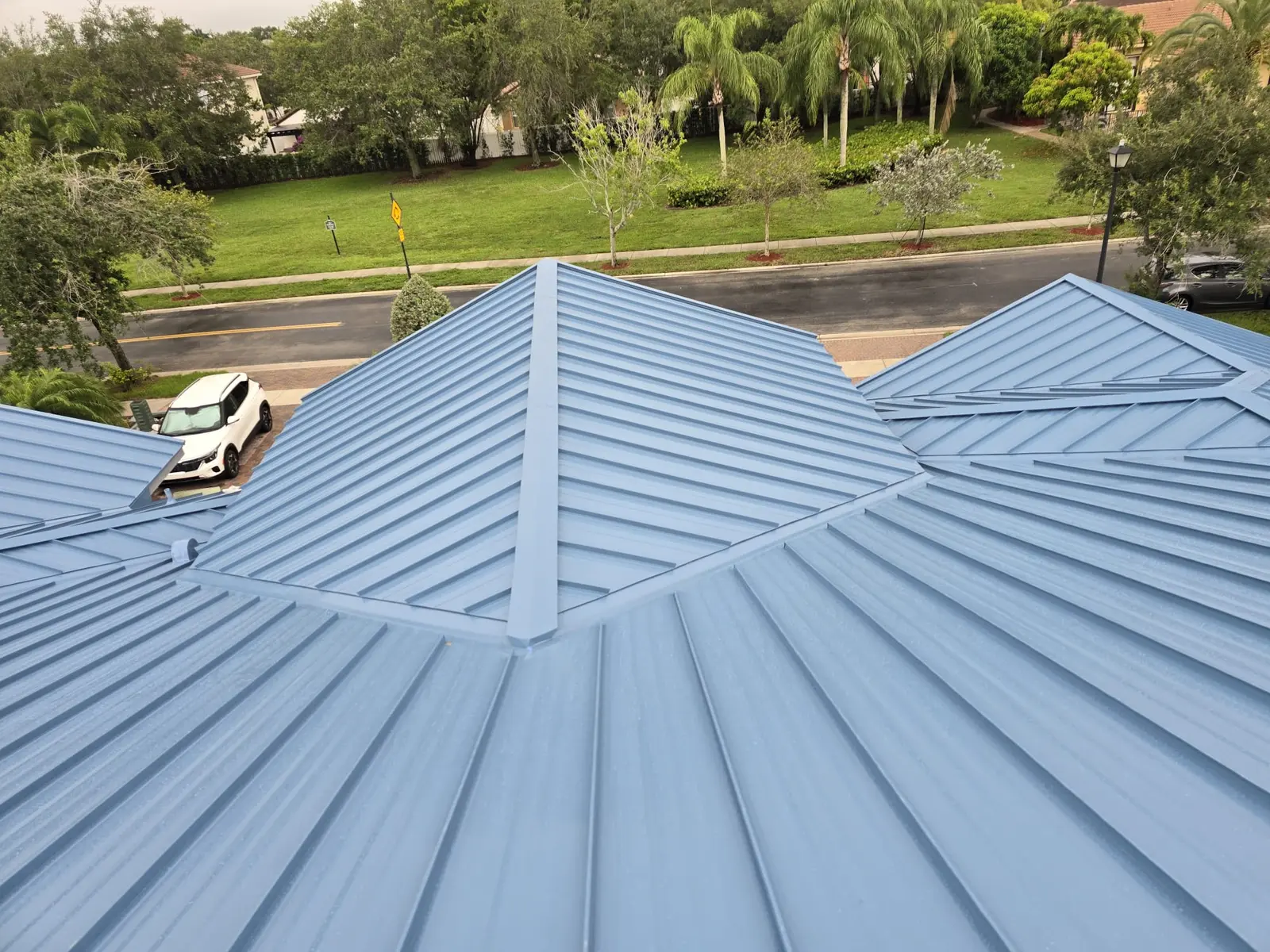
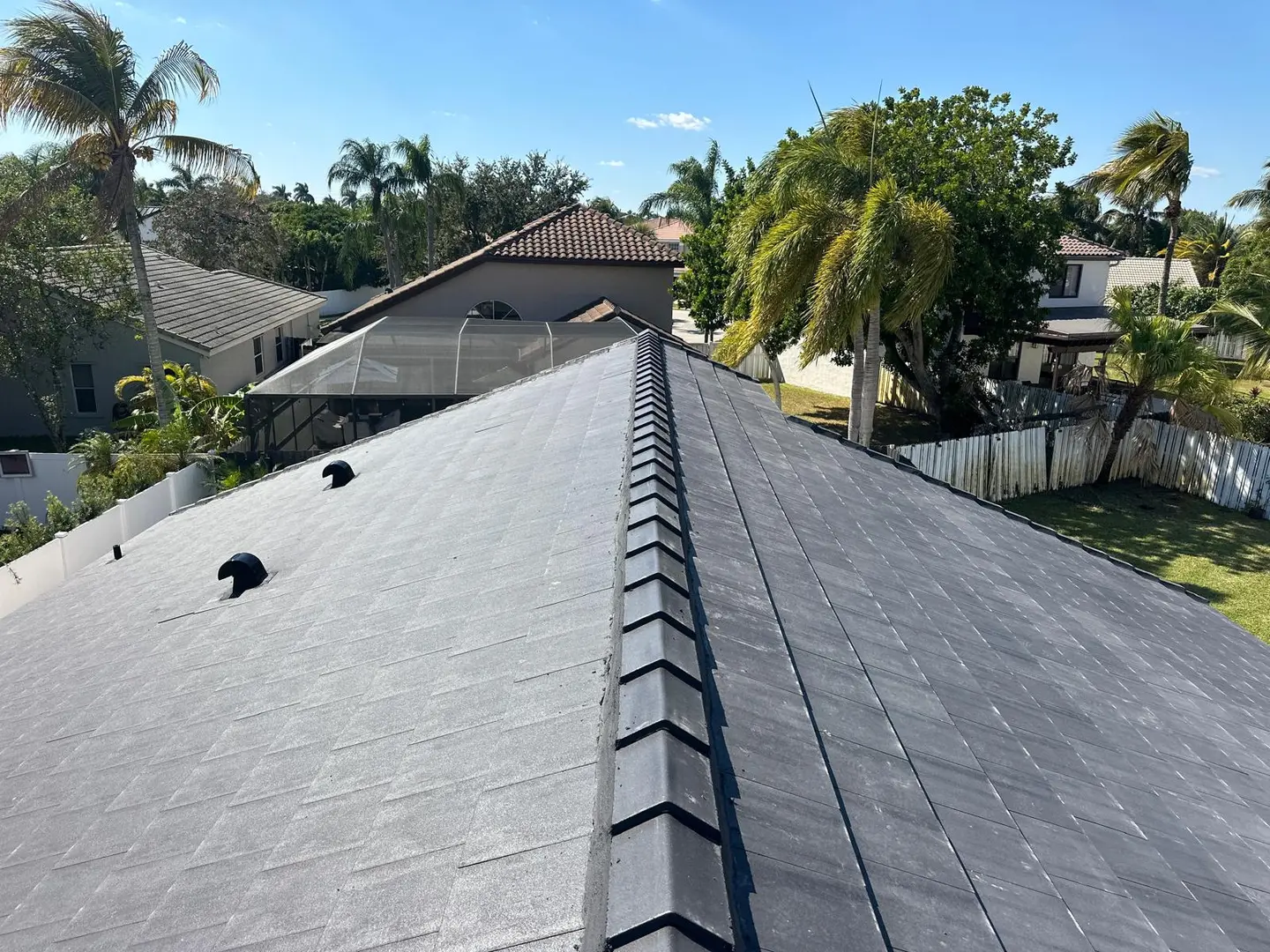
Real M&M project photos. These are different homes, shown to compare roof appearances.
The quick answer
Consider standing seam metal for a lighter covering and a clean panel look. Consider concrete tile for its range of flat and curved profiles and a familiar neighborhood appearance. Neither is an automatic winner on cost or hurricane performance. Underlayment, attachment, coastal exposure and the roof's condition matter with either option.
Metal vs. concrete tile at a glance
This guide compares residential standing seam metal with concrete tile. Exposed-fastener metal, specialty metals and clay tile have their own specifications and costs.
| What to compare | Standing seam metal | Concrete tile |
|---|---|---|
| Appearance | Straight panel lines and a broad finish palette. Compare the panel profile as well as the color. | Flat, low-profile and high-profile options. Concrete tile can create either a clean slate-like look or a traditional curved roofline. |
| Budget | Finish, panel material, attachment method and roof complexity affect the price. | Tile selection, underlayment assembly, attachment, loading and tear-off affect the price. |
| Weight | Typically a lighter roof covering. A conversion still needs a project-specific deck and attachment review. | Typically a heavier covering. Confirm the structure can support the selected assembly, especially when changing from another material. |
| Storm performance | Check the approved panel, clips or fasteners, spacing, deck and edge details for your roof's design pressures. | Check the approved tile, attachment pattern, adhesive or fasteners, underlayment, hips and ridges for your roof's design pressures. |
| Maintenance | Inspect seams, flashings, penetrations, finishes and any exposed accessory fasteners. Concealed panel fasteners do not mean maintenance-free. | Inspect broken or displaced tiles, flashings and signs of water entry. Access may require careful tile removal and matching replacement pieces. |
| Long-term planning | Coating condition, corrosion exposure, attachment and installation details matter alongside the panels. | The tiles and the layers beneath them can age differently. Sound-looking tile does not establish the condition of the underlayment. |
Swipe the table to compare both roof types.
Does a metal roof cost more than tile?
Not always. Our published Broward County planning ranges overlap. A standard-color metal roof can cost more or less than a concrete tile roof depending on the chosen system and the work included.
The example below uses 2,500 square feet of measured roof surface, or 25 roofing squares. Living area is a different measurement: slope, overhangs, garages and covered spaces can change the roof area.
| Roof system | Per sq. ft. of roof | 25-square example |
|---|---|---|
| Standing seam metal · mill finish | $8.50–$10.00 | $21,250–$25,000 |
| Standing seam metal · standard color | $9.00–$13.00 | $22,500–$32,500 |
| Concrete tile · direct-to-deck self-adhered underlayment | $8.00–$11.00 | $20,000–$27,500 |
| Concrete tile · #30 base plus peel-and-stick underlayment | $11.00–$13.00 | $27,500–$32,500 |
These are M&M's published August–September 2026 Broward planning ranges, not fixed quotes or countywide averages. Both tile options assume foam-attached concrete tile. Metal ranges are grouped by finish, not by attachment method. Premium finishes, clay tile, coastal material requirements, access, tear-off and additional wood repairs can change the price. A Palm Beach County property needs its own estimate.
Read the standing seam cost guide and concrete tile cost guide for inclusions, allowances and more roof-size examples. A lower price is only a useful comparison when the proposals cover the same work.
See the difference for your own roof
Get metal and tile options with the materials, scope and allowances clearly identified.
Which roof is better for hurricanes?
A generic “metal versus tile” rating cannot answer that for your home. Wind performance depends on the tested and approved roof assembly, the building's design pressures and correct installation. Roof height, shape, location and edge or corner zones can affect the required attachment.
For standing seam, review the panel profile and material, clips or fasteners, spacing, deck and perimeter details. For tile, review the specific tile and attachment method, adhesive or fastener schedule, underlayment, and hip and ridge details. An approval for one combination is not permission to substitute another.
Broward and Miami-Dade are Florida's High-Velocity Hurricane Zone (HVHZ). Palm Beach County still has wind-design and product-approval requirements, but it is outside that designated zone. The permit documents and local building department determine what applies to your property.
Ask for these details in your proposal
- The exact manufacturer and roof system
- The applicable Florida approval or Miami-Dade NOA
- Project-specific attachment and design requirements
- The underlayment, flashing and deck-repair scope
For approval documents, use the Florida Product Approval search or Miami-Dade product-control search. Review the complete document and its installation limitations with your contractor.
Look beneath the metal panels or roof tiles
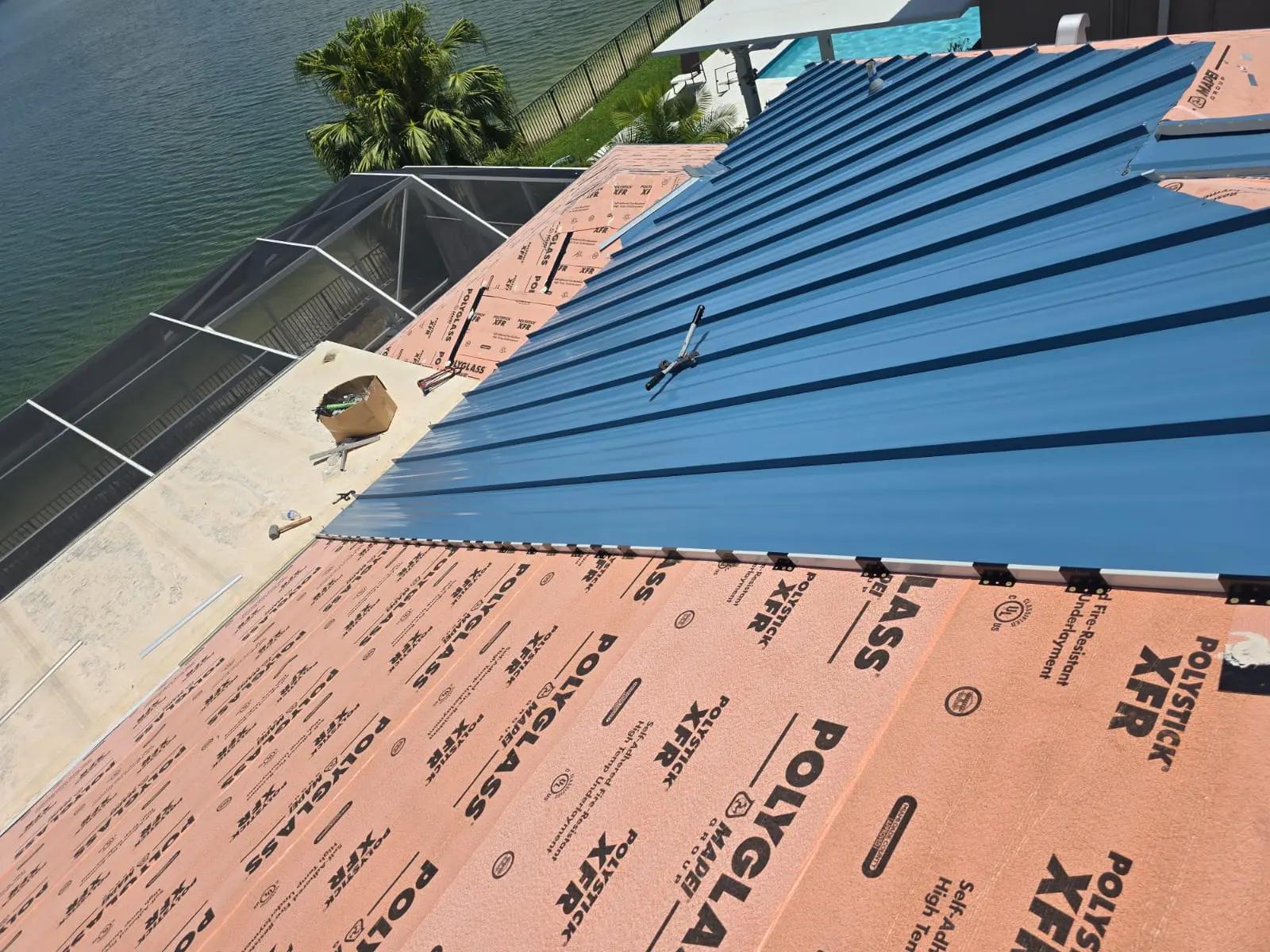
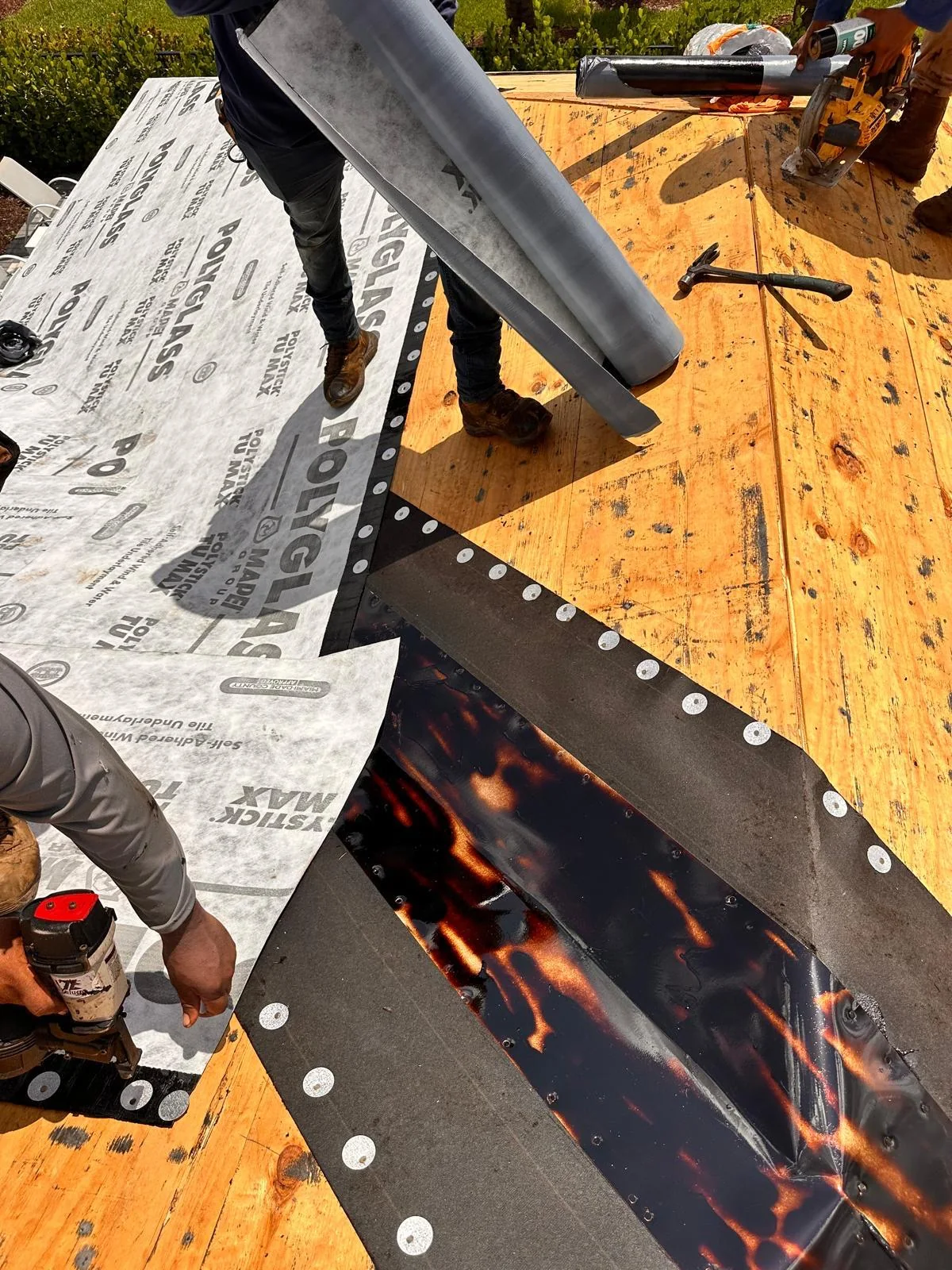
The surface is only part of a roof. Deck preparation, underlayment, valleys, wall connections and penetrations all influence how water is managed. These photos show two of our projects while those layers were still visible.
Lifespan: covering versus complete roof
A long-life tile or panel does not guarantee that every component lasts equally long. Tile may look intact while underlayment or flashings need work. A metal roof also needs attention to its seams, finish, fasteners and transitions. Inspection findings and maintenance history are more useful than one lifespan promise.
Our South Florida roof-lifespan guide explains the distinction. If an existing tile roof has problems, also compare tile repair versus replacement.
Maintenance: plan for access and repairs
Tile inspections may reveal broken or shifted pieces, and an underlayment repair can require removing tiles to reach the affected area. Matching discontinued profiles or colors may be difficult. Metal inspections should include flashings, penetrations, coating damage, corrosion and attachment details; repairs depend on the panel system and access.
Neither option is maintenance-free. Ask how the roof will be inspected, how future solar or equipment work should be coordinated, and what maintenance the warranty requires.
Salt air, summer heat and insurance
Near the coast
Ask which metal substrate, finish, fasteners and accessories suit the property's exposure, and read the actual coastal warranty exclusions. Aluminum and coated steel are different selections. Tile roofs also contain metal flashings and attachment components that need compatible materials.
Cooling your home
Color, solar reflectance, thermal emittance, insulation and the complete roof/attic design all matter. Both metal and tile have reflective options. Compare the specific product's cool-roof ratings rather than assuming one material always produces a lower electric bill.
Insurance expectations
Neither material guarantees lower premiums. Ask your insurer how documented roof features, condition and a wind-mitigation inspection affect your policy. Keep those possible savings separate from the contractor's roof price.
Learn more from the U.S. Department of Energy's cool-roof guide (PDF) and Florida's wind-mitigation resources.
Which roof fits your home?
Start with the appearance you like and any HOA or association requirements, then confirm the system works for the structure, roof geometry and budget. Flat tile can offer a contemporary look, so this is more than a choice between “modern metal” and “traditional tile.”
Consider standing seam metal
You prefer panel lines and a lighter covering
Compare mechanically seamed and other approved standing seam options, the metal substrate and the finish. Confirm that the panel system fits your roof's slope, transitions and coastal conditions.
Explore metal colors and samples →Consider concrete tile
You prefer a flat or curved tile profile
Compare tile shape, color, availability and the approved underlayment and attachment assembly. Confirm structural capacity and how the selected profile works with your home's architecture.
Explore tile colors and samples →Considering a change from tile to metal? Our Miramar conversion project shows one completed example. For a homeowner who selected concrete tile again, see our Miramar Windsor Slate reroof. Each reflects a different property and selection.
Leaning toward metal? Our roof material guide explains when metal roofs in South Florida are a good fit and how they compare with shingles.
Compare two complete proposals
The same measured roof
Compare the actual roof surface, slope, waste, existing material and tear-off scope—not just the home's living area.
A named roof assembly
List the panel or tile, finish, underlayment, attachment method, flashing details and applicable product approvals.
Clear inclusions and allowances
Identify permits, engineering, HOA submittals, disposal, property protection, plywood/fascia allowances and unit prices for extra work.
Written warranty terms
Separate workmanship coverage from material and finish warranties. Check coastal exclusions, maintenance duties and transfer terms.
See our roof replacement process for more on project preparation and scope. If payment options are part of the decision, review the roof financing guide alongside your written roofing estimate.
Metal vs. tile roof questions
Is a metal roof better than a tile roof in South Florida?
The better choice depends on your home's structure, roof shape, location, appearance preferences and budget. Standing seam metal offers a lighter covering and straight panel lines; concrete tile offers several flat and curved profiles. Compare the approved complete assemblies and written scopes rather than assuming either material is always better.
Is a metal roof cheaper than a concrete tile roof?
The ranges can overlap. M&M's published Broward planning guides place standard-color standing seam metal at $9–$13 per square foot of measured roof area, foam-attached concrete tile with direct-to-deck underlayment at $8–$11, and tile with a #30 base plus peel-and-stick system at $11–$13. Finish, attachment, access, tear-off and repair scope can change the quote. Clay and premium tile need separate pricing.
Which roof is better for hurricanes: metal or tile?
A material name alone does not establish hurricane performance. Either option needs an approved assembly selected and installed for the project's wind design pressures, roof geometry, deck and attachment details. Ask for the applicable approval and project-specific fastening or attachment schedule instead of relying on a generic miles-per-hour claim.
Can I replace my existing tile roof with metal?
A tile-to-metal conversion may be possible after reviewing the deck, roof slope, connections, required approvals and any association requirements. M&M's Miramar project is an example of an existing tile roof replaced with a 24-gauge mechanically seamed metal system. Your property's scope and suitability still need an inspection.
Do concrete tiles last as long as the roof underneath them?
The tile covering and the underlayment, flashings and attachments are different parts of the system. Tiles may remain usable while a layer beneath them needs attention. A replacement decision should consider water entry, underlayment condition, tile availability and the extent of repairs—not the appearance of the tiles alone.
Are metal roofs louder in the rain?
Indoor sound depends on the complete roof and ceiling assembly, including the deck, insulation and attic space. A residential roof over a solid deck is different from an open metal canopy. Discuss your home's construction and sound expectations rather than assuming all metal roofs sound the same.
Will metal or tile automatically lower my insurance premium?
Neither roof covering guarantees a discount, continued coverage or a particular premium. Florida wind-mitigation credits depend on documented features and insurer rules. Ask your insurer which inspection and records it needs before treating an insurance saving as part of your roofing budget.
Can M&M quote metal and tile for the same house?
Yes. Request a free comparison estimate and tell us you are considering both. We can review the property, discuss suitable systems and prepare pricing with the selected materials, included work and allowances clearly identified. We serve homeowners across Broward and Palm Beach counties.
Explore your roofing options
About this comparison: photos show M&M projects; budget ranges come from our linked Broward cost guides. Actual roof design, product selection and pricing require a property assessment. Product approvals, manufacturer instructions and the authority having jurisdiction control installation requirements.
“On-time, on-budget! Absolutely fantastic company;that exceeded all expectations!”
Get metal and tile priced for your home
Tell us where your property is and that you are considering both roof types. M&M Roofing will help you compare suitable systems and a clear written scope.
Call (754) 714-8445